





Naval Vessels Lürssen (NVL) is now part of Rheinmetall as the "Naval Systems Division". Why the innovative player in naval shipbuilding is so attractive for the defence giant was demonstrated today in the traditional Blohm & Voss facilities in the port of Hamburg.
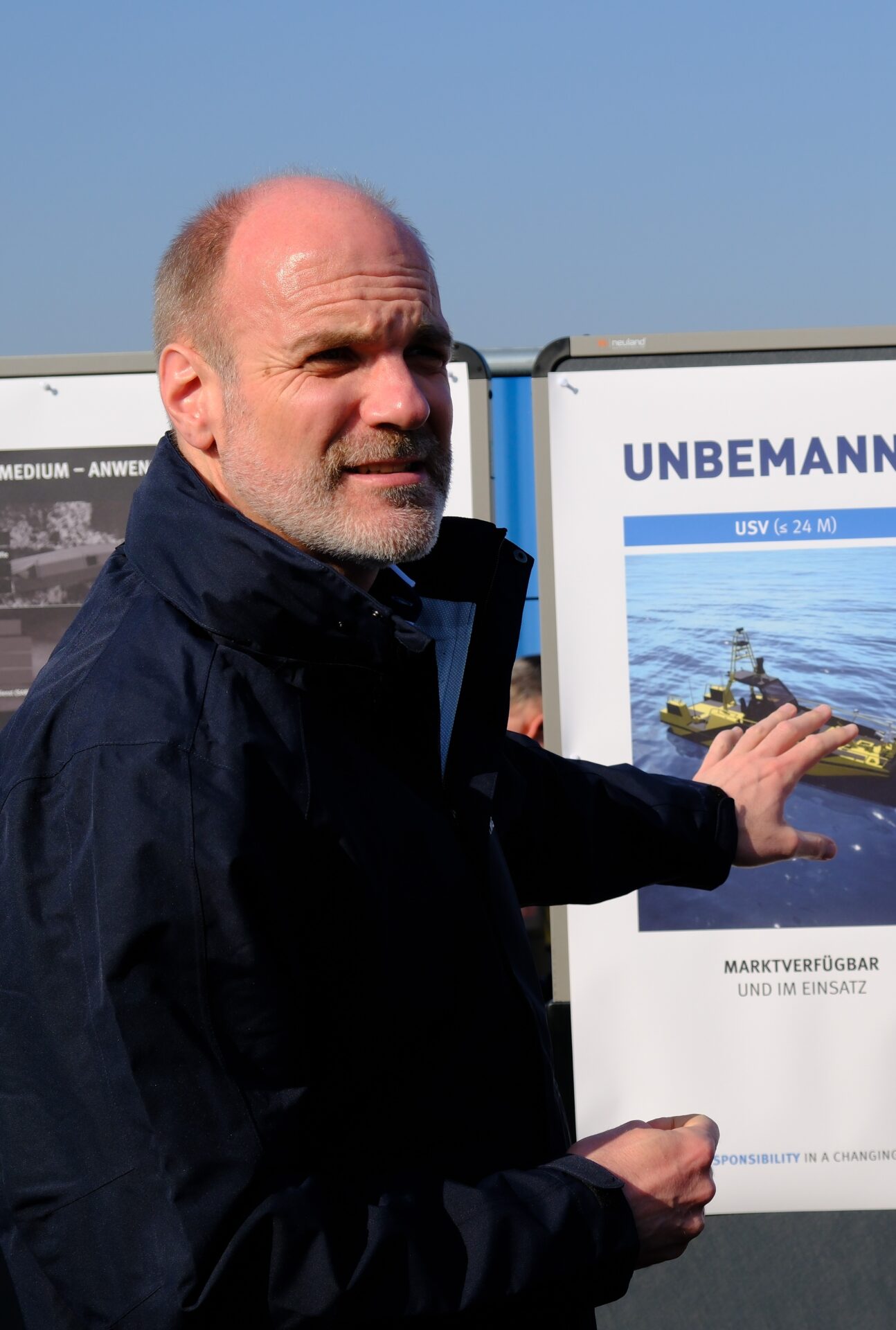
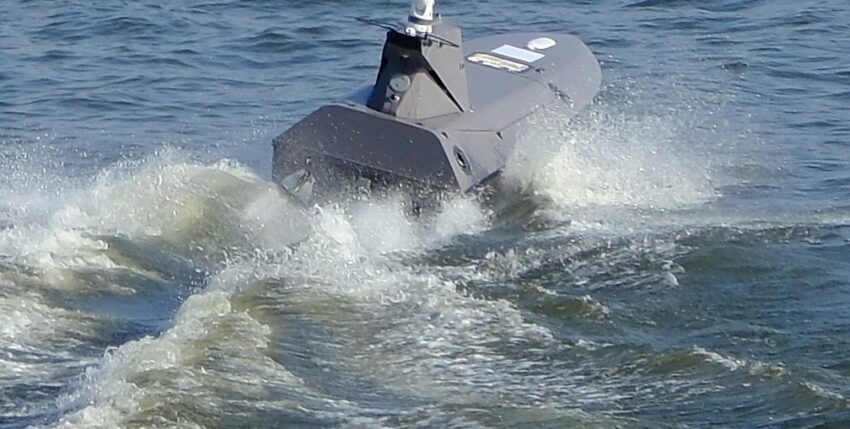
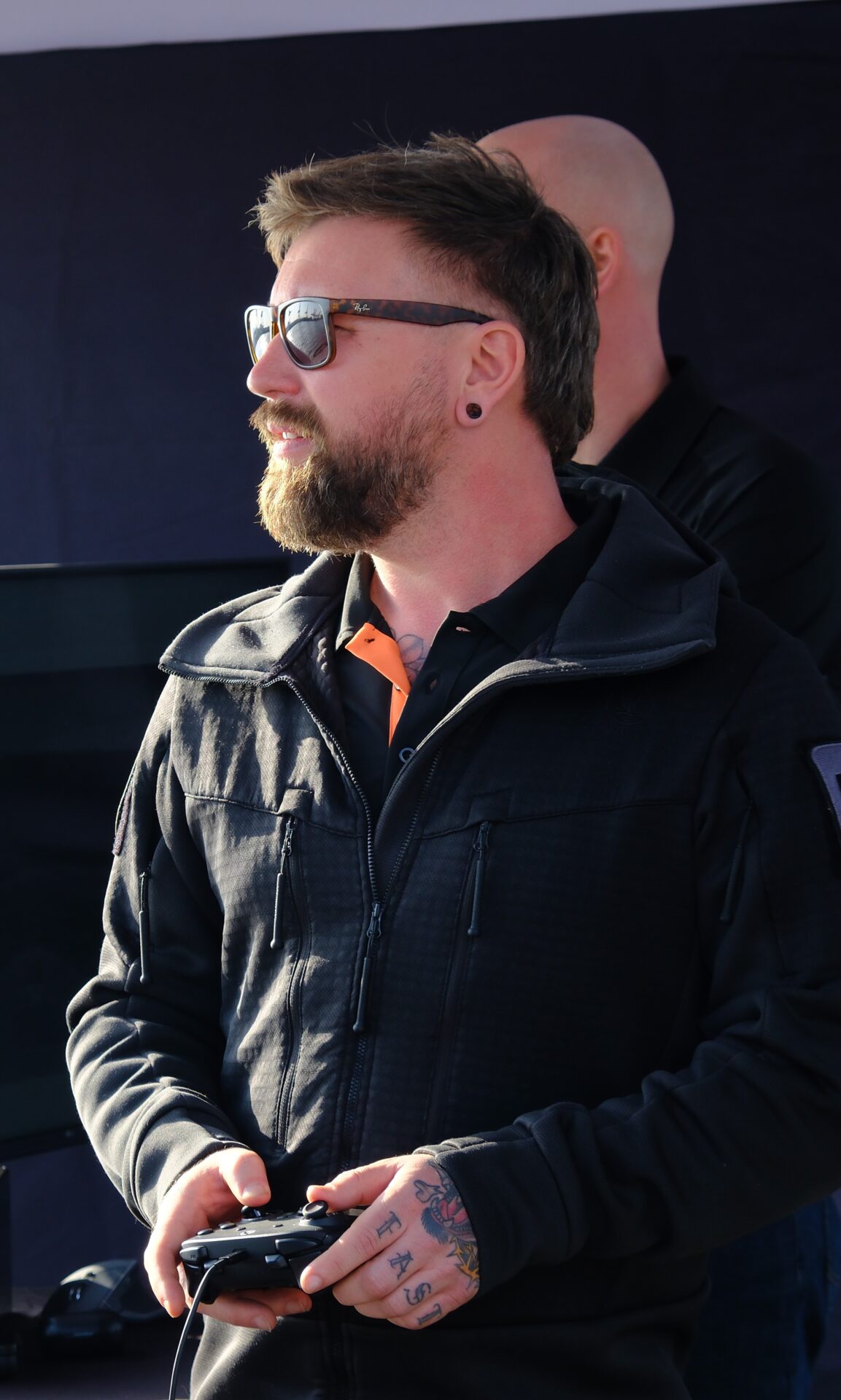
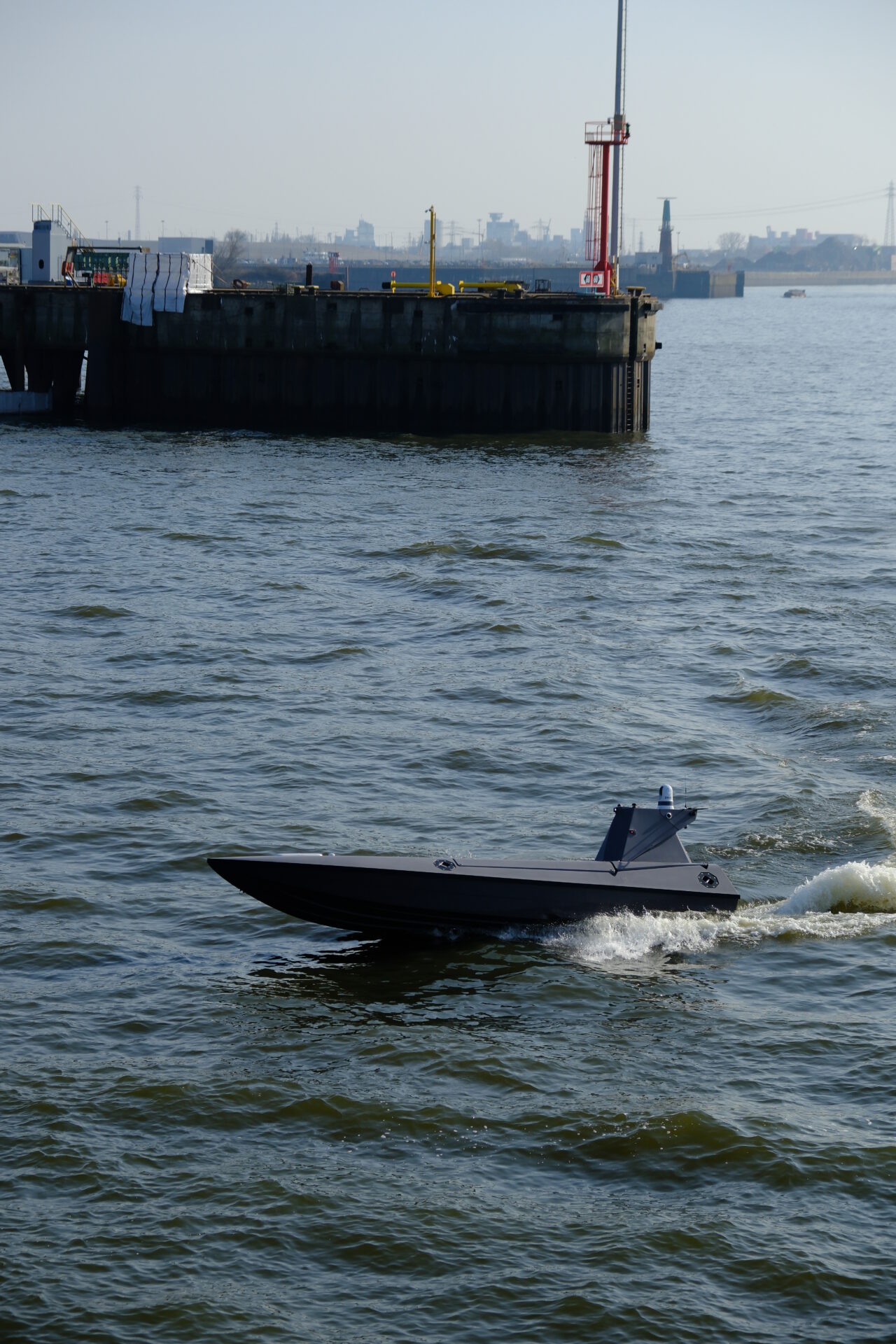
The „Scout“ surface drone, which could be groundbreaking for the future of maritime security, was presented together with Kraken, a company that has become known as a racing boat specialist. In the presence of the German government's maritime coordinator, Christoph Ploss, Tim Wagner, previously CEO of NVL, which will now be called the Naval Systems division, presented the new technology. Rheinmetall's latest acquisition plans the series production of autonomous surface drones. The Rheinmetall armaments group will realise large-scale production in Hamburg. Tim Wagner described the technology and the conceptual idea behind the surface drone: „it starts with 15 boats to get the whole topic going,» said Wagner. «We want to scale up to 200 boats per year.» In future, 1,000 boats a year could be produced in three shifts at the Blohm+Voss shipyard in Hamburg. The drones would provide seamless surveillance of German coasts and neighbouring waters, right into the German Economic Zone in the North Sea. According to the developers, the technology presented by Tim Wagner covers the entire spectrum of maritime dimensions: whether on, under or above water, the sensors can be used. Even armament is possible and this was also indicated by the typical warship paintwork in RAL 7000. And for all those who think that this object can be neutralised by "collecting" it: this much has been revealed, it won't work. The remote control is also not surprising: the Kraken specialist used a standard remote control from a games console. Firstly, this is clever - because you don't have to develop it from scratch; secondly, this is an attractive recruitment criterion for future operators of the Playstation (sorry: XBOX) generation. The weight of the drones of around 2.5 tonnes and their size also allow for uncomplicated nautical handling
The „K3 Scout“ boat, which is equipped with diesel jet propulsion, is not „autonomous“ - there is no such thing yet, said Tim Wagner - but is remote-controlled. The „vehicle“, which is used for both military and civilian purposes, is a joint venture with the British manufacturer Kraken Technology Group. These surface vehicles are based on

on the high-speed technology experience of Kraken. However, the device will not always be travelling around, but mostly just keeping watch. According to the developers, it can remain in a sea area for up to a year and wait silently to see if there are any abnormalities. The engine can remain stopped, the battery can also be maintained by solar cells. This is no longer a vision; several orders for the boats have already been placed. Who? They didn't say. But 150 orders have already been placed - including in the marine sector.
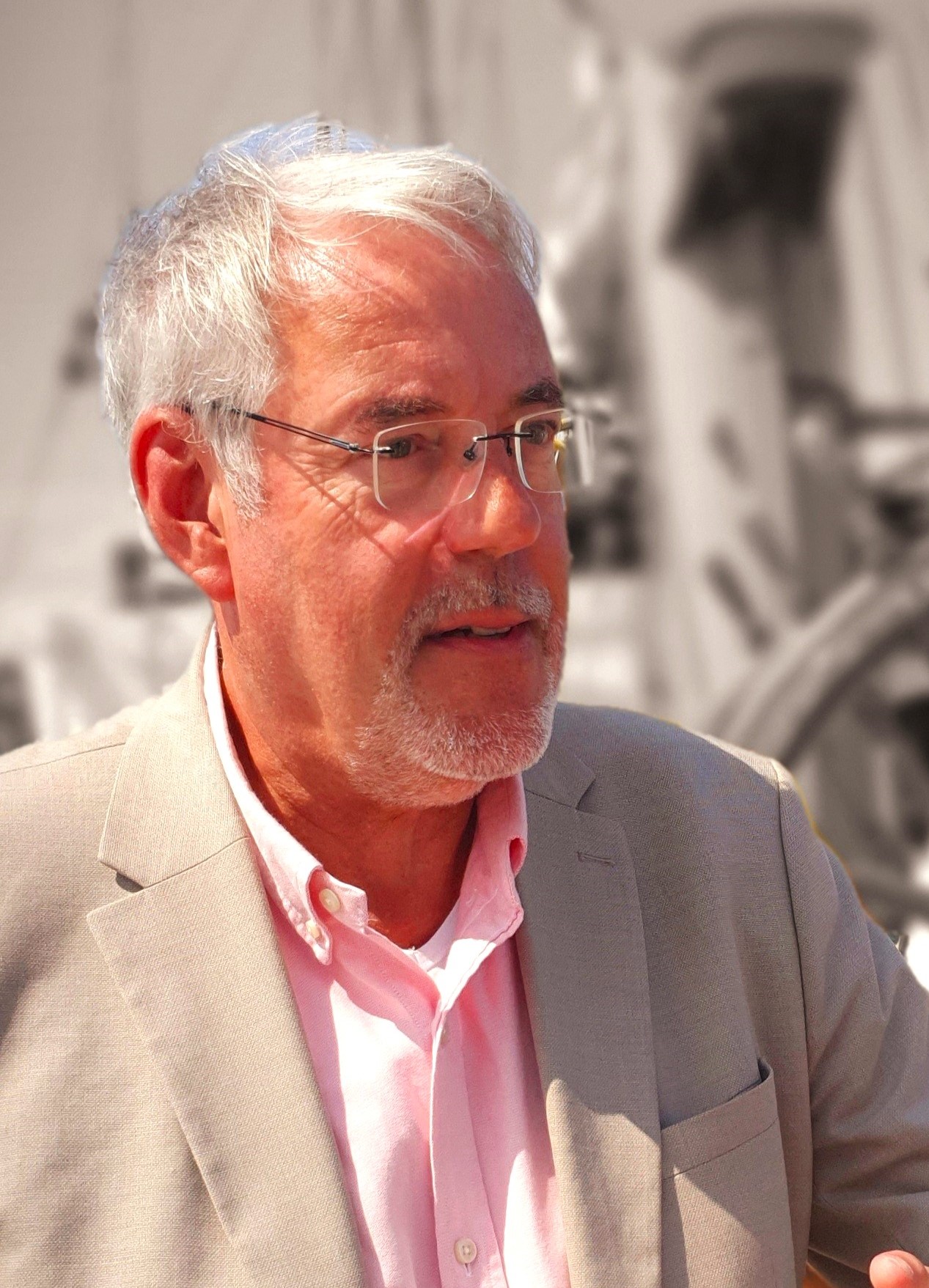
The Federal Government's maritime coordinator, who was present, was impressed and emphasised how important shipbuilding and maritime security are for the Federal Republic of Germany. The preliminary talks with experts from the associations and the industry had an effect: Christoph Ploss will have to represent the importance of shipping and the sea routes in Berlin as a Hamburg resident. And by the way he announced a small sensationHe announced increased funding for maritime research and federal guarantees for shipyards. The previous problem of financing shipbuilding projects and the hesitancy of German financial institutions will thus be supported by federal guarantees. This is good news for the shipbuilding industry.
Text/Photos: Schlüter
 English
  German