





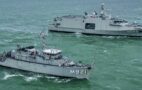

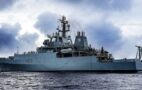
During a joint demonstration by German Naval Yards and CMN Naval (Constructions Mécaniques de Normandie) in Cherbourg, Anschütz was able to demonstrate the performance of its autonomous navigation and deployment system. During a high-speed voyage, the unmanned test ship manoeuvred autonomously, maintained the specified course and avoided recognised dangers in accordance with the rules.
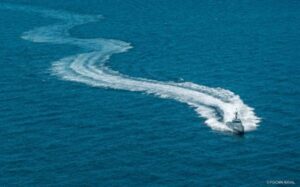
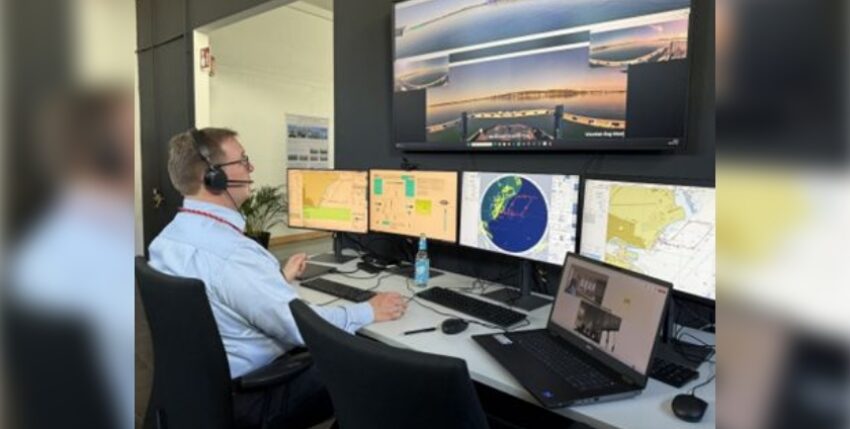
The test in the English Channel supports and complements the company's efforts as part of the CAPTN initiative (Clean Autonomous Public Transport Network) on the Kiel Fjord. The research catamaran "Wavelab" regularly completes autonomous journeys there, which are monitored from a remote operations centre in Kiel. The digital twin installed there enables full control of the unmanned vehicle with 360-degree video, radar and ECDIS displays. According to the company, the autonomous navigation and deployment system completed two years of tests with over 200 collision avoidance events under real conditions in the Kiel Fjord.
Science, industry and the public sector have joined forces (CAPTN) to create a unique real-world laboratory for emission-free, networked and autonomous shipping - including a 5G infrastructure, digital land centre and real test vehicles.
The autonomous system is based on the SYNAPSIS NAVAL integrated navigation system, which has already proven itself many times over: It was first introduced on the German corvette "Braunschweig" and later installed on the British Diamond-class destroyers (Type 45) as well as on numerous other naval units. According to the company, more than 50 navies worldwide now rely on Anschütz bridge and navigation solutions.
SYNAPSIS technologies have been further developed for autonomous navigation, tactical mission functions and automation management (we reported). All important navigation sensors - from radar and AIS to optical cameras - are integrated and create a comprehensive, continuously updated and precise maritime situation picture on board. This integrated situation picture forms the basis for safe navigation and dynamic manoeuvring of unmanned ships. The system automatically keeps the vehicle on course and at speed and, thanks to its collision avoidance module, can recognise impending dangers at an early stage and independently calculate safe avoidance routes.
A key safety feature is the newly developed COLREG-compliant collision avoidance algorithm. COLREG stands for "International Regulations for Preventing Collisions at Sea" - the globally binding set of rules for the behaviour of ships in encounter and overtaking situations. The algorithm continuously evaluates the traffic situation and, in the event of danger, translates these rules into navigational and machine-based decision-making logic in order to automatically execute evasive manoeuvres that comply with the rules.
Findings from both test series - high-speed with CMN Naval and real-life laboratory CAPTN with the "Wavelab" - will flow directly into future naval scenarios such as ISR missions (intelligence, surveillance, reconnaissance), mine defence or escort operations. With the combination of tried-and-tested, traditional navigation hardware, AI-supported navigation functions and tried-and-tested remote control concepts, Anschütz is positioning itself as the German technology leader for autonomous and unmanned ship systems - for both civilian and military applications.

 English
  German
One Response
Fantastic news, there is still a lot of work ahead and behind. The old contactor compass on my cutter still works. Keep up the good work!