







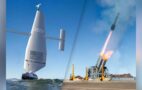
It took almost a year for the Defence Committee in Washington to learn of the results of a series of tests conducted by the Navy in the middle of the year in which four different systems for defence against small UAS drones, known as counter-UAS (C-UAS), were evaluated.
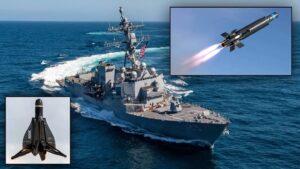
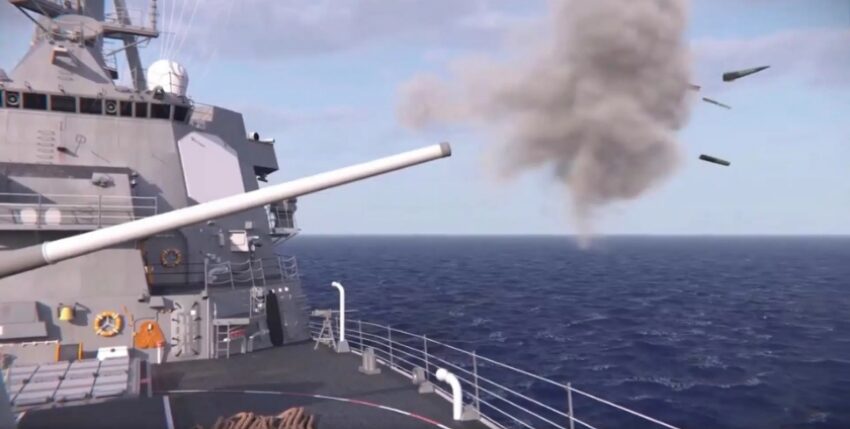
In August last year, the two Arleigh Burke destroyers "USS Jason Dunham" and "USS The Sullivans" tested the effectiveness of the HPV (High Velocity Projectile) on board, the laser/radar-guided Longbow "Hellfire" air-to-ground anti-tank missile (AGM-114), the twinjet-powered and AI-supported Anduril drone "Roadrunner", and the autonomous and swarm-capable Raytheon "Coyote" interceptor small aircraft. The aim was to determine which combination of these weapons is best suited for use in the next carrier battle group for defence against so-called "low-cost saturation attacks" (swarm attacks with low-cost drones).
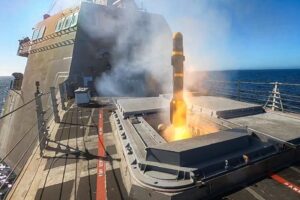
Test result: They all do it! The good news is that they are all already at sea - in different configurations from the LCS in the Persian Gulf/Red Sea to the CSG of the aircraft carrier "USS Gerald R. Ford" off Norway. There, the two Arleigh Burke destroyers of the newer Flight IIA are equipped with the "Coyote" system (port side next to the VLS shaft of the aft superstructure). "Coyote" is fired in the direction of the threat and searches for/discriminates its target by means of installed AI - which can also be influenced from a central location during the approach to the target.

 English
  German