




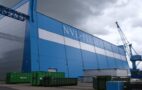

Spanish shipyard builds Royal Navy supply ship in Northern Ireland
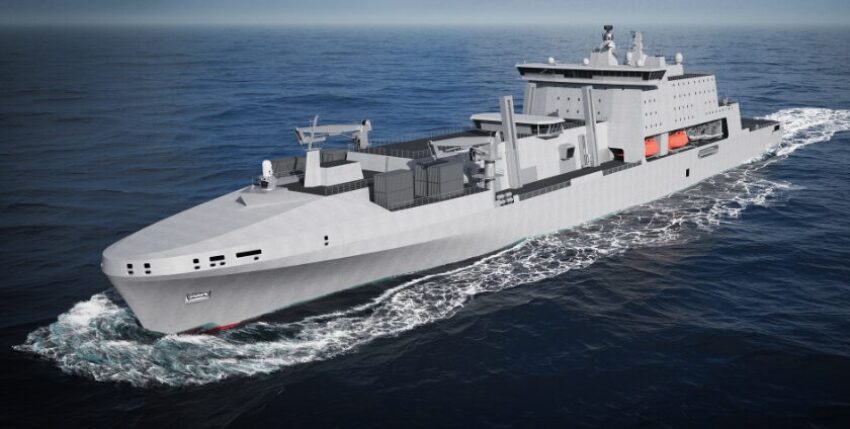
What would have been almost unthinkable years ago is now being publicised: The Spanish-managed Navantia UK in London is proud to announce that, following the Preliminary Design Review (PDR, October 2024), the Critical Design Review (CDR) for the Fleet Solid Support Ship (FSS) has now been finalised and construction can begin.
With a length of 216 metres and a displacement of 39,000 tonnes, the FSS will be the Royal Navy's second largest ship after the two aircraft carriers. Construction of the first hull is scheduled to begin in 2025, with all three to be delivered in 2032.
The names were supposed to be released after the first steel cut - but it is assumed that traditional RFA names such as "Stromness", "Lyness" (Scapa Flow) and "Tarbatness" of the 60s and 70s will play a role - all Scottish locations, which in turn will hurt the English soul. They are to replace the RFA's (Royal Fleet Auxiliaries) "Fort Austin", "Fort Rosalie" and "Fort Victoria", as well as temporarily replacing the "Argus" as a flight training ship for helicopter training.
DE&S (Defence Equipment and Support) and BMT, a shipbuilding design office in Bath with close ties to the Royal Navy, played a key role in the development of the FSS by the "Resolute" team. Navantia was the bidder for the FSS, one of the newest support ships in Europe, and was awarded the contract in 2023.
Since then, the Spanish state-owned shipyard has been looking for a suitable production site for the project - and confirmed it this year with the takeover of the traditional Harland & Wolff shipyard in Belfast.
The fact that H&W was one of the four largest shipyards in the United Kingdom shows that there must have been goodwill on the British side.
It is remarkable that both parties are looking for certain creative weak points in the customs and regulatory bureaucracy in Northern Ireland, at the neuralgic interface between the Brexit-stricken kingdom and the trade-free European Union, in order to be able to engage in profitable shipbuilding together. How else could these two historically very different siblings come to a common denominator?
Fleet Solid Support Ship
Graphic: DE&S

 English
  German