










Last year, the North Sea reached its highest temperatures since regular measurements began. The Baltic Sea has also continued to warm. The latest data from the Federal Maritime and Hydrographic Agency (BSH) shows that the average water temperatures in the North Sea and Baltic Sea last year were significantly higher than the long-term average.
The BSH has been determining average temperature values and anomalies since 1968 and has been compiling weekly analyses since 1995. The compiled data shows that the North Sea reached an average of 12.1 degrees, the highest value ever measured. The surface temperature rose by up to 1.5 degrees above the long-term average in the reference period from 1997 to 2021.
According to the BSH, the average annual temperature in the entire Baltic Sea region was 9.6 degrees, more than one degree above the long-term average for the same reference period. This is the second warmest year since the start of our data series, according to the head of the Marine Climate Division at the BSH; only in 2020 was the water in the Baltic Sea warmer.
Steady trend
The data shows that the temperatures of the North Sea and Baltic Sea have only been moving in one direction for over 50 years. This development is a direct consequence of climate change, according to the Head of the Oceanography Department at the BSH.
Problem definition
What initially promises people a pleasant time by the water has less pleasant consequences for the marine ecosystem. The Alfred Wegener Institute (AWI) in Bremerhaven has reported that climate change is causing certain fish species to migrate polewards and bottom-dwelling species to retreat to deeper and colder waters.

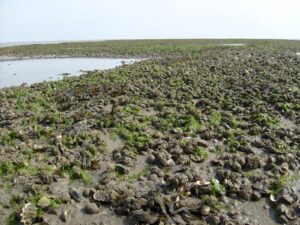
A significant increase in introduced thermophilic species has also been observed, which, although they have not yet threatened any native organisms, have led to a change in the habitat. According to an AWI researcher, huge reefs of Pacific oysters and hectare-sized underwater forests formed by algae from the Far East can be recognised immediately by any mudflat walker.
And that is by no means all. Eight highly industrialised countries with around 80 million people living in the coastal areas are supplied by humming container giants, making the North Sea one of the busiest and noisiest seas in the world. The underwater noise is a particular problem for marine mammals such as harbour porpoises. In addition, three of the largest and most important European seaports are located here - Rotterdam, Antwerp and Hamburg. In addition, there is intensive exploitation of all resources. Oil and natural gas extraction, large fishing fleets that take around two million tonnes of fish from the sea every year, offshore wind farms and, last but not least, intensive tourism form the pillars of the coastal countries' economies. And pollutants are also released into the sea via the rivers.
Outlook
This intensive, unsustainable hotspot of human utilisation will certainly not remain without consequences. If the problems such as overfishing, mass tourism and environmental pollution (e.g. plastic waste and noise) are not tackled with courage soon, the North Sea as a small marginal sea of the Atlantic may also become a "Dead Sea"...
kdk, NDR, BSH, AWI



 English
  German