



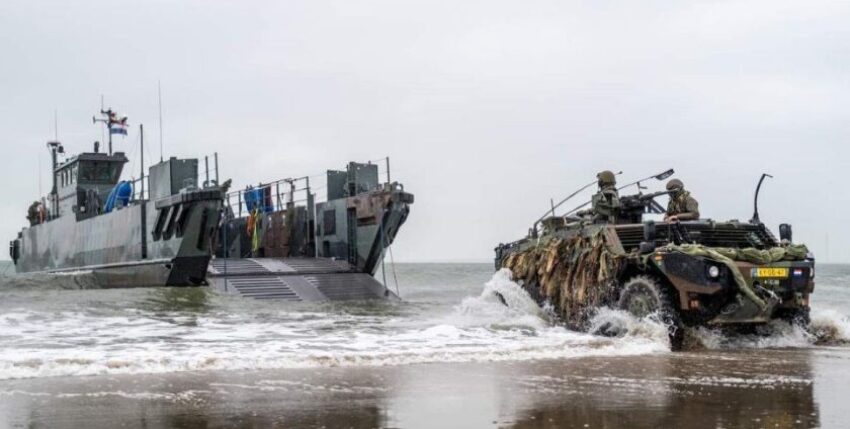






De Haas Shipyards in Rotterdam handed over the first two of four modernised Landing Craft Utilities (LCU) to the Royal Netherlands Navy in January. The third LCU is due to be delivered this year and the fourth in 2026.
Reconstruction
The landing craft were adapted to new requirements and changed operating conditions. These include the latest sensors and effectors and an improved weapon deployment and guidance system. New generators were installed and the exhaust systems were relocated to the stern. The bridge was given a new layout with updated equipment and the crew were given modern sleeping quarters and new sanitary facilities.
The modernisation increases operational capability, flexibility and survivability in amphibious operations. Thanks to this mid-life upgrade, the LCU can now be kept in service until at least 2032.
Means of transport
The Dutch therefore continue to rely on landing craft to transport heavy equipment (lorries, off-road vehicles, recovery vehicles), material and fully equipped soldiers to the beach and back, also as a lift from an amphibious transport ship.
Loss of ability
This is important in times of crisis and war and especially when there is no harbour available. The fact that this capability was abolished without replacement in the German Navy could therefore come back to haunt us.
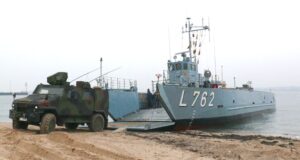
Correct: the Barbe-class landing craft were old (but popular until the end) and other nations still have similar boats. According to a spokesperson, the naval battalion is currently working on a position paper on how to maintain the capability for this landing craft component within the German Navy. However, these amphibious flagstaffs will have to be provided by the alliance partners in future. It is good that the Dutch Navy exists, as it strengthens its role within NATO.

 English
  German