






The Arctic has become a geostrategic region in which the superpowers USA, Russia, China and the neighbouring states of Canada, Denmark and Norway are vying for influence, possession and new borders - geopolitically, economically and, above all, as a military theatre of operations.
The Arctic stretches from 66°33'north latitude to the North Pole and covers around 20 million square kilometres. Half of this huge area is covered by the Arctic Ocean. Climate change is causing the ice in the Arctic to melt ever faster. This particularly affects Greenland, which is still largely covered in ice and is the largest island in the world, over six times larger than Germany. The Arctic could be ice-free in the summer months as early as 2040. Ice-free North Sea passages, the Northeast Passage along the coast of Siberia and the Northwest Passage between the islands of Canada, shorten the sea route between Europe and Asia. A fifth of global oil and gas reserves and mineral resources of all kinds are thought to be in the Arctic (Greenland). The Arctic Council was founded in 1996 to regulate the struggle for the Arctic and aims to achieve a coordinated balance of interests between the Arctic states. Its members are Canada, Denmark, Finland, Iceland, Norway, Russia, Sweden and the USA. Germany and twelve other countries are observers on the Council. China is seeking a permanent seat. The Arctic states of the USA, Canada, Russia, Norway and Denmark form the so-called "Arctic Five" in the Council, a regional forum that is intended to negotiate peacefully on the borders of the Arctic Ocean. Following Russia's invasion of Ukraine in 2022, all members terminated their cooperation with Russia and cancelled their participation in the Council meetings. Russia subsequently cancelled its membership fees. This means that the future of the Arctic remains unresolved and open.
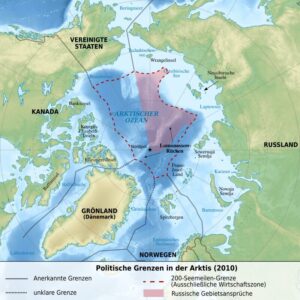
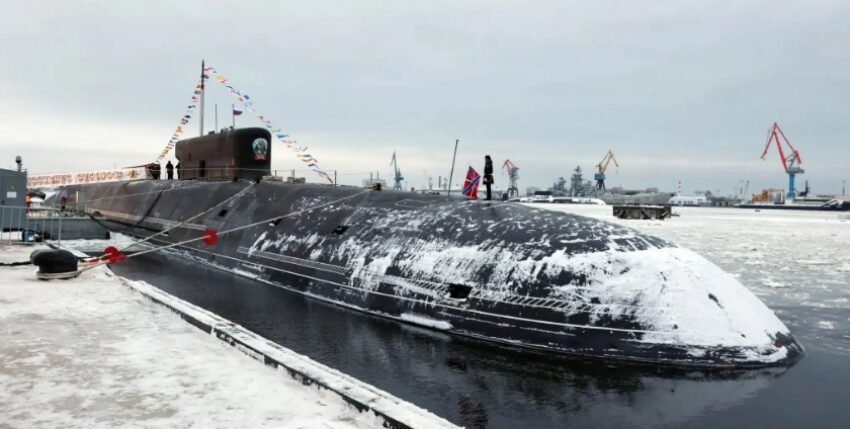
As a continuation of the Cold War, Russia and the USA regard the Arctic as a geostrategic area with military-strategic dimensions because, among other things, it formed the shortest distance between the USA and Russia for their nuclear deterrent systems. American and Russian nuclear submarines (SSBNs) regularly operate under the Arctic ice. The Russian Northern Fleet, whose units were designed for operations in ice-covered waters (Arctic), is present in the Arctic region. Among other things, they have ice reinforcements in various classes (ice classes are the categorisation of the ice resistance of ships). For operations in Arctic waters, Russia deploys its largest icebreaker fleet in the world, consisting of 49 heavy icebreakers, most of which are nuclear-powered and armed. Russia has reactivated the military bases from the Soviet era and is building new military bases, constructing submarine bases and installing radar stations and modern reconnaissance and satellite surveillance systems. Russia has built its northernmost military complex in the Arctic Ocean on the island of "Alexandra Land" (Franz Josef Land archipelago), 1,000 kilometres south of the North Pole. In addition to military infrastructure (bunkers, fuel depots, hangars, airfields, depots), missile defence systems, radar and early warning systems and new runways for Tu-95 strategic bombers were built there. Russia is also producing new UAVs (Unmanned Aerial Vehicles) for surveillance and control missions. The cold-weather UAVs are designed to operate for four days with a special GPS-independent navigation system and can withstand temperatures of up to -40°C and strong Arctic storms. Overall, Russia has secured military surveillance and control of the Arctic region, including the 5,600 kilometre-long northern sea route along Russia's Arctic coasts.
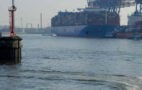
China's icebreaker
China, which describes itself as a "Near Arctic State", is also vying for claims to the Arctic on the grounds that the northern polar region is a "global commons" and, alongside outer space and the seabed, is a "new border area" with an unresolved administrative and legal situation. Among other things, China operates the polar station on Spitsbergen, which is primarily used to research the ice sheet and the climate. Since 1984, China has undertaken over 40 expeditions in the Arctic. In 2024, China operated in the Arctic for months with three heavy icebreakers and several research vessels. The planned construction of a polar Silk Road with corresponding infrastructure, the securing of overflight rights, pipelines, fishing rights and cable laying as well as the strategic partnership with Russia also demonstrate China's strategic interests in the Arctic.
As a country bordering the Arctic, Canada sees itself as an Arctic nation and describes its Arctic strategy as "Our North, Our Heritage, Our Future". Among other things, the country insists on a geostrategic position that aims to classify the Northwest Passage through Canada's Arctic archipelago as inland waters in future and thus subject it to Canadian control. Canada has also applied to the UN for large areas of the Arctic to be assigned to the Canadian continental shelf. In order to maintain a permanent presence in the Arctic, Canada has seven heavy icebreakers. In 2024, Canada concluded an agreement (Ice Pact) with Finland and the USA on the joint construction of further heavy icebreakers. With the joint construction project, they want to counterbalance Russia and China, which are continuously taking possession of the Arctic, in terms of geopolitics and security policy. The USA, which only has two heavy icebreakers, wants to have three new heavy icebreakers built by 2029. Trump's proposal to acquire Canada as the 51st US state has sparked outrage and strong opposition in Canada, as well as a hostile attitude towards its neighbour and NATO partner, the USA.
Annex Greenland
As the Arctic is increasingly influencing the global strategic security environment, the USA declared its interests in the region (Artic Strategy) back in 2014, with Greenland in particular at the centre of its pursuit of interests. Trump wants to annex Greenland with its natural resources because "we need the strategically important island for our national security." Greenland had been a Danish colony since 1721 and became part of Denmark in 1953. Greenland, with 57,000 people, is autonomous, but belongs to Denmark, which exercises foreign and security policy over the island and subsidises the island with 530 million euros annually. Denmark considers Greenland to be a Danish area of interest and an operational area for the Danish armed forces and has established a military Joint Arctic Command (JAC) on Greenland. In the parliamentary elections in March 2025, almost all Greenlandic parties voted in favour of independence for their island. Acquisition by the USA is firmly rejected by Denmark and Greenland.
The USA has been trying to take over Greenland since 1867. After the Second World War, they offered 100 million dollars for the island. However, Denmark refused. In 1940, the USA set up a consulate on the island and built airfields during the Second World War as stopovers for the transfer of military aircraft from the USA to Great Britain. In May 1945, Denmark finally agreed to a US military presence on the island and in 1951 concluded a security agreement with the USA that authorised the use of Greenlandic bases for all NATO countries. The agreement was amended in 2004. Since then, the USA has primarily used the Thule Air Base (Pituffik Space Base) military base, which it has expanded to include an early warning system for monitoring ballistic missiles.
Norway's frigate programme
Securing and monitoring NATO's northern flank (North Sea and Arctic) is a key task of the Royal Norwegian Navy. To this end, Norway wants to procure five to six new frigates for use in the Arctic region as quickly as possible, as the four frigates of the "Fridtjof Nansen" class will be gradually decommissioned from 2029. The new frigates will primarily be used for anti-submarine warfare (ASW) and will be equipped with state-of-the-art technological systems (helicopters, drones, sensors, FK) and equipped with cold-resistant components (propulsion, electronics, payload) for long-duration operations in Arctic waters. The frigate programme, worth around ten billion dollars, is Norway's most expensive armaments project. To speed up the procurement process, Norway has selected Germany, France, the UK and the USA as potential strategic partners in order to tie in with their frigate programmes. Germany is procuring the F126 frigate, France the FDI frigate, the UK the Type 26 and Type 31 frigates and the USA is currently building "Constellation" class frigates. Norway wants to decide on a strategic partner by the end of 2025.
In March 2025, Germany and thyssenkrupp Marine Systems and Norway's Ulstein Verft signed a letter of intent for industrial cooperation in frigate construction in the event of an order being awarded. The aim is to combine the cutting-edge technology of thyssenkrupp Marine Systems with local Norwegian shipbuilding expertise, with the main value creation in frigate construction remaining in Norway. With the memorandum of understanding, Germany has achieved a good starting position for the contract award.
Dieter Stockfisch

 English
  German