











As Europe seeks to modernise its industrial sector, the availability of low-cost steel has become an important factor. However, as the European Union tightens its climate regulations, the focus is also turning to the decarbonisation of steel production.
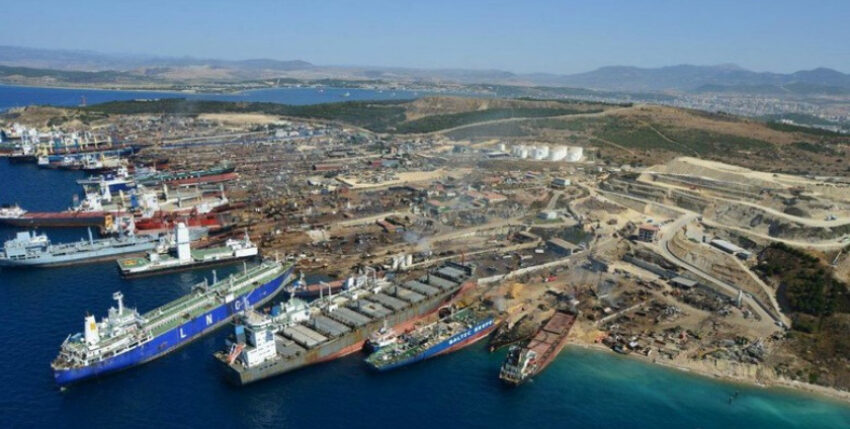
The carbon footprint of the steel industry in Europe accounts for around five percent of all regional emissions, which corresponds to around 190 million tonnes of CO2. The steel sector therefore plays a crucial role in the EU's decarbonisation plans. Although new technologies for clean steel production are emerging, the recycling of scrap metal is now also seen as an easily achievable target. According to a new report by the Brussels-based climate think tank Sandbag, the Brussels-based non-governmental organisation Shipbreaking Platform and the Italian University of Tuscia in Viterbo, around 80 km north of Rome, ship recycling remains a largely untapped potential for carbon reduction in the steel industry in Europe.
Recent trends suggest that the demand for scrap metal will increase in the coming years as steel producers seek to reduce their energy consumption. One of the newer technologies that use less energy is electric arc furnaces. These furnaces are particularly characterised by their ability to process large quantities of recycled steel. The report argues that ship steel could be a reliable source of scrap due to its high quality standard and predicts that just under 12,000 European-owned ships will reach the end of their life by the mid-2030s. At this scale, it is estimated that 10 to 15 million tonnes of steel scrap could be recovered each year, equivalent to up to 20 % of annual steel scrap consumption in the EU.
However, only one per cent of European ships are currently recycled in the EU, although more than 70 per cent of a ship's weight can be recycled as steel scrap. Most European shipowners (still) sell to South Asian shipyards, which offer attractive prices for steel scrap. The European ship recycling industry therefore still has a long way to go.
According to the authors, the planned EU Circular Economy Act represents a decisive opportunity to create incentives for ship recycling in Europe. There are already forecasts that Europe will become a net importer of steel scrap by 2050. Ship recycling would therefore ensure a reliable supply chain for the secondary raw materials market. So the demand is already there, all that is missing is the supply.
kdk, The Maritime Executive

 English
  German