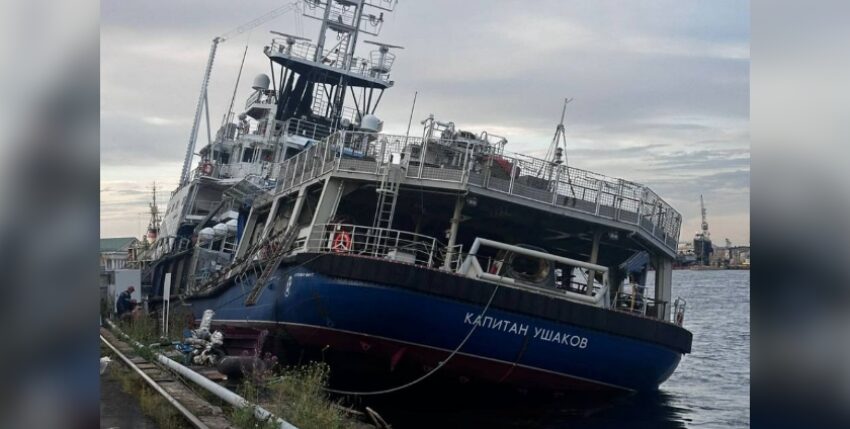




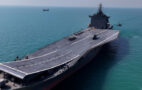
Moscow has switched its economy to war production. If one of the state-owned defence companies such as the United Shipbuilding Corporation (USC), which is considered a "main supplier of military ships for the Russian Navy" under EU sanctions, starts to falter, things are going to get tight! In mid-August, USC, a conglomerate of various shipyards, was forced to lay off almost three quarters of its workforce at one of its main plants in Khabarovsk on the Amur River in the far east of the country. Remote locations, cost-intensive transport, limitation to medium to small warships - and of course the sanctions - paint a bleak picture. Furthermore, outdated equipment and labour-intensive processes, inefficient cooperation with one another and complex small series or one-off productions mean that almost all Russian shipyards are in the red. The brand new ocean-going tug "Kapitan Ushakov" (Project 23470, 70 metres, 3,200 tonnes, ice class 4), which suffered a water ingress, capsized and sank at the pier in the Baltic Shipyard in Saint Petersburg at the beginning of August while in the final stage of outfitting, is emblematic of this misery in shipbuilding. The tug was laid down in Yaroslavl, north of Moscow, in 2017 and towed to the Baltic Sea a year after its launch. It was due to enter service in the Northern Fleet at the end of last year. The "Ushakov" at least will be missing from Russia's ambitions in the Arctic, as its three sister ships are sailing out of reach in the war-torn Black Sea (2) and in the earthquake-ravaged Pacific region.



 English
  German