






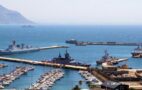


Behind a sober announcement from Damen on 9 December 2025 lies a small sensation. The Dutch shipbuilder reports that NAVSEA - the Naval Sea Systems Command responsible for the design, procurement and material responsibility of US combat and support ships - has selected its LST-100 design as the basis for the "Medium Landing Ship" programme led by the US Navy. The new McClung class is to emerge from the programme. The type ship will be known as the "USS McClung" (LSM-1) and will primarily be used to support units of the US Marine Corps support. The operational requirements therefore clearly come from Quantico.
European design, American added value
The decision once again gives a European design weight in US naval shipbuilding - despite the politically heated experience with the Constellation-class frigate for which Fincantieri was responsible. LST-100, an export-proven landing ship design from the Damen catalogue, will become the reference for up to 35 McClung-class LSMs, which are to be built entirely at US shipyards. Nigeria already operates an LST100, Australia uses the design as the basis for eight Landing Craft Heavy; the USA is now a third user, and Damen is also talking about further interest from other regions.
TDP, billion-euro programme and VCM model
Contractually, Damen remains strictly limited to the design and data role. NAVSEA has awarded a fixed-price contract for a Technical Data Package (TDP) and extensive usage and modification rights. Industry reports place the value at around 3.2-3.3 million US dollars. Depending on the source, the 35-ship programme is estimated at around USD 5 to 15 billion - the Navy calculates an average of around USD 150 million per LSM, while the Congressional Budget Office estimates USD 340 to 430 million per unit.
The ships are built separately by US shipyards, integrated via a Vessel Construction Manager (VCM) model: a commercial management organisation holds the LST-100 data package and coordinates the design application, material flow and construction orders across several shipyards. The political pressure to limit design changes and keep series costs under control is addressed in several places. Remarkable in terms of industry policy: Bollinger already had an Advanced Procurement contract for an alternative LSM concept. However, Bollinger Shipyards, the Louisiana and Mississippi-based Gulf Coast shipyard group, is now more likely to become one of several construction yards under a VCM umbrella.
EABO workhorse for the A2/AD zone
Operationally, LSM addresses a gap between the Army Landing Force and large LHA/LPD that has been described for years. A report by the Congressional Research Service on the LSM programme and a USMC force design paper outline the operational picture: Marine Littoral Regiments and "Stand-In Forces" are to operate from islands and logistically simple, temporary bases within the Chinese anti-access/area-denial zone. What is required are robust, deliberately simple landing ships that can approach shallow coasts and beaches, land troops, vehicles and ammunition directly via bow and stern ramps and, if necessary, deploy quickly - ideally in the "noise" of civilian coastal shipping traffic.
LST-100 in profile
LST-100 is positioned precisely in this segment: around 100 metres long, around 16 metres wide, shallow draught, RoRo deck and vehicle deck with a combined area of over 900 square metres, helideck and accommodation for a core crew of around 18 people plus over 280 additional crew. Depending on the sailing profile, the range is between a good 4,000 and over 7,000 nautical miles at cruising speeds of around 14-15 knots; bow and stern ramps and a 25-tonne crane enable heavy vehicles and containers to be loaded and unloaded on undeveloped coasts. The modular design allows national adaptations (command and control, communications, self-protection) and offers the option of being extended to the LST-120 by a 20 metre segment.
Lessons learnt - let's see how it turns out
USNI and naval insiders explicitly describe the current course of action as "retooling around the Dutch LST-100": the Navy is moving away from the initially more complex, more expensive LSM approach in favour of a mature, standard design that does not require development and has requirements that are as frozen as possible. The signal direction is clear - unlike with Constellation (and major European projects), changes to the design of the McClung class are to be strictly limited, risks shifted and series production stabilised at an early stage.
The schedule calls for the first LSM construction contract to be awarded in FY2025, construction to begin in 2026 and the USS McClung to be delivered to the fleet around 2029; the Marine Corps expects the type ship to take four to five years to build, with later units to be built in about three years per hull. This will be followed by pier tests, shipyard and acceptance trials as well as near-operational tests with littoral units, with the aim of having at least one operational LSM and other ships in the pipeline by the early 2030s.
Ladies between high-end frustration and LST success
For Damen, McClung/LST-100 represents a gain in operational prestige and a reputational counterpoint to the charged perception surrounding F126 and other complex capital ship projects: The Group can demonstrate its strength as a provider of modular export designs and licence cooperation, while the problems in highly integrated, politically charged programmes continue to be critically observed. All in all, LST-100 is less acquittal than stabilisation for Damen - but on a stage that could hardly be bigger in the maritime world.
HUM

 English
  German