







Naval Vessels Lürssen (NVL) is now part of Rheinmetall as the "Naval Systems Division". Why the innovative player in naval shipbuilding is so attractive for the defence giant was demonstrated today in the traditional Blohm & Voss facilities in the port of Hamburg.
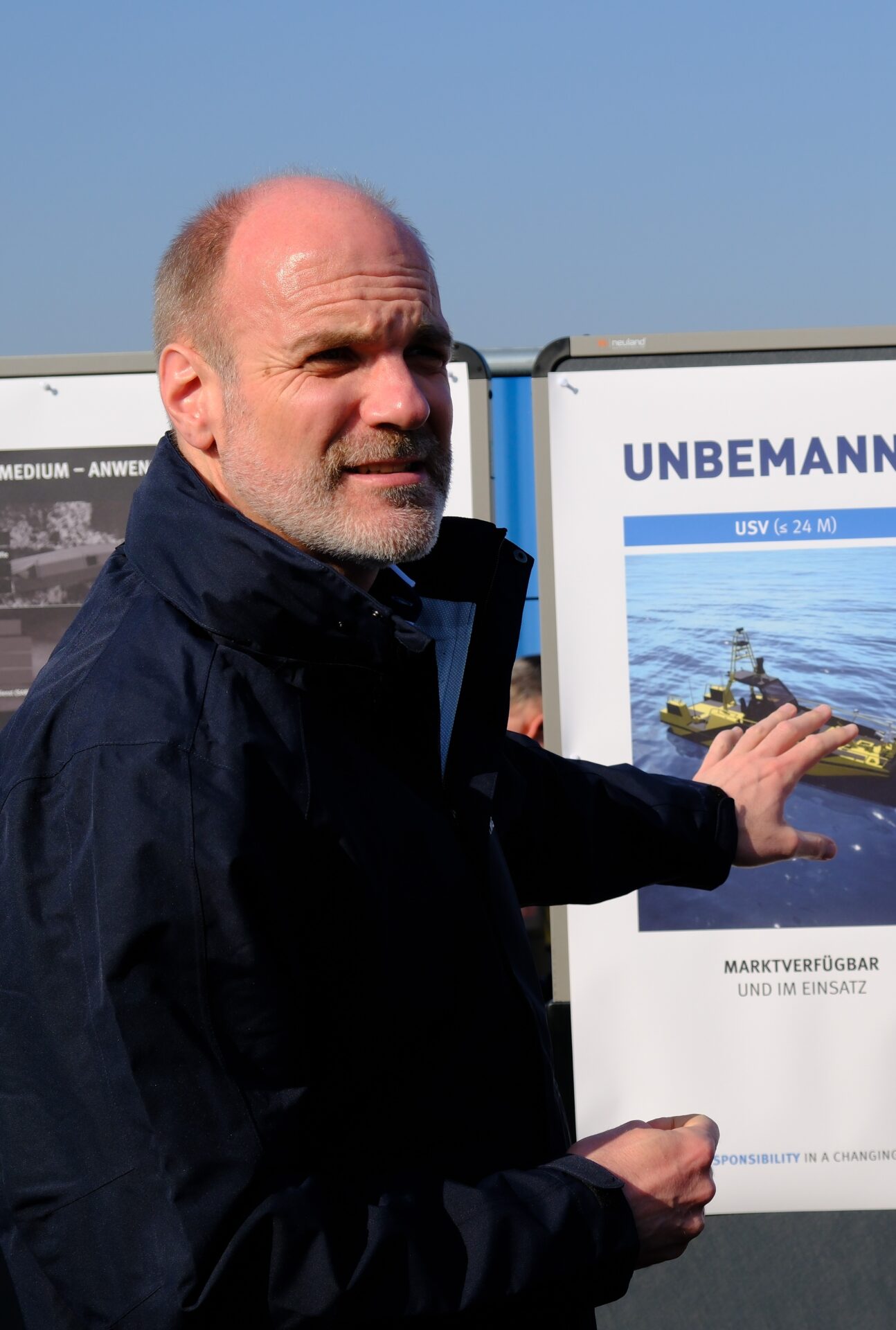
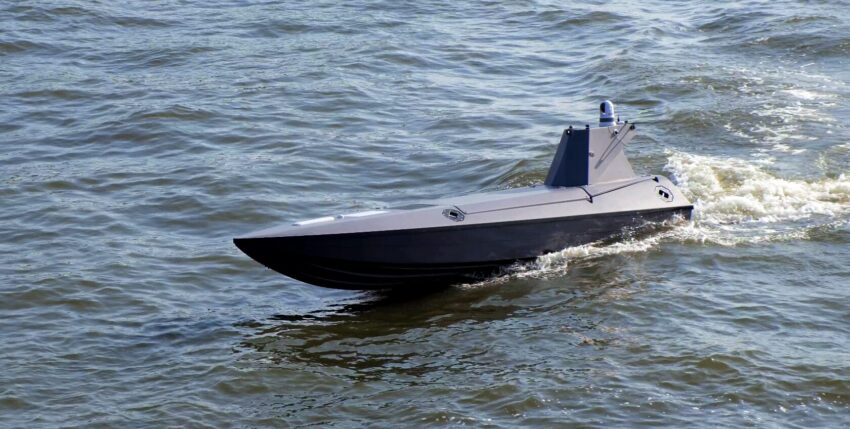
Together with the company Kraken, which has become known as a racing boat specialist, the Scout„ surface drones“ (USV Scout) and Mission Craft AMC 12 which could be groundbreaking for the future of maritime security. In the presence of the German government's maritime coordinator, Christoph Ploss, Tim Wagner, previously CEO of NVL, which will now be called the Naval Systems Division, presented the new technology.
A few days after the official completion of the takeover of Naval Vessels Lürssen (NVL) by Rheinmetall on 1 March 2026, the newly formed naval powerhouse has unveiled its technological ambitions in the field of autonomous surface systems. Series production of autonomous surface drones is planned. The armaments group Rheinmetall will realise large-scale production in Hamburg. Tim Wagner described the technology and the conceptual idea behind the surface drone: „It starts with 15 boats to get the whole topic going,» said Wagner. «We want to scale up to 200 boats per year.» In future, 1,000 boats a year could be produced in three shifts at the Blohm+Voss shipyard in Hamburg.
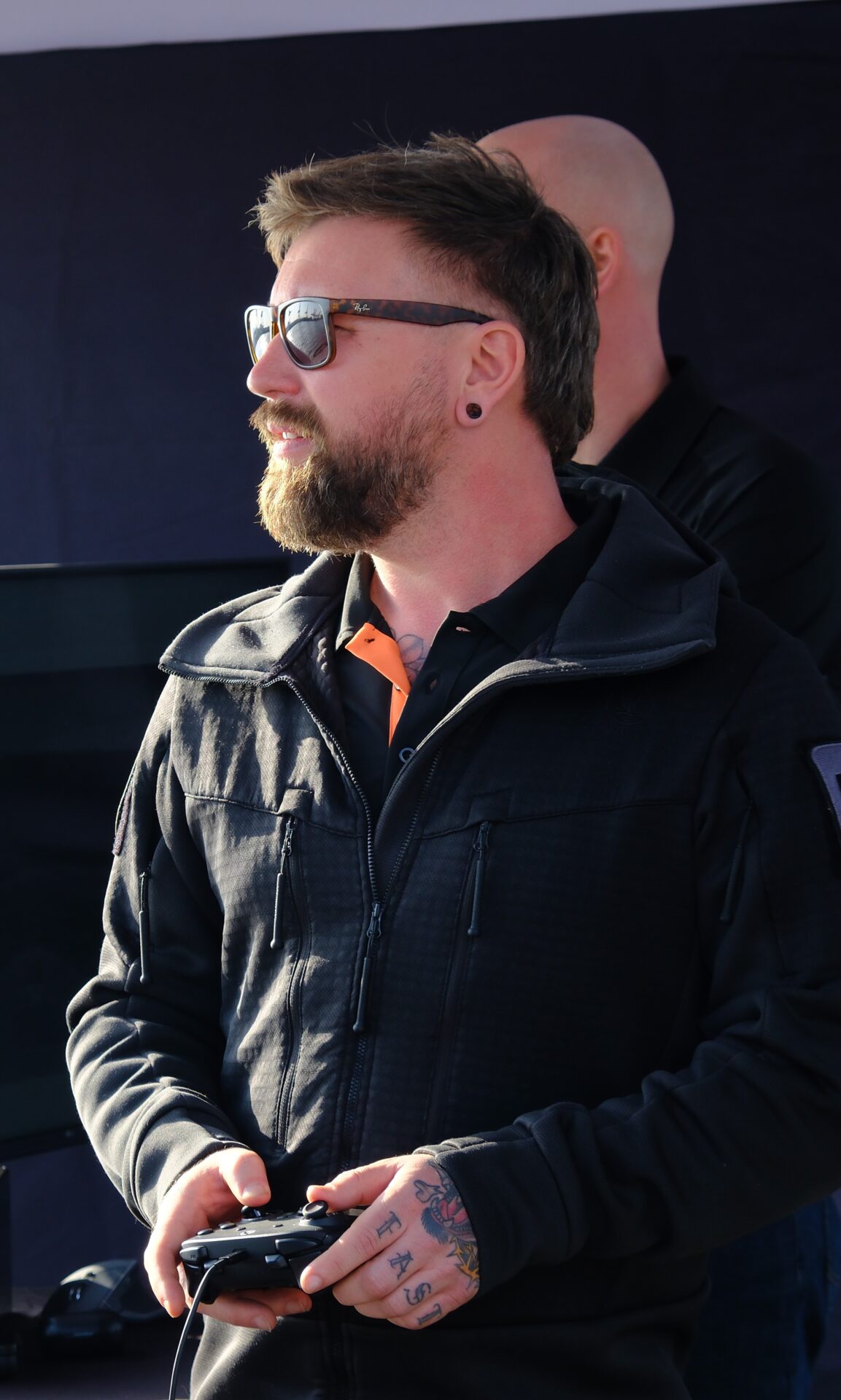
The drones would provide seamless surveillance of German coasts and neighbouring waters, right into the German Economic Zone in the North Sea. According to the developers, the technology presented by Tim Wagner covers the entire spectrum of maritime dimensions: whether on, under or above water, the sensors can be used. Even armament is possible and this was also indicated by the K 3"s typical warship paintwork in RAL 7000. And to all those who think that this object can be neutralised by "collecting" it: this much has been revealed, it won't work. The remote control is also not surprising: the Kraken specialist used a standard remote control from a games console. Firstly, this is clever - because you don't have to develop it from scratch; secondly, this is an attractive recruitment criterion for future operators of the Playstation generation (sorry: XBOX). The weight of the drones of around 2.5 tonnes and their size also allow for uncomplicated nautical handling. The test vehicle was operated by two

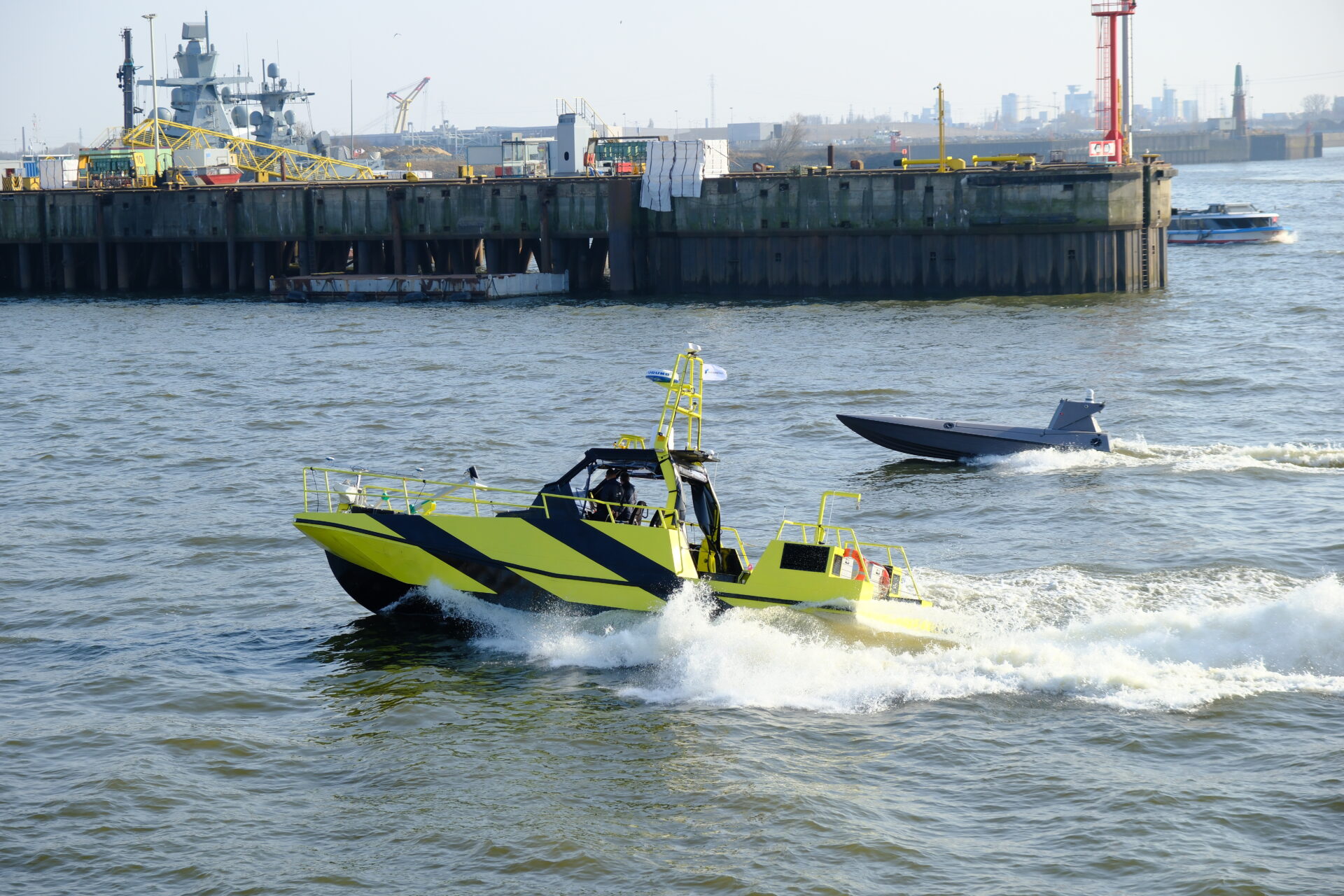
people controlled. The octopus was at the centre of the demonstration in the port of Hamburg K3 Scout Medium. The system is a prime example of the strategy of closing maritime gaps through mass, impact and speed. Designed as an ‚extended arm‘ of manned units, the system enables a „low-cost“ approach at a basic price of around 347,000 euros and thus the realisation of a concept of Attritability - the deployment of units whose loss in high-intensity combat remains tactically and financially calculable. It reaches speeds of over 50 knots and is primarily designed for rapid reconnaissance (ISR) and identification of threats to critical infrastructure.
The technological sovereignty of this generation of drones is the result of a closely interlinked cluster of expertise. In a synergetic ecosystem, the Naval Systems division pools market-leading expertise ranging from high-precision sensor technology to AI-supported decision-making, to which Anschütz and MacArtney contribute. The Bremen-based company 'besecke' bundles all technical ship systems and enables autonomous operation and health monitoring even in disturbed environments. The „K3 Scout“ boat, which is equipped with diesel jet propulsion, is not „autonomous“ - there is no such thing yet, said Tim Wagner - but is remote-controlled. The „vehicle“, which is used for both military and civilian purposes, is a joint venture with the British Manufacturer Kraken Technology Group. These surface vehicles are based on the high-speed technology experience of Kraken. But the K 3 Scout will not be in constant motion, but will mostly just keep watch. According to the developers, it can remain in a sea area for up to a year and wait quietly to see if there are any abnormalities. The engine can remain stopped, the battery can also be maintained by solar cells. This is no longer a vision; several orders for the boats have already been placed. Who? They didn't say. But 150 orders have already been placed - including in the marine sector.
Technical data K 3 Scout:
Length/width: 8.4 m / 1.93 m; Displacement: 2,500 kilograms; Drive: Inboard diesel engine; Speed: Up to 55 knots; Range: 650 nautical miles at 25 knots; Duration of use: 30 days; Payload: 600 kilograms; Material: glass fibre reinforced plastic (GRP); Modularity: Possibility of including interchangeable function modules (e.g. for reconnaissance, combat or electronic warfare). Leadership: Remote controlled.
Technical data AMC 12 (test vehicle), as far as known:
Length/width: 12 m / 3.5 m; Speed: up to 35 knots; Material: Aluminium; Drive: Water jet drive; Leadership: The demonstrator is still manned, but - and this is the core objective - it should be able to operate autonomously.
 English
  German
2 responses
Something went wrong with the boat data. Or are the boats identical?
Hello Mr Strasser,
and THANKS for your advice. The „AMC 12“ technical data has been updated.
Yours sincerely,
Your editors