









Large fleet construction: double strategy decided for frigate programme
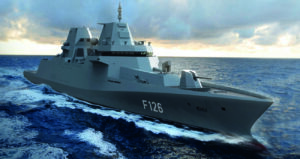
Yesterday - on 28 January 2026 - the Defence Committee met in Berlin. After a number of reports on the current situation, agenda item 7 (BMF submissions) also included agenda items relating to the German Navy's F126 frigate project. It was about nothing less than the decision to continue the stalled F126 frigate programme or to identify an alternative platform. A report from the "Federal Ministry of Defence on the procurement of frigates on the basis of alternative platforms."
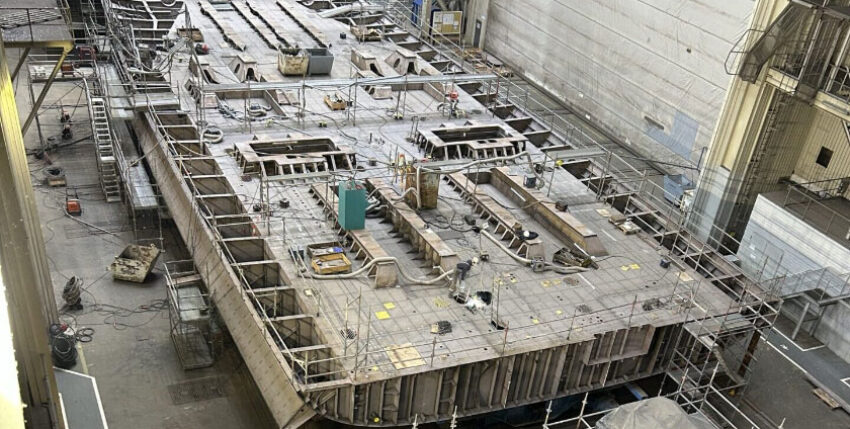
Prior to this, however NVL B.V. & Co. KG (NVL) attracted attention with a press release, because - according to the text - they are working on "taking over the F126 project as general contractor in a few weeks". The team has succeeded in "untying the Gordian knot and successfully transferring the design data of the Dutch shipbuilder DAMEN into its own system". This has "closed the interface between design and production". Tim Wagner, CEO of NVL, commented: "This was a real challenge and probably the most critical milestone for a potential takeover." It is learnt that the proximity in time to the parliamentary referral was purely coincidental and not - as one might assume - premeditated. The fact that work is already in full swing fits in with this.
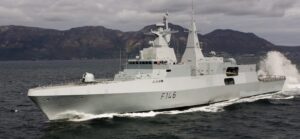
On the same day, the Budget Committee approved a preliminary contract with TKMS for the Procurement of probably four MEKO A-200 class frigates. 50 million was released to secure production slots in the shipyards and order material with long delivery times. The aim is to have the first ship delivered by the end of 2029. In addition, two freezes in the defence budget in connection with the F126 project were released. This sends out a political signal: the new technical start is feasible. Defence Minister Boris Pistorius is said to have agreed to this: "We are not giving up on the F126. But we want to run on two tracks."
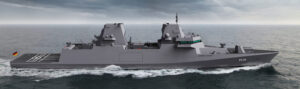
Although this is progress, the F126 programme is still almost two years behind schedule. The MEKO A-200 platform under discussion is a way out: it is considered available, industrially manageable and carries a lower development risk. At the same time, the investments in the F126 programme are "saved", as it would be politically and financially almost impossible to justify discontinuing it. According to our calculations, around 1.8 billion euros have already been invested, capabilities have been planned and industrial commitments have been made. The suppliers continue to fulfil their contractual obligations. Despite its fragility, the chosen course - a technical restart while simultaneously preparing an alternative solution - can be rationally justified. In terms of timing, the plan is ambitious; "well-informed circles" have rumoured that contracts are to be signed as early as spring. Who builds what is currently purely speculative, but the shipyard capacities in Germany will all be needed!
A coexistence of F126 and MEKO A-200 plus F127?
Three large surface combatant projects are accessing limited resources in parallel: Design, shipyard capacities, supply chains and acceptance processes - all on one timeline and resource base. The shipyard and personnel issue becomes challenging: Are there enough engineers, skilled workers and dock space for three programmes? The navy already has personnel problems today. Recruitment is becoming a limiting factor, regardless of the type of ship. One solution is being considered behind the scenes: a proportionate Phasing out of the corvettes class 130 would free up logistics and personnel capacities. The MEKO as a replacement for the first batch of 130, so to speak, is not all that naval shipbuilding will have to and want to do, as further units are possible in the derivation of requirements: three instead of two civilian-crewed fuel supply vessels, four instead of three fleet service boats are conceivable. And no decision has yet been made about the successors to the tenders and minesweepers.
We will report back.
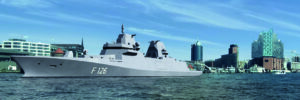
Text: Schlüter / Mergener / Stephenson

 English
  German
One Response
What does the coexistence of the MEKO A200 DEU and the F126 actually mean?
A brief consideration here:
Number of floating units
According to the Marine 2025 course, 6 F126s are planned, while 6 to 9 K130 corvettes are planned. The current inventory of K130s comprises 5 from the 1st batch and 5 from the 2nd batch, totalling 10 ships.
This means that the decommissioning of 1 to 4 K130s by 2035 is already planned. Due to the not inconsiderable adjustments in the construction of the second batch, the ships of the first batch, which are to be operated by the German Navy for longer than 2035, would have to be extensively modernised or replaced by new builds. As the aim now is to introduce the MEKO A200 DEU as quickly as possible, it can be assumed that 6 or 5 K130s will still be operating under the German flag in 2035, depending on whether a K130 newbuilding or conversion is added.
I also reckon with around 9 to 10 K130s and 1 (or ideally 2, if two ships are built in parallel) MEKO A200 DEU by 2029, as well as a double-digit number of larger FCSS naval drones, roughly based on the Skjold class, plus smaller uMZKB-sized (unmanned multi-purpose combat boats).
By 2035, there will be 5 K130s and 4 to 6 MEKO A200 DEUs, depending on production priorities. In this calculation, the larger FCSS seed drones are deployed in a ratio of 1 to 3 K130 AND MEKO A200 DEU, which corresponds to a total of 15 for the K130 and a further 12 to 18 for the MEKO A200 DEU. In addition, there are 6 F126 frigates and 6 to 9 F127 frigates, including their 3 to 4 LRMVs (Large Remote Missile Vessels).
Beyond 2035, production of the MEKO A200 DEU with FCSSs and F127 with their LRMVs will continue.
Personnel
Due to the shortage of personnel, I only expect a new crew for the first MEKO A200 DEU, while all other MEKO A200 DEU will get their crews from the K130. The K130s will be decommissioned when the new ships enter service. This means that the crews in question will continue to be reinforced until the new ship is taken over in order to be able to handle the necessary training for the new systems in parallel with ship operations and thus maintain the operational readiness of the navy. This involves roughly doubling the crew size from approx. 60 to approx. 120 posts, which is why the K130's embarkation capacities are needed during the transition period itself. The MEKO A200 DEU will join the German fleet when they enter service in their own frigate squadron in Operational Flotilla 1 and will have an increased focus on the Baltic Sea and the marginal seas.
Displacement (steel in water until 2029)
K130 have a displacement of approx. 1,840 tonnes, MEKO A200 EN has (here as an example) a displacement of approx. 3,700 tonnes, the one adapted for Australia approx. 3,940 tonnes and for the F126 it is approx. 10,550 tonnes. According to reports on the expanded capacity to 96 VLS cells, the F127 is likely to be around 12,000 tonnes. If the larger FCSS (Future Combat Surface System) naval drones for the K130 were to be procured on the basis of the Skjold class, for example, they would have a displacement of around 275 tonnes, whereas the lightweight uMZKB would probably only be 15-20 tonnes, such as the CB90 NG.
By 2029, the 9 to 10 K130s together will have a displacement of approx. 16,460 to 18,400 tonnes, and the 1 to 2 MEKO A200 DEU will have a displacement of approx. 4,000 to 8,500 tonnes. As no K130s would be taken out of service during the commissioning of the first MEKO A200 DEU, this represents a plus of 4000 tonnes for the fleet. From the entry into service of the second MEKO A200 DEU, this is the difference between the two ships, resulting in a plus of 2250 tonnes for the fleet each time.
If the larger FCSS seed drones based on the Skjold class were to be produced in series, each unit would represent an increase of approx. 275 tonnes or approx. 825 tonnes per equipped K130 or MEKO A200 DEU. With, for example, 15 units by 2029 for 5 floating units, that would be an increase of 4,125 tonnes for the fleet.
Skjold class
The Skjold class are light corvettes from Norway. Their GRP hulls are designed for Surface Effect Ship (SES) operation, enabling a maximum speed of 60 kn (111 km/h). This would provide the commander with a very agile and flexible means of fulfilling his mission without losing personnel. As the hulls are made of GRP, they can be manufactured in parallel at many shipyards specialising in GRP, for example for yachts, which have a corresponding 50 m long and large dock. The final outfitting with the more "sensitive" equipment can then be carried out in the classic way at the outfitting quays of the naval shipyards or naval arsenals. The hulls are of course made of salt water-resistant epoxy resin and glass fibres, which clearly require less maintenance (osmosis) than the cheaper yacht hulls made of polyester resin.
The possibility of largely decoupling the classic shipyard capacities for naval tasks means that the production of such sea drones made of GRP could run alongside without impairing the production capacities of the steel frigates.
VLS versions and arrangements on the MEKO A200 DEU
The MEKO A200 EN has the "Sylver" VLS system developed by DCNS for its VL MICA NG, while the Australian version relies on the classic MK41 system with "Tactical" 16 cells. The footprint for the 8-cell VLS module is 2.6 × 2.3 m for the Sylver system and 2.62 × 3.43 m for the MK 41 8-cell VLS module. With a 2 × 2 arrangement for around MEKO A200EN, the Sylver system has a calculated area requirement of 5.2 x 4.6 m with a total of 32 cells, while a 2 × 1 arrangement of the MK 41 VLS system has a calculated footprint of 5.24 x 3.43 m with a total of 16 cells. For a 2 × 2 arrangement of the MK 41 VLS system with 8-cell VLS modules to fit, it would require a calculated area of 5.24 × 6.86 m, which is 2.26 m more than the Sylver with its smaller cells requires for 32 cells. An exotic MK 41 configuration would be a 2 × 1 arrangement with an additional 90 degree rotated VLS module with 8 cells. This arrangement with 24 cells would have a theoretical calculated footprint of 5.24 × 6.05 m, which would save just 0.81 m.
If you were to opt for a MEKO A200 DEU with 32 MK 41 cells instead of the classic configuration with 16 MK 41 cells, these 2.26 × 5.24 metres of additional space would have to come from somewhere. That's around 12 square metres more space required than in the standard configuration, so you have to be prepared to compromise and accept compromises elsewhere. If the engineering department is good and has already worked on this particular point, the firing start could take place without additional delay, but it is possible that the ship will be 2.5 metres longer and therefore heavier and more expensive. If a better "Deep Precision Strike" capability were required, for example by means of a Tomahawk, the "Strike" variants, which are around metres longer, would have to be installed instead of the standard MK 41 cells in "Tactical" lengths so that they can hold Tomahawk Block Vb and similar weapons. Here you would also have to be prepared to compromise in order to accept the deck superstructure, which is around one metre higher, as there is no room for this extra metre under the MK 41 VLS.
The MEKO A200 is a multi-purpose frigate which, in addition to anti-submarine warfare (ASW), is also capable of air defence (AAW) and naval warfare against enemy ships (ASuW). The MEKO A200 DEU will probably also provide these capabilities, and with a strike-length MK 41 it would also be capable of performing deep precision strike in combination (for target reconnaissance). The frigate's capabilities can be further enhanced with the appropriate drones, such as the larger FCSS for ASuW or USVs with towed sonars for ASW. The FüWES command and weapon deployment system used must therefore support the integration of drones and their means of action by default. If possible, the standard FüWES CMS 330 should be used here, not least so that the navy has the opportunity to build up know-how and expertise for the F127.
Conclusion on speed
However, all of the above points are only acceptable if they do not unnecessarily hinder/delay the construction of the MEKO A200 DEU. For every extra request, the importance must be weighed against the loss of time and may have to be rejected. Even if >>gold-edge solutions such as DMS 1030-1<< are unlikely to come into play here, other administrative requirements must not delay construction unnecessarily.
This is about speed, which is why I would suggest paying the shipyards bonuses if they deliver the MEKO A200 DEU, or I'll call it the F128, faster than agreed. Shipyard workers are much more motivated to work overtime if they are remunerated accordingly, the deployment of personnel from external companies also costs money and much more to speed up the construction of the F128.