





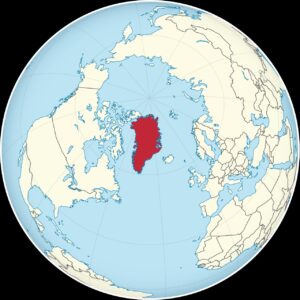
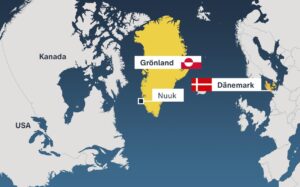
Greenland is the largest island in the world. For a long time, Greenland was only of marginal geopolitical and economic importance. Its unique geographical location between the Arctic and Atlantic Oceans, the influence of climate change, rich natural resources and the current US president have put Greenland at the centre of strategic importance.
In 2019, during his first term in office, the US President caused a worldwide stir when reports about his interest in buying Greenland became public. This news triggered numerous discussions about the motives, feasibility and geopolitical implications of such a project.
Greenland's history
The story Greenland is characterised by the settlement of the Inuit over 4,000 years ago, the arrival of the Vikings in the 10th century and the colonisation by Danes and Norwegians that began around the 14th century. Greenland has been administered from Copenhagen since 1814. When Denmark was occupied by the Germans during World War II, the USA took over control and security of Greenland and established numerous military bases on the island. After the Second World War, control of Greenland reverted to Denmark and the USA reduced its troop presence. With the Danish constitutional reform of 1953, Greenland was officially decolonised and integrated into the Kingdom of Denmark as a province with equal rights. Greenland gained extensive autonomy in 1979. Self-government was further expanded in 2009. The population is predominantly Inuit, whose traditions and way of life are closely linked to the Arctic environment. In the last decade, Greenland has increasingly become the focus of international attention. Climate change is increasingly opening up the Arctic waters to shipping, giving rise to hopes of economically exploiting the mineral resources that were previously hidden under a kilometre-thick layer of ice.
Greenland's geopolitical importance and US interests
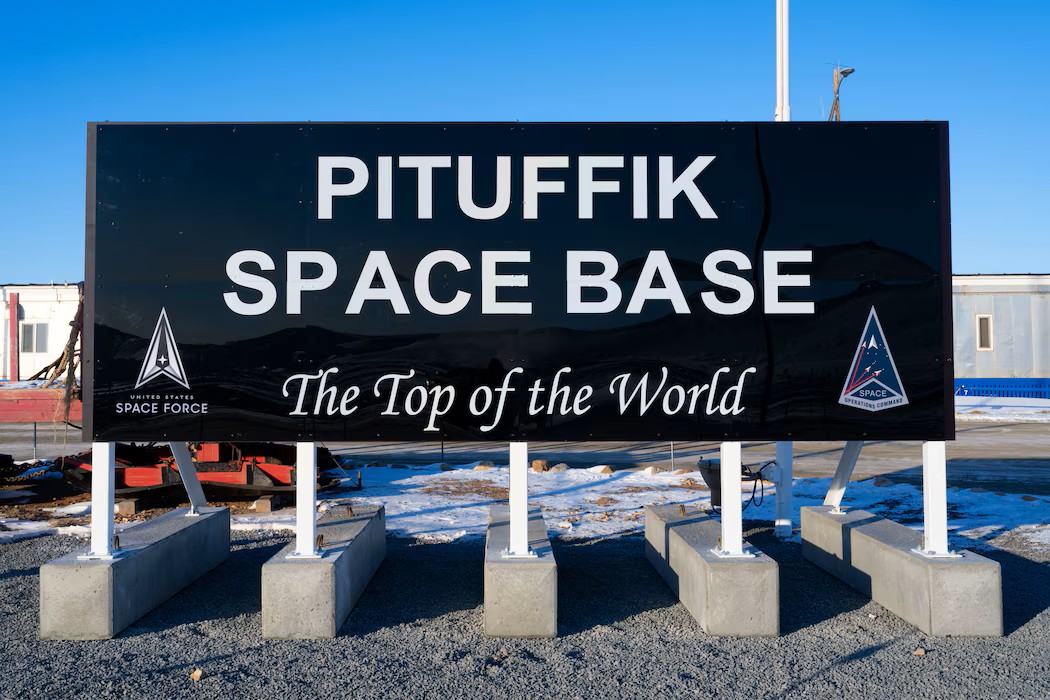
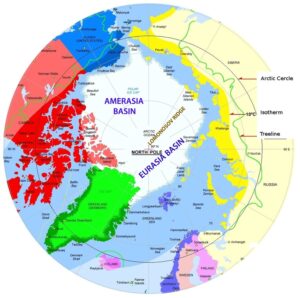
The USA retained the airbase in Thule (PITUFFIK SPACE BASE since 2023), which was opened in 1951 during the Cold War and is still strategically important today, with the strategic early warning radar in the north-west Greenland. Only around 175 Americans are still stationed there. Leaving aside the US President's narcissistic motives and desire for recognition, the USA still has concrete strategic interests that are closely linked to Greenland are connected. Greenland is the closest eastern neighbour to the USA. Due to its location between North America and Europe, Greenland plays a key role in security and defence issues. Whoever owns Greenland controls the opposite coast of Murmansk, Russia's most important nuclear base. Whoever owns Greenland is also in a position to control the eastern outlet of the Arctic Ocean. The Greenland-Iceland-UK Gap (GIUK) is the maritime gap through which all Russian nuclear-powered submarines must pass in order to reach open waters. Incidentally, all of these strategic interests of the USA are currently being comprehensively served, as the USA, Denmark, Norway and Canada have corresponding treaties and decades of proven Arctic cooperation.
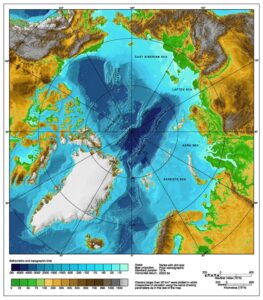
The US administration states that by acquiring Greenland to prevent powers such as China or Russia from expanding their influence in the Arctic. In fact, although Beijing's rhetoric includes a "polar Silk Road", there are no signs of any intention to utilise the Arctic region for military purposes in the long term. Russia itself already owns the largest share of the Arctic Ocean and, like the Soviet Union, has so far shown no interest in Greenland shown. Russia is much more interested in the Norwegian archipelago of Spitsbergen (Svalbard). In any case, securing its own Arctic territories is already enough of a challenge in the current situation.
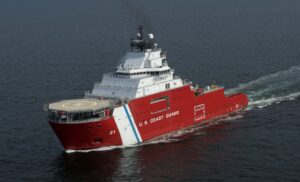
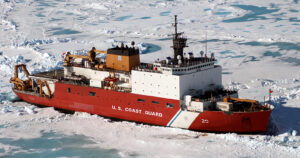
In principle, however, one could argue that there is a potential threat to Arctic territories from Russia and China. However, if such a threat actually existed, the USA would have little to counter it, even in Alaska: The US Coast Guard has just two icebreakers ("USCGC Healy", 17,000 tonnes, and "USCGC Storis" 13,000 tonnes), the US Navy has no ice-capable platforms - although, it is being upgraded. In the Bering Strait, which is barely 70 kilometres wide, Russia and the USA are only separated by a two-kilometre-wide area of ice between the two Diomedes Islands - nothing happens there, as the area is largely uninhabited.
So on the US side, it's all about economic interests, deals for oil, gas and other raw materials on Greenlandic soil. Their extraction is becoming increasingly technically feasible and economically interesting. And China, at least, has sufficient financial resources to be able to buy into the industrial extraction of raw materials - something that should be prevented. But that, in turn, is the sovereign task of Denmark and the Greenlanders themselves - perhaps also from a security policy perspective in a European context.
Greenland's future
But as it looks now Greenland future will continue to be determined by the Greenlanders. According to the Self-Government Act of June 2009, the decision on Greenland's independence lies with the population. And in January 2025, the population already rejected joining the USA as its 51st state by a majority of 85%. In Davos, the Europeans showed a unity and determination in their resistance that has obviously impressed Trump and - for the time being at least - deterred him from any plans to annex the island.
What nobody would have thought possible: the previously rather insignificant Greenland became a test case for the cohesion of NATO. What remains is a transatlantic shambles that must now be swept up, especially in the European capitals. There can be no more business as usual. Europe must put its entire security architecture - not just the Arctic - on a new, independent footing. The resources are there, but what is needed now is political unity and a self-confident will to shape the future. The EU has even had the right motto for this since 2000: In varietate concordia. United in diversity.
Cooperation as a strategic duty
As a result of decades of neglecting the northern flank, the USA's security interests in the Arctic region are clearly dependent on successful cooperation with its western neighbours. In view of growing strategic competition in the Arctic, coordinated alliance planning is imperative. It is the task of politics, diplomacy and the armed forces of the alliance to deepen and expand this in order to systematically strengthen interoperability and the joint ability to act in the Arctic North.
The question remains: does America want to hear this?

 English
  German