






The German Navy on the move
It's serious! The Russian war may be being waged in Ukraine - bad enough - but the foothills of this storm are sweeping across Europe: propagandistically in the media, subversively in the networks, activistically with drones over barracks and critical infrastructure, invisibly in cyberspace, felt in the Mediterranean and sensed in the Baltic Sea. Russia is not only waging war in Ukraine - Russia is waging war at all levels and wherever there are weak points.
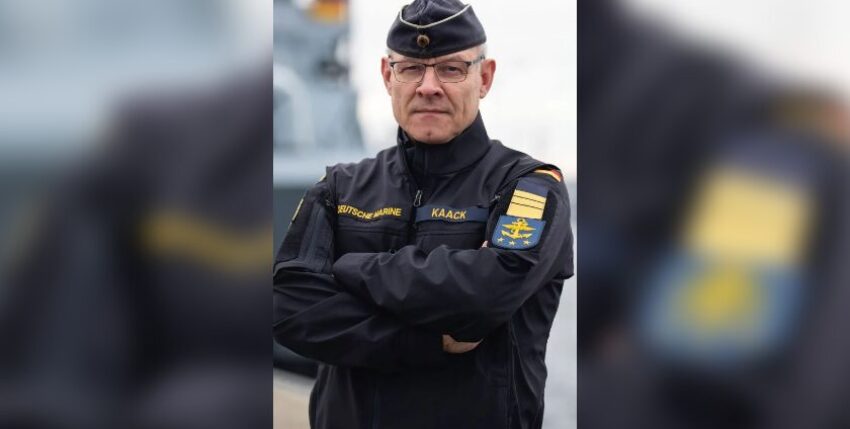
Anyone who listened carefully to the words of the Chief of Naval Operations at the Navy's Historical Tactical Conference could sense concern - and determination at the same time. Vice Admiral Jan Christian Kaack is not the first naval inspector to be confronted with threats from the east. A Vice Admiral Zenker, the second inspector after the founding of the German Navy, had the Cuban Missile Crisis on his desk in 1962. It lasted 13 days. Vice-Admiral Hans-Joachim Mann was sitting tensely in the situation room in 1989 when the Wall fell - without violence. That was one night. He also had to send naval units to the Gulf War. That lasted a few months.
But Jan Christian Kaack is the first inspector of the German Navy to bear responsibility during a war in Europe. A war that the aggressor Russia is brazenly taking to the Baltic Sea. Kaack has now been Inspector of the Navy for four years - and the war in Ukraine will soon be entering its fifth year. Kaack is fighting a battle - and he never tires. He remains level-headed and yet determined, because fortunately no shots have yet been fired in the Baltic Sea. Only anchors - and that is under control.
The Russian provocations in Baltic airspace are something else. If NATO's navies and air forces weren't so well trained and strong-willed, there might already have been fatalities. There have already been a few close calls - and the Russian air force would have missed an aircraft during the in-flight. What you hardly see and hear about: NATO is successful in containing Russian aggression in the Baltic Sea.
Kaack has the minister's ear, but not all the hearts of the navy - and "um zu". Not everyone has yet fully understood what is meant, he says. And anyone who has not yet listened properly in town and country can read his intention here. Four key points:
Shape the growth!
Focussing our navy on its core mission!
Invest in innovative skills!
Put the fleet to sea!
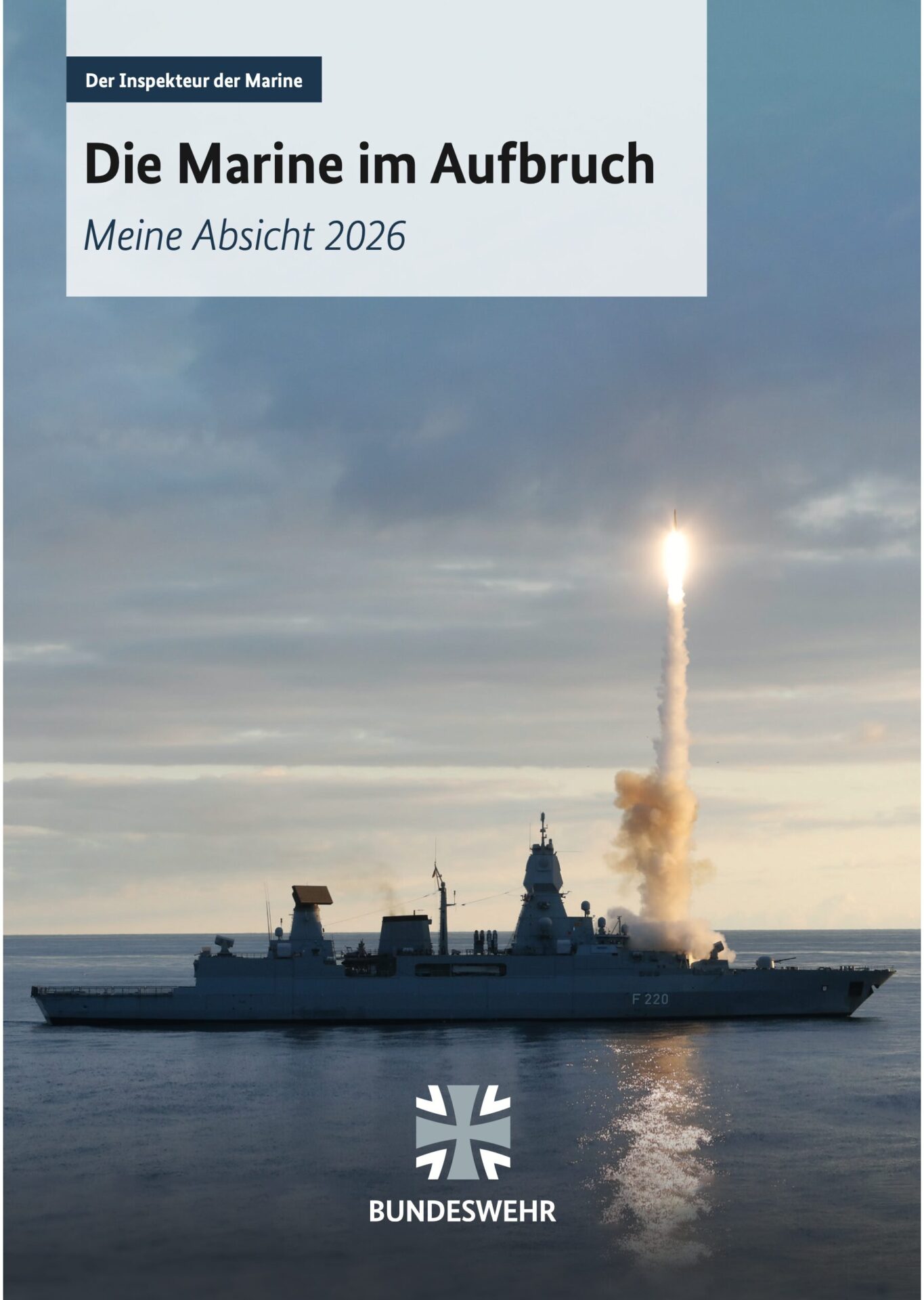
Find out more here: The navy on the move
Text: Schlüter/Stephenson

 English
  German
3 responses
It's all taking far too long... multi-purpose combat boats, K130 corvettes, drones, ... I don't even want to talk about frigates. Even if Poseidon and Sea Tiger are being introduced [very very] slowly... I still have the impression that no rapid procurement is wanted at all.
Dear Mr Markus Fi?
Thank you for your critical comment, but I would like to partially disagree with it due to your introductory first half-sentence, which unfortunately contains the generalising word "everything". The example you cite is not applicable to the P-8A Poseidon in this form.
An exceptionally fast pace was demonstrably set here in particular. It took less than five years from the signing of the contract in June 2021 to the commissioning of the first machine in November 2025, which corresponds to a real procurement turbo. This project in particular shows that rapid procurement is both possible and desirable if the framework conditions are right.
This is because your criticism ignores key structural factors. Defence procurement follows formalised, legally binding procedures that are intended to ensure transparency, competition, budgetary clarity and legal certainty. These processes are not an end in themselves, but are politically and legally prescribed.
For shipyard procurements in particular, it is not enough to simply "order" a product. Mature design and detailed plans, available shipyard and supplier capacities, qualified personnel and long-term industrial planning are also required.
These factors cannot be accelerated at will without massively increasing risks in terms of costs, quality or deadlines. For example, the lack of design plans for the production of frigate 126 can be attributed to the industry and cannot be blamed on either politics or the Bundeswehr.
Individual projects take too long - this can and should be discussed. However, generalisations should be avoided.
Yours sincerely
Klaus Klages
Editorial office mfo
As someone who often comments here, I have no choice but to praise this absolutely clear and well-considered publication! It is rare that so much is stated so clearly as in this document: The navy on the move.
I have therefore selected what I think are the three best quotes from the wealth of passages worth quoting:
"Many obstacles and hurdles are of our own making, and alongside all those who are working tirelessly to grow our navy, there are still too many who are waiting and getting lost in processes."
-Inspector of the Navy, Vice Admiral Jan Christian Kaack
"Despite all the justified criticism of the defence industry, bureaucratic procedures and superiors who have not yet recognised the signs of the times - we ourselves must seize the opportunities and really examine everything for its potential benefit for our navy."
-Inspector of the Navy, Vice Admiral Jan Christian Kaack
"The battle of the future requires the ability to deploy next-generation unmanned systems. We are now building up the German Navy's drone fleet. I expect the rapid adoption, integration and utilisation of the new systems, which will arrive in increasing numbers in 2026. Under, on and above water."
-Inspector of the Navy, Vice Admiral Jan Christian Kaack