

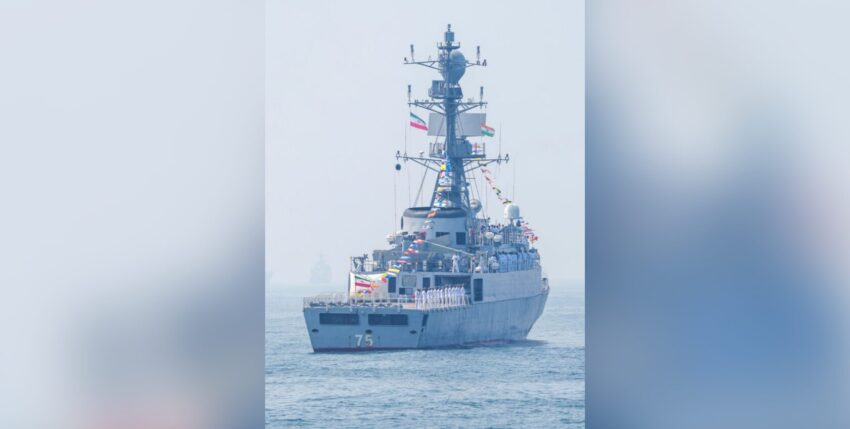



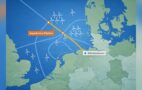

Iran probably still has enough missiles and drones to continue the intensity of the attacks for several days at least. The regular Iranian navy has been virtually destroyed. But the Revolutionary Guards with their naval small arms units still appear to be present throughout the region. according to the German Navy's shipping management a transition to asymmetric warfare ("all in") by Iran.
On the sixth day of the military operations „Epic Fury“ (USA) and „Rising Lion“ (Israel), the end of Iran's naval forces can be declared. At the very least, it no longer exists as a coherent organisation. While the first phase of the conflict was characterised by the elimination of land-based air defence and command and control centres (C2), today could mark the transition to the „area denial neutralisation“ phase. Iran is largely neutralised as a conventional maritime actor.
Chronology
Day 1-5: The collapse of Iran's naval capabilities took place in three precisely coordinated phases:
Day 1-2 (SEAD & C2): Massive strikes against radar systems and communication nodes. A surgical air strike on the headquarters in Bandar Abbas led to the death of Rear Admiral Shahram Irani, the commander-in-chief of the regular navy (Artesh). This created an operational vacuum from which the naval command has not recovered.
Day 3-4 (IRGC neutralisation): Targeted attacks on the Revolutionary Guards' speedboat bases. An estimated 70 %s of small combat vehicles (Zolfaqar and Tondar class) have already been destroyed by loitering ammunition in their hiding places.
Day 5: Systematic sinking of the remaining surface units in the harbours of Chah Bahar and Bushehr.
Analysis of the main losses (as at 05/03/2026)
The current Battle Damage Assessment (BDA) shows the loss of Iran's technological and strategic leadership.
- IRIS „Dena“ (Moudge-class frigate): In a historically significant operation, the Dena was sunk approximately 40 nautical miles south of Galle, Sri Lanka, by a US Virginia-class nuclear submarine using a Mark 48 ADCAP torpedo. The frigate was on its way back from exercise MILAN 2026 and was neutralised as an „out-of-area“ threat. See section III.
- IRGC „Shahid Mahdavi“ (auxiliary ship for asymmetric naval warfare): The converted container ship sank in the Gulf of Oman after massive hits by LRASM sea-target missiles. This means that Iran has lost its only mobile base for drone launches and containerised ballistic missiles far from its own coast.
- While the corvette „Jamaran“ was already sunk in Chah Bahar on 3 March, the heavily damaged frigate „Sahand“ capsized yesterday, 4 March, at its berth in Bandar Abbas.
- Submarine weapon: The three Kilo-class units (Project 877) are considered „blocked“. Due to air strikes on the bunker access points in Bandar Abbas, these units are currently unable to manoeuvre and are effectively out of action in the conflict.
The sinking of the „IRS Dena“ and Hegseth's error
The sinking of the frigate IRIS „Dena“ on 4 March 2026 attracted particular attention when the ship was destroyed by a Mark 48 ADCAP torpedo from a US Virginia-class submarine around 40 nautical miles south of Galle (Sri Lanka). According to US Secretary of Defence Pete Hegseth, this was the „first torpedo engagement against an enemy warship since the end of the Second World War“. That is not correct: In the Falklands War in 1982, the Argentinian cruiser ARA „General Belgrano“ was sunk by the British submarine HMS „Conqueror“, and the Indian INS Khukri also sank the Pakistani Hangor in 1971 with a torpedo. However, this was the first torpedo operation by a US submarine against an enemy surface force since 1945.
Securing the sea routes
The resulting power vacuum is currently being stabilised by a massive international naval concentration. The focus is on securing the Sea Lines of Communication (SLOC) against remaining asymmetric pinpricks and the considerable mine threat.
- UK (Royal Navy)Deployment of HMS Prince of Wales (R09) Carrier Strike Group with focus on specialised mine countermeasures (MCM).
- France (Marine Nationale): As announced by President Macron, the carrier group around the Charles de Gaulle (R91) (recently still in western Sweden) is moving to the eastern Mediterranean. France is thus positioning itself as a protective power on Europe's southern flank and sending a signal that it is recognising and actively pursuing its historically deep-rooted interests. The presence serves to reassure allied states and to protect against a horizontal escalation of the conflict.
- Regional partners: Greece is deploying a Hydra-class frigate (EU mission ASPIDES), while Turkey is showing its presence by deploying the TCG Anadolu and escort vessels to safeguard regional interests.
The end of Iran's blue water ambitions
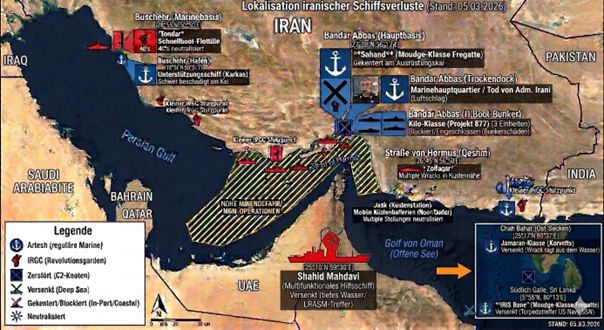
The collapse is not only due to the losses. Without integrated air defence and modern command and weapon deployment systems, the remaining Iranian units will remain largely defenceless. As their destruction progresses, Iran's naval forces will be reduced to the status of a mere coastal defence force.
The Strait of Hormuz is developing into a highly complex theatre of hybrid security. The challenge now lies in countering asymmetric attacks and mines. In addition, the challenge for the emerging Western maritime coalition is to switch from massive destruction to security in order to reassure the oil markets. All ships and crews with German (DEU) connections are in direct danger.
Iranian ship losses
Geolocalisation of Iranian ship losses (as of 05.03.2026)
| Location | Coordination (approx.) / region | Unit(s) concerned | Status | Affiliation |
| Bushehr (naval base) | 28°59'N 50°50'E | Speedboat flotilla (Tondar class) | Approx. 40% destroyed (harbour basin) | IRGC |
| Bushehr (harbour) | 28°58'N 50°51'E | Support ship (Karkas class) | Heavily damaged on the quay | Artesh (Marine) |
| Bandar Abbas (main base) | 27°08'N 56°12'E | Sahand (Moudge class frigate) | Capsized at the outfitting quay | Artesh (Marine) |
| Bandar Abbas (dry dock) | 27°09'N 56°15'E | Unnamed Moudge-class frigate | Destroyed in the dock (air strike) | Artesh (Marine) |
| Bandar Abbas (submarine bunker) | 27°08'N 56°12'E | Kilo class (project 877) (3 units) | Blocked/locked (bunker damage) | Artesh (Marine) |
| Strait of Hormuz (Qeshm) | 26°45'N 55°50'E | Various patrol boats (Zolfaqar) | Multiple wrecks near the coast | IRGC |
| Gulf of Oman (open sea) | 25°10'N 59°30'E | Shahid Mahdavi (Expedition ship) | Sunk (deep water) | IRGC |
| Chah Bahar (East Basin) | 25°17'N 60°37'E | Jamaran class (corvette) | Sunk (wreck protruding from the water) | Artesh (Marine) |
| Indian Ocean | 5°55' N, 80°13' E | IRIS Dena (Moudge class frigate) | Sunk (torpedo hit, Los Angeles class) | Artesh (Marine) |
| Jask (coastal station) | 25°38'N 57°46'E | Mobile coastal batteries (Noor/Qader) | Some positions neutralised | IRGC / Artesh |
Text: Hans - Uwe Mergener / edited
With thanks to our colleagues at European Safety and Technology www.esut.de

 English
  German
5 responses
Thank you for this overview. Some of the reports in the media are incomplete, incorrect or do not appear at all. Sometimes they are only touched on and not followed up.
Hello Mr Mergener, please do not use outdated information that I published three days ago. A lot has happened since then.
And we are called Naval Shipping Management.
Greetings
Ltr. MSchLtg HH
Hello, Mr Lange.
I'm sorry about the naval shipping line. It got lost in the pile I had to deal with.
Really overlooked .... And obviously didn't notice it in the editorial process. Which I don't want to talk my way out of!
On topicality. Yes, I have to pass. I was not aware of your publication. So I did some research and collated it. And then formulated it.
In my more recent post (published on hansa online), I put a ‚disclaimer‘ up front:
This analysis is based on a triangulation of official military situation reports (CENTCOM), international maritime warnings (UKMTO, JMIC) and verified government information. This picture is supplemented by well-founded OSINT analyses and recognised maritime specialist media. This methodical approach ensures a fact-based picture of the situation that consistently excludes speculative elements and actively counteracts targeted disinformation (fake news) by cross-checking independent sources.
And that was the situation for me when I was surprised by the task on 4 March. My wife wasn't exactly happy when I left the shared home to get a picture. There was no help to be expected from the house. And I didn't know about your publication.
When I was made aware of this on Thursday, by which time my draft had already been sent to the editors, it was too late.
Perhaps a common ground could be established. But such pipe dreams have often been shattered in the past. However, this does not refer to you or your department!!!! Explicitly! Please don't make out any consternation - I mean other navies and other services.
Do you have time on Monday morning (9 March)? I'll be at B&V for an NVL event from around 2.00 pm. Available before then.
Otherwise you can also call us on 0173 848 1287.
Mast and sheet breakage
H. Uwe Mergener
Pensioner
Hello Mr Mergener, please do not use the information I published three days ago. A lot has happened since then.
And we are called Naval Shipping Management.
Greetings
Ltr. MSchLtg HH
see my reply to your comment of the same name