






The naval aviators are on the rise: admittedly, it reads like a stereotype. But that's the truth.
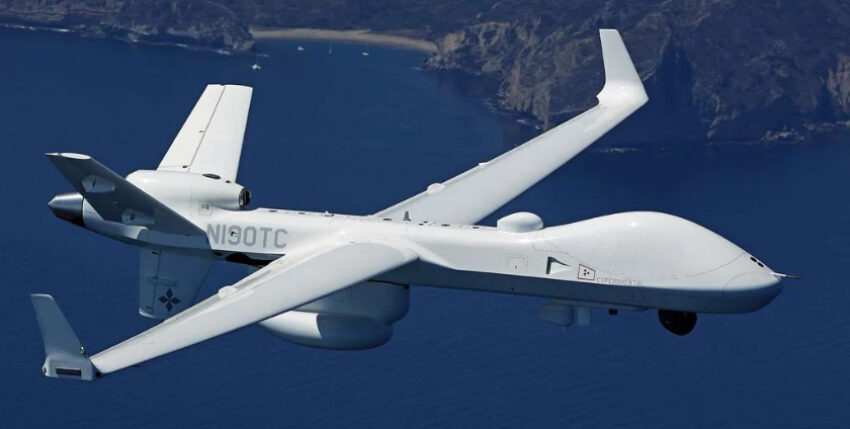
Following the arrival of the first two Boeing P-8A "Poseidon" and the landing of the very first NH90 "Sea Tiger" in December, the naval aviators in Nordholz are continuing to "swap" the entire "flying fleet". Following the decision by the Budget Committee in December, the next milestone was reached on 12 January: the signing of the contract between the NSPA (NATO Support and Procurement Agency) and General Atomics Aeronautical Systems for the procurement of eight MQ-9B "SeaGuardian" drones marks the start of the unmanned capability for naval warfare from the air. The costs for the project of around 1.5 billion euros include systemic support and training for the early years.
Combined reconnaissance and submarine hunting
In future, the German naval forces will use the P-8A "Poseidon", which is currently being delivered, to protect international sea routes as well as underwater pipelines, harbours and offshore facilities. In future, drones will supplement the capabilities of a classic MPA (Maritime Patrol Aircraft). The interaction of manned and unmanned systems will allow large-scale operational areas such as the North Atlantic or the Baltic Sea to be monitored almost seamlessly. But it won't stop there: the Poseidon is a powerful weapon system for detecting and combating submarines and is being expanded with a new capability in the form of the MQ-9B.
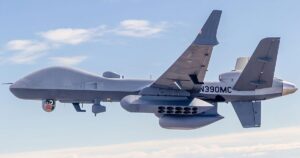
While the P-8A can cover large distances quickly with a cruising speed of more than 900 kilometres per hour and has a high capacity for sensors and weapons, the strength of the MQ-9B lies in its exceptional endurance. Thanks to its comparatively low weight of 2230 kg and its aerodynamically favourable design with a wingspan of over 20 metres and a length of only around ten metres, the drone has very good gliding characteristics. Under ideal conditions, it can theoretically remain in the air for up to 30 hours, taking into account the weather conditions, flight profile and payload.
Sensors, armament and networked operations management
The MQ-9B can carry more than 2,000 kilograms of "payload", i.e. weapons, into the theatre of operations. Various sensors are planned for maritime use, including powerful cameras and radar systems for monitoring the sea surface, as well as active weaponry such as missiles or bombs. A drop container for sonar buoys will be integrated for submarine hunting. This will turn the drone into a powerful sensor carrier for combating underwater targets and maritime reconnaissance.
The data collected by the sensors is transmitted in real time to ground control stations from which the "drone pilots" of the naval aviators control the drones. At the same time, other German Navy aircraft and ships will also be able to access this information. Sharing data and information with friendly navies is planned. Due to the fundamentally standardised design of the aircraft - national special requests were not implemented for reasons of time and money, among other things - this cooperation is almost a matter of course. This represents a significant operational leap into the future, particularly in the area of submarine hunting.
Inflow, infrastructure and familiarisation
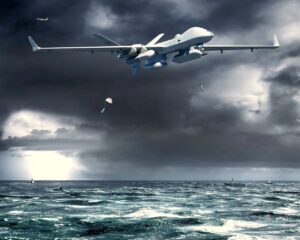
In future, the eight MQ-9B drones and the associated ground control stations will be used at the Naval Air Wing 3 "Graf Zeppelin" stationed at the Nordholz site. The first systems are due to be delivered to the German Navy from 2028. However, extensive preparations are required before flight operations can begin, in particular the training of drone pilots, sensor operators and technical personnel as well as the development of the associated infrastructure. "Unmanned" does not mean "without personnel"; the specialists for maintenance and flight must be recruited and trained. Maintenance requires hangars and, above all, space. At a conference in Rostock at the beginning of January 2026, Vice Admiral Jan Christian Kaack, Inspector of the Navy, announced that the search for an additional airfield for the Naval Aviation Command had come to fruition: negotiations were underway for the Schwerin-Parchim Airport in Mecklenburg-Vorpommern.
Smarter from experience
The Bundeswehr can benefit from the fact that the UK and Belgium are already using the MQ-9B. Also Denmark will have four MQ-9B "SeaGuardian" in 2025 procured. Their experience can be used to make the introduction of the drone as smooth as possible. The USA has been using drones of this type from General Atomics since the first deployment of the MQ-9A "Reaper" in 2020. Such weapon systems became infamous when they were deployed in Afghanistan by the UK and the USA. This experience led to heated discussions in Germany and even resulted in a rejection of armed drones, leading to the resignation of the defence policy spokesperson in 2020. This has changed, even if ethical and legal conditions remain complex. The German Armed Forces are currently already operating eight "Heron TP" drones from the Israeli manufacturer IAI.
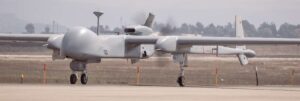
The crewless machines (for whom "unmanned" is not gender-correct enough) have the advantage of not having to carry safety and survival systems for crews. Apart from the low risk to operators, the weight and range advantage directly benefits operational sustainability. However, this does not mean that drones are in competition with traditional MPAs, as a well-known German aviation magazine claimed in June 2025, because it is the combination of the two that provides the operational added value. The fact that an MPA with crews is highly vulnerable in armed conflicts - as was bitterly experienced in the Black Sea - is leading to the increased use of unmanned systems. However, the readily available human eye is still important for monitoring maritime infrastructure and presence operations in peacetime or in crises.
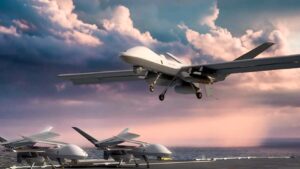
In contrast to the failed procurement of the "Euro Hawk", which also appeared to be an option for the Navy and can now be seen as a museum crash landing at the Berlin-Gatow airfield, the MQ-9B is certified for certification, both for international and German airspace. A long-standing co-operation between the naval aviators and General Atomics USA (https://www.ga.com/) via its German branch and the maintenance of the Dornier DO 228, which is operated by the German Navy on behalf of the Ministry of Transport.
kdk, hsc

 English
  German