






Supply at sea is to be put on a new footing with the Medium Support Unit. But it is a long way from demand to realisation.
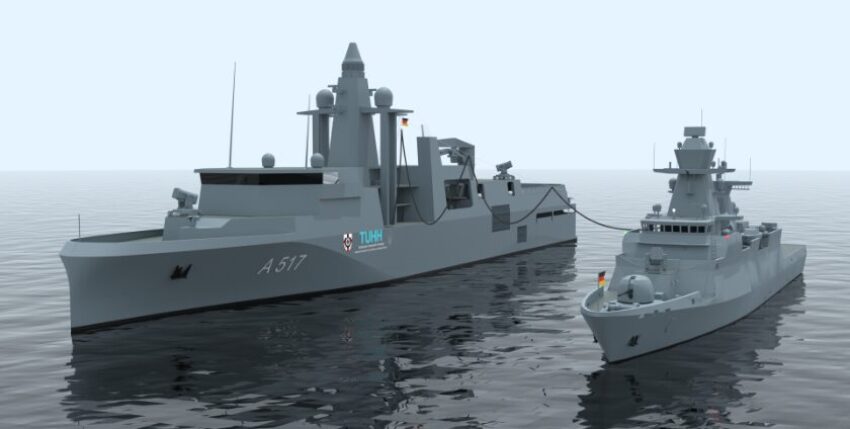
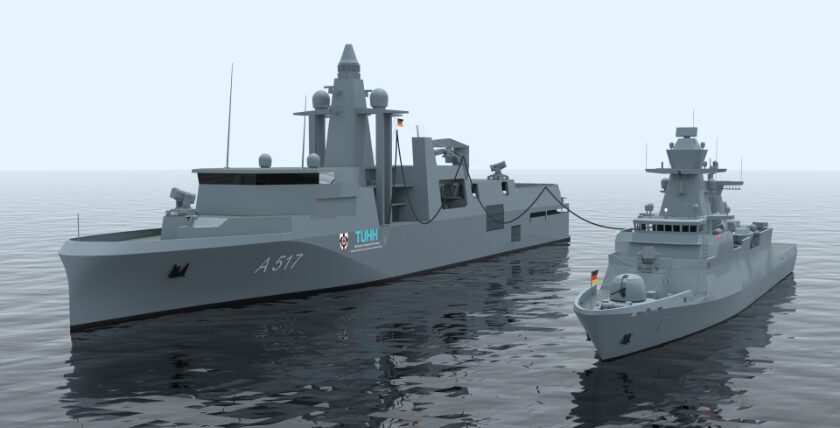
The challenges are clear and unambiguous. The changed geostrategic environment demands endurance and flexibility from the German Navy. Technical innovations are dictating the requirements for new naval units on an unprecedented scale and with increasing speed. In the area of maritime supply and support at sea, the Medium Support Unit is the answer to these operational and technological challenges. The Medium Support Unit focuses on supplying maritime units at sea with fuel and ammunition. This will remain the indispensable core task in the future - combat requires more endurance than ever. The rapid technological developments in the field of unmanned systems offer enormous potential in terms of effectiveness and reconnaissance - the guiding principle "Every unit a drone carrier" is becoming decisive for action. Digitalisation and networking are vital for survival in a "battle of information" - support units are becoming even more integrated into the entire navy in terms of information technology. Threats are a reality. The defence against simultaneous attacks by missiles, small targets and drones as well as swarms of drones places the highest demands on target detection, reaction and action capabilities - a completely new threat quality for support units. Broad range of tasks and compactness of the units. Two conflicting requirements that can only be met by a modular design. Future-proof through flexibility. Dynamic changes show us every day - tasks and requirements are constantly changing. Only those who can react quickly and flexibly are future-proof. The German Navy has clearly outlined and prioritised these requirements with the 2035+ course and the currently published 2025 course. But how does this translate into concrete military requirements for a new construction project? And how is the path to concrete realisation to be designed in order to realise the units that optimally fulfil the requirements with the given resources?
Graphic: BAAINBw
Complexity as an opportunity
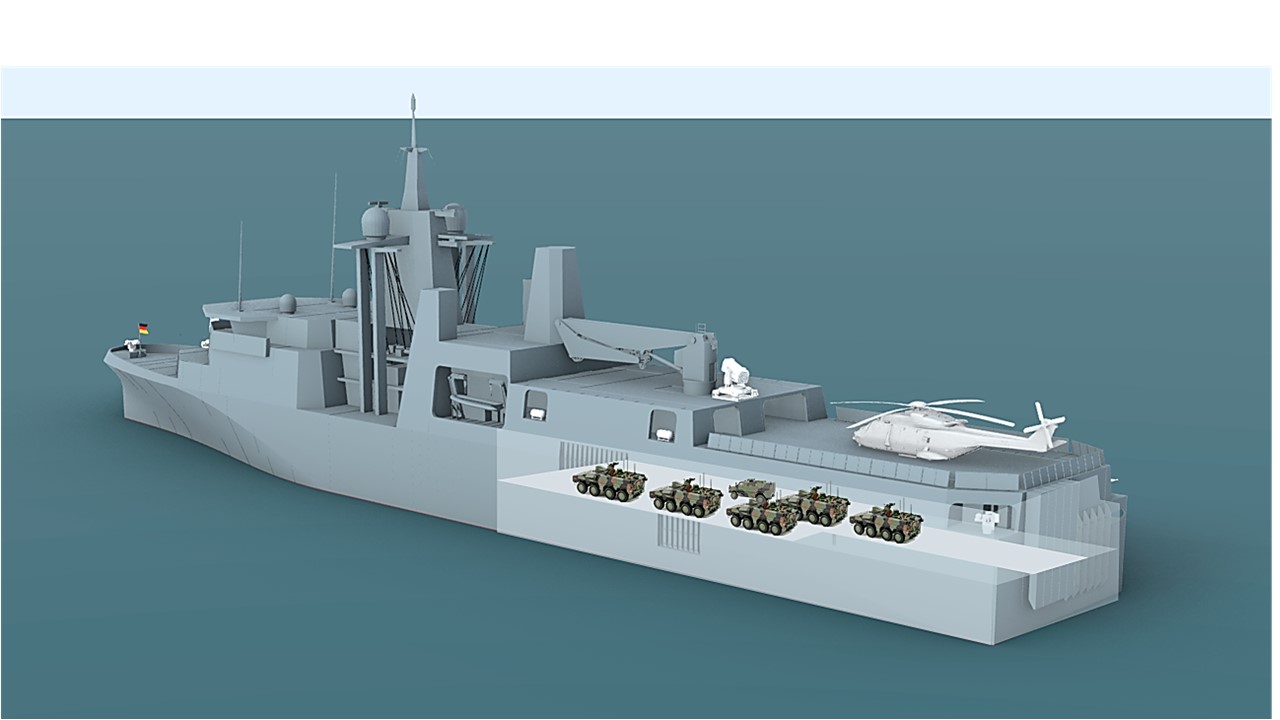
The German Navy recognised the need to significantly increase the endurance of boats by providing compact supply units as early as the end of the 1950s. To this end, 13 tenders were commissioned in the early 1960s and replaced 30 years later by six Class 404 tenders. The next replacement was to take place another 30 years later. In 2022, the Federal Office of Bundeswehr Equipment, Information Technology and In-Service Support (BAAINBw) was commissioned to realise a pure successor solution. Almost simultaneously, the world changed dramatically from one day to the next and a massive change of course was implemented in defence policy with the turning point of the times. In 2023, the Navy formulated its (new) 2035+ course with a significant reorientation, which resulted in drastic changes to the requirements profile, particularly for the new support unit. In fact, the previous requirements had to be completely revised. In order to continue to enable short-term realisation, it was decided to leave responsibility with the project manager in the BAAINBw and to coordinate the adjustments and extensions to the requirements situation in direct cooperation with the planning office/planning and the authorised representative of the Navy. The newly formulated capabilities include increasing self-protection, in particular to effectively combat drones and missiles, increasing command and control capability with comprehensive data link and communication means including a situation picture display, providing the capability to deploy drones in the air and sea areas, the capability to transport soldiers and material, including vehicles, including the ability to quickly load and unload, the deployment of special forces including the requirement to quickly deploy and pick up and transport their operational boats, the ability to comprehensively transport patients and the suitability to permanently operate an organic helicopter the size of a Sea Lion as well as a landing option for heavy helicopters.
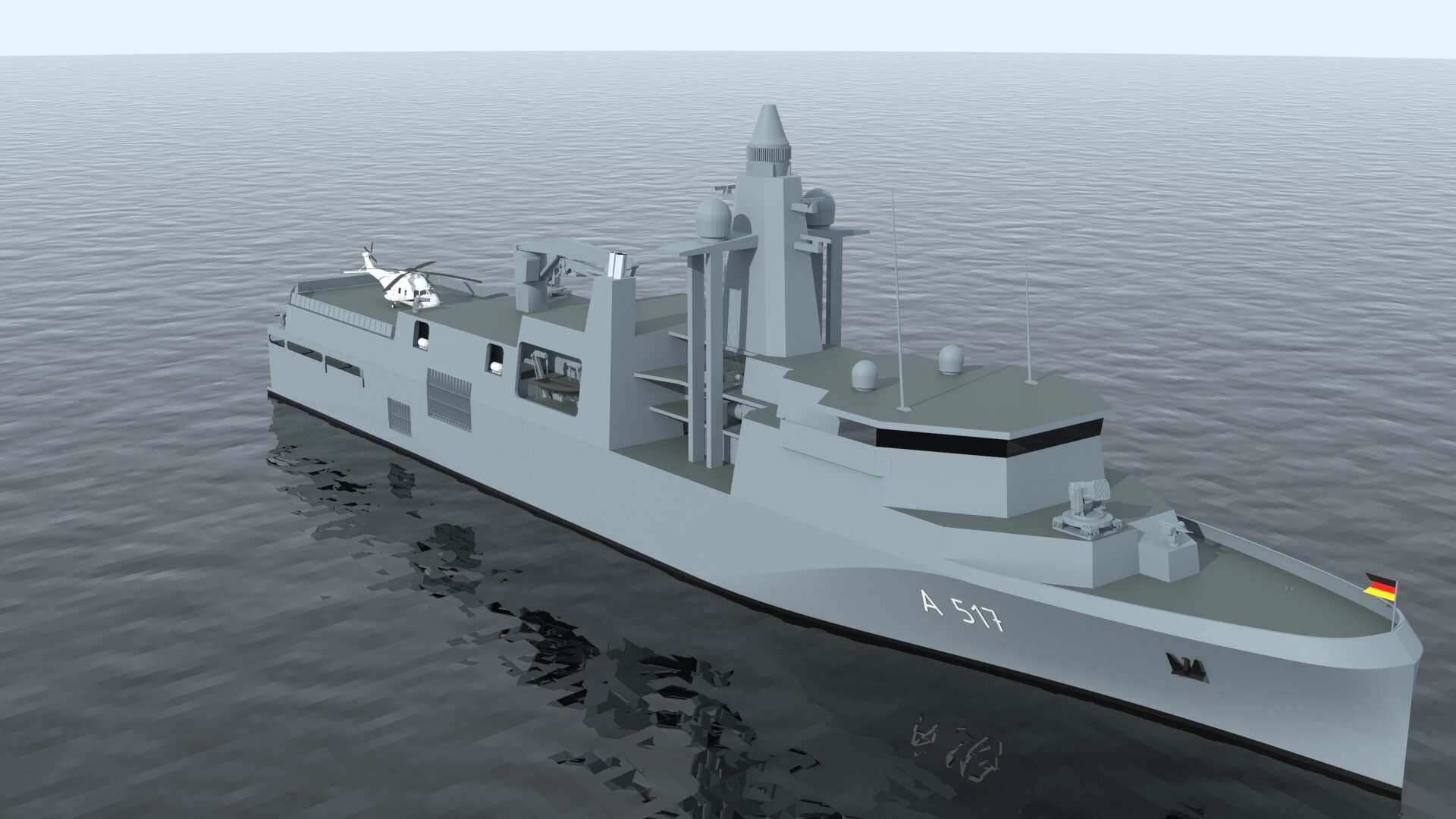
In several iterative loops, the respective requirements for the above-mentioned capabilities were subjected to a technical feasibility test based on the framework conditions of budget, realisation time and operability. The scope and characteristics of the individual requirements were formulated in such a way as to optimise the overall deployment conditions. As a result, two proposed solutions were developed. The first solution proposal represents a unit that is designed to be as compact as a tender and fulfils all capabilities in various forms, with the exception of the capabilities for the organic operation of a medium helicopter and the landing of a heavy helicopter. The second proposed solution fulfils all requirements, which leads to a considerably larger ship design with significantly higher costs in procurement and especially in operation. As a result, the first design fulfils a maximum of the new capabilities with a moderate increase in procurement and usage costs. Nevertheless, the complexity of the project increases considerably due to the significant expansion of the capabilities and requirements.
More than just a ship design
Different technical disciplines such as shipbuilding, propulsion, sensors, weapons and logistics must be functionally integrated in the smallest of spaces in such a way that they can be operated and fulfil the required
effect can unfold. Military-specific requirements such as stability, NBC protection, signature reduction and IT security increase the demands. At the same time, the Bundeswehr aims to comply with a large number of civilian regulations as far as possible when operating in public spaces, including the International Convention for the Prevention of Marine Pollution from Ships (Marpol) and the International Convention for the Safety of Life at Sea (Solas), provided they do not conflict with military requirements. Increasing digitalisation is making a significant contribution to increasing complexity. In a defence project for military ships and boats, further areas are added that significantly increase multidimensionality. Aspects such as the logistics for operating the units, military security, testing and approval aspects, especially for military equipment, procurement law requirements and industrial and economic policy aspects outline a colourful bouquet of influencing factors that must be managed by the project management of a maritime armaments project.
Design principles
What specific design principles are being pursued in the project to meet the new requirements? Here are a few examples: Technology - introduced and available on the market: In order to accelerate realisation, the requirements were examined with regard to their feasibility in terms of time as part of the requirements controlling process. Care was taken to ensure that available technologies, components and systems were available on the market and used across the board. Logistics and training: In order to limit logistical expenses, particularly with regard to documentation, spare parts and training, the focus is on utilising components and systems that have already been introduced as far as possible. A further advantage of this is that the (time-consuming) processes involved in making the equipment ready for use can be significantly reduced and the necessary documentation and logistical procedures are available to the troops right from the start of use.
The navy will have to make do with the Class 404 tenders for a few more years. The early operational readiness of the units will continue to be significantly influenced by the needs-based training of the (initial) crew. The timely provision of the military crews is just as important here as the project-side planning of the various training aspects, both for the soldiers and for the civilian maintenance areas. In particular, the project management aims to fully and comprehensively define the entire training programme with all parties involved at the start of the procurement process on the basis of the ship's design and the training requirements derived from it. Information security and military security: The almost universal digitalisation of all areas and systems today requires a completely new dimension of information security. The time and resources required for planning, coordination and implementation considerably exceed the costs of previous projects. Project management pays particular attention to this aspect. The topic is carefully considered as early as the analysis phase and all relevant departments are involved at an early stage. Verification management: Verification management to establish the provision of services in the various project stages, from integration tests to factory tests, harbour and sea tests through to various deployment tests, is always subject to a strong tension between the resilience of the verification (test scope and test depth) versus the effort involved in the verification (time, costs and resources). In any case, the various verifications with the different authorities, including the acceptance commission, future operator, quality inspection bodies, external classification societies and military testing organisations, must be fully defined before the award of the contract is initiated. Success factors here are the time-consuming coordination of all parties involved and project experience; after all, there are no fixed rules that guarantee success.
Graphic: BAAINBw
The large number of tasks, not only in terms of the wide range of skills that need to be developed in the associated technical areas, illustrates the immense scope of the project work. Coping with the complexity is only possible by pooling specialist resources and expertise.
Summary and outlook
With Course 2035+ and Course 2025, the German Navy has realigned the direction of the Medium Support Unit project. In an intensive dialogue between the Navy, project management and planning, the technical, economic and operational basis for decision-making was developed, and at the end of April 2025, the planning department management defined the necessary capability requirements. On this basis, the BAAINBw will plan the further realisation of the project. The referenced technical solution approach of the project management shows that these capabilities can be mapped with a compact and future-proof design. Currently, the technical solutions in the areas of weapons and command and control as well as in the relevant project elements are being developed. The results of this work will form the basis for the Inspector General's selection decision as the next key project milestone. Subject to the pending decision, the project management is pursuing the award of a total of six units by means of a competitive contract. The tasks assigned to the Medium Support Unit project have inevitably led to a complexity that represents a particular challenge. The BAAINBw project management is ensuring that this challenge is mastered by taking a comprehensive and complete view of all project aspects of procurement and subsequent utilisation and by involving the Navy and all other stakeholders at an early stage.
Technical Government Director Gunther Brückner is Head of the Task Force Supply, Tender and Medium Support Unit Division at the Federal Office of Bundeswehr Equipment, Information Technology and In-Service Support.
Gunther Brückner

 English
  German