

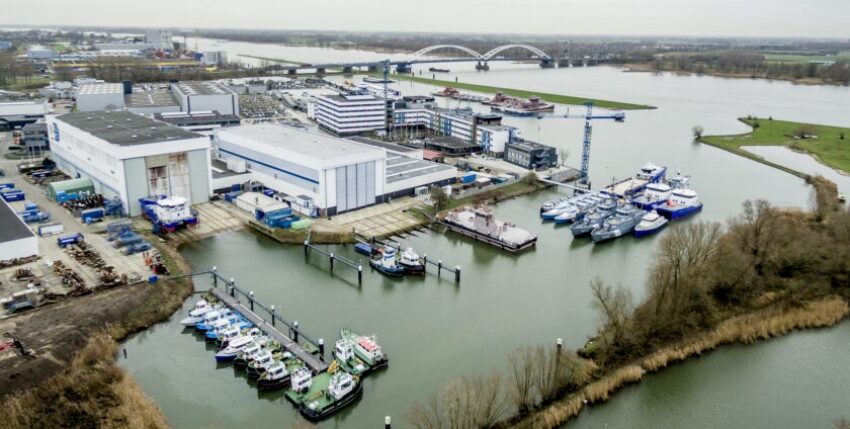






At the beginning of December 2025, the Dutch Financial Intelligence and Investigation Service (FIOD) searched several Damen Shipyards offices and employees' private residences as part of a sanctions investigation. Two directors of the company, aged 39 and 60, were arrested and remanded in custody, as reported by the Dutch television programme Nieuwsuur.
The subject of the investigation is the suspicion that Damen Shipyards may have continued to supply goods to third countries after the start of the Russian war of aggression against Ukraine in February 2022 and after the first EU sanctions came into force, via which these goods subsequently reached Russia. During the searches, the FIOD seized physical and digital documents as well as data carriers, which are now being analysed.
According to research by Nieuwsuur, an extensive shipbuilding project for crab fishing is at the centre of the investigation. According to the report, Russian shipyards are said to have gained access to sanctioned components via intermediate stations in Turkey and Hong Kong. Several manufacturers stated that they recognised their components in import databases. At least three companies, including the German propeller manufacturer Schottel, stated that they had supplied the identified components exclusively to Damen Shipyards in the Netherlands.
Damen Shipyards rejects the allegations. The company stated that it had cooperated fully with the relevant authorities and had complied with the applicable legal and regulatory requirements in all business transactions.
According to the public prosecutor's office, the current investigations are not directly related to another case against Damen Shipyards, which is also being conducted by the FIOD. This concerns allegations of bribery, falsification of documents and money laundering in the period from 2006 to 2017. In addition, there is a separate case of possible sanctions violations in connection with the delivery of several cranes to Russia.
The arrests at management level and the parallel investigations are significantly increasing the pressure on the Dutch shipbuilder. For government clients and international customers, particularly in the security-relevant maritime environment, questions of compliance, supply chain control and regulatory reliability are becoming increasingly important, including for Germany. Regardless of the outcome of the proceedings, the ongoing investigations are likely to have a lasting impact on the company's assessment in the international competitive environment.
kdk,

 English
  German