











From a press release by the German Aerospace Centre (DLR) in Cologne:
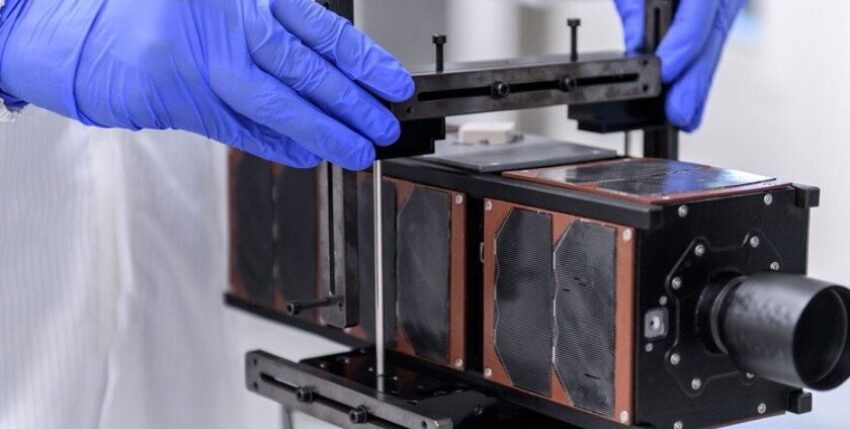
It weighs just six kilograms and is the size of a shoe box - but its interior makes it an observer of the world's oceans: the miniature satellite OTTER was launched into space on 28 November 2025. At an altitude of 500 kilometres, it unfolded its solar panels, launched its instruments and is now keeping an eye on ships and certain events on the high seas. The OTTER (Optical Traffic Tracking Experiment for Responsive Space) nanosatellite uses its antenna to record the position signals of maritime targets (AIS), checks them with on-board sensors (camera, etc.) and sends the data to the ground station, where it is analysed. Illegal fishing, ships in distress, oil spills, but also signal tampering and "obscured" activities at sea and on the high seas can be detected in this way. The use of space-based infrastructure for maritime reconnaissance offers great added value compared to land- and sea-based systems because situational images can be created from high altitudes regardless of national borders.
Background
The OTTER mission is being carried out by DLR together with industry. It is not only an experiment on the way to rapid provision of space-based capabilities in the event of failure of existing systems in the form of new networks, but is also intended to illustrate how effectively a small satellite can support large existing systems using the example of maritime reconnaissance.
The nanosatellite was launched on a SpaceX rocket in the USA and is expected to remain in low Earth orbit for around two years before burning up in the Earth's atmosphere. It is also a test platform for the construction and operation of small satellites (up to 500 kilograms) and the smallest space vehicles.

RSC³ in mission responsibility
With OTTER, research is being conducted into responsive space capabilities for maritime tasks. Responsive space means that space-based services are provided quickly in the event that individual satellites fail and need to be replaced or bridged. To this end, DLR established the Responsive Space Cluster Competence Center (RSC³) five years ago in Trauen near Fassberg with the support of the BMVg as a national competence centre for responsive satellite deployment, which is now also leading the OTTER mission.
"Responsive space" as the ability to meet short-term needs by quickly launching small satellites or reconfiguring existing space systems increases the resilience of the critical space infrastructure. Incidentally, the RSC³ is an international organisation.
ajs

 English
  German