

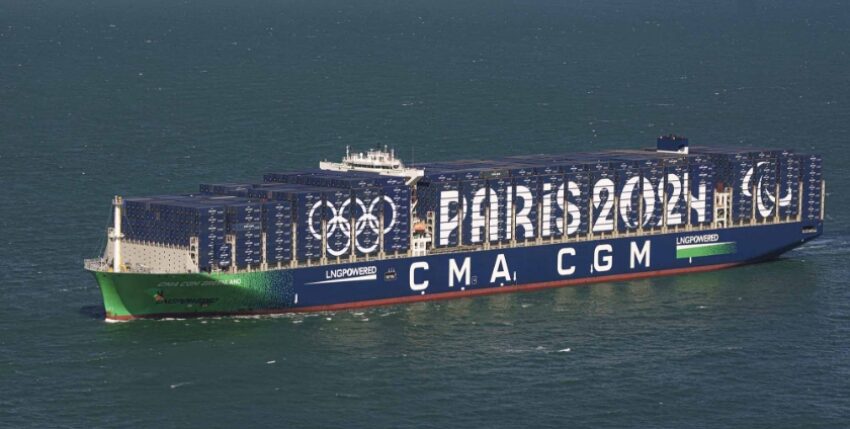






The French shipping and logistics group CMA CGM is sticking to its longer transit route around the Cape of Good Hope for the time being, although it considers the region to be more stable following the ceasefire agreement between Israel and Hamas, as the group announced in January.
The Yemeni Houthi rebels had declared, that following a ceasefire agreement between Israel and Hamas, they would no longer attack ships with connections to the USA and the UK. However, it was unclear how this announcement would affect shipping traffic.
It is now clear that shipping companies are remaining cautious. Shipping giant MSC also intends to continue avoiding the Red Sea for the time being. CMA CGM said that the improved stability was a positive but fragile sign in view of the ongoing tensions and the associated risks for merchant ships. Both shipping companies emphasised that the safety of crew and cargo is a priority. Adjustments could be made on a case-by-case basis, depending on the security situation and global conditions.
In a statement, Houthi leader Abdul Malik al-Houthi said his forces are "in constant readiness to intervene immediately if the Israeli enemy returns to escalation".
As any perceived violation of the ceasefire agreement by Israel could trigger a point of escalation, container lines should not be expected to rush back to the shorter route through the Suez Canal. This will take months rather than weeks, as shipping lines need absolute certainty that the threat has not just been temporarily removed.
Current developments in the Gaza Strip seem to prove the shipping companies right.
kdk, gCaptain

 English
  German