

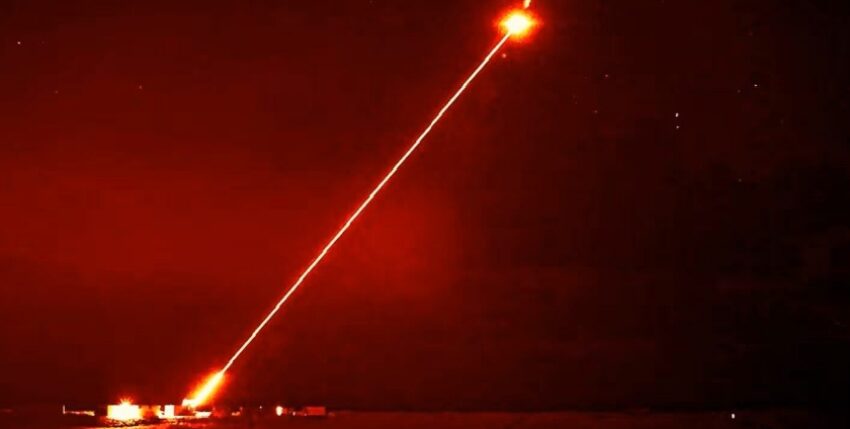








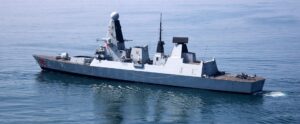
On 20 November, the British Ministry of Defence announced a contract worth GBP 316 million (around EUR 359 million) with MBDA UK. The contract is for the delivery of the DragonFire laser weapon system, which is to be installed on Royal Navy ships in the future. The first actual installation in the fleet is planned from 2027 - initially on a Type 45 Daring-class destroyer (152 metres, 8,500 tonnes).
The decision follows a series of tests in which a 50 kW laser is said to have successfully engaged unmanned aerial targets at speeds of up to 650 kilometres per hour. In London, the cost factor is emphasised above all: The energy consumption of a shot is put at around 10 pounds sterling (around 12 euros) - no comparison with anti-aircraft missiles, where six-figure sums are quickly reached per shot.
Especially against the background of mass drone attacks (swarm), a laser appears attractive for the Royal Navy: no ammunition logistics, no explosives, high precision and, in principle, unlimited operational readiness as long as power is available.
Pioneer in Europe - but not a global pioneer
With this defence measure, the UK is taking on a pioneering role in Europe. While the US Navy trialled the first lasers on individual units years ago and reports are circulating from China about systems being installed on a trial basis, the Royal Navy is the first European navy to aim for a series solution. Other NATO navies - including the German Navy - are still at the testing, technology study or industrial co-operation stage.
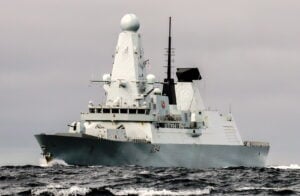
Type 45 as a platform
The choice of the Type 45 destroyer comes as no surprise: with its all-electric propulsion system and a total power output of more than 50 MW, the class appears to be fundamentally suitable for supplying a high-energy weapon - especially after completion of a comprehensive power improvement programme (PIP). In combination with SAMPSON radar, S1850M sensor technology and the Sea Viper battle management system, the laser weapon could be usefully integrated as a short-range component of air defence. They will not replace missiles or artillery in the foreseeable future. If the technology delivers what it promises, they will form an additional layer in the defence network.
Trial by fire lurks in the operational reality at sea
Atmospheric conditions play a key role in the performance of laser weapons, especially in a maritime environment. Fog, rain, spray and snowfall reduce the effective range because they can scatter and attenuate the laser beam. Turbulence in heavy seas ("beam wobbling") and line of sight restrictions caused by high masts or antennas also play a role. This means that the laser's long-term performance under real operating and weather conditions in the North Atlantic and Baltic Sea has yet to be proven.
A not insignificant prerequisite for this is also a sustainable solution to the stability problems of the energy and drive system of the Type 45 class as part of the Power Improvement Project (PIP) - the background to this is weak points in the cooling circuit of the WR 21 gas turbines, which have already led to drops in performance and complete power failures in tropical and Arctic waters.

 English
  German