




Security situation for shipping: German Navy asks the German Shipowners' Association for support
Status 03.03.26
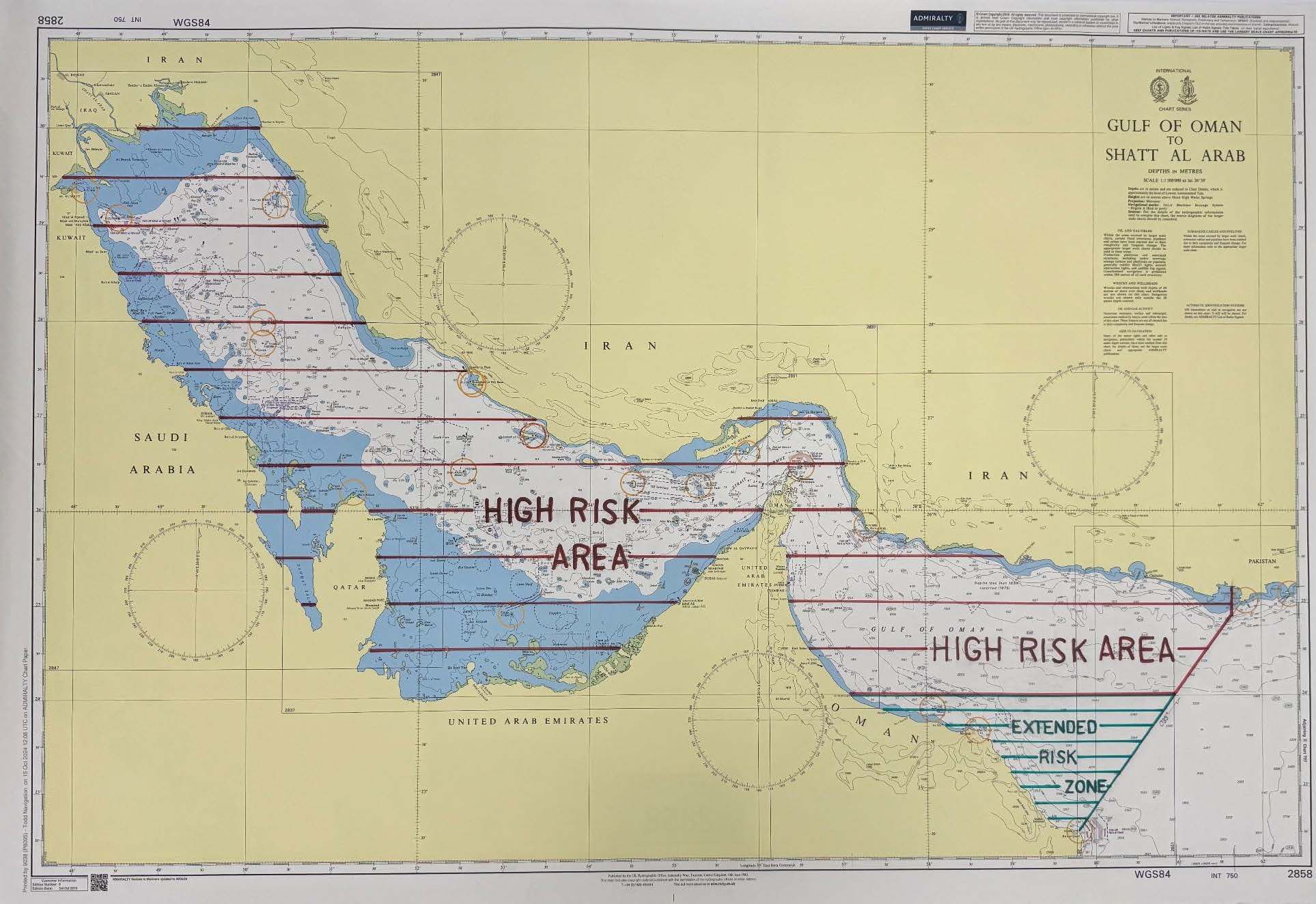
The German Shipowners„ Association (VDR) works together with German institutes and the German Navy. The German Navy has currently submitted a request to the VDR to supplement the situation report with information from the region. The aim is to provide updates on ships with a German connection in order to supplement the advisory function of the German Navy. The existing data sources, some of which are freely accessible recording systems (popular marinetraffic.com), have weaknesses that can only be verified by visual means and regional knowledge. Among other things, this concerns chartered ships with a German connection. The sea areas affected are the Red Sea, Gulf of Aden, Persian Gulf and Mediterranean (east to the Cyprus line). The naval shipping management of the naval command in Hamburg, the German “Naval Shipping Centre", is responsible.
30 German ships are affected
More than 30 German merchant ships are in the Persian Gulf. The Federal Police Sea (BuPolSee) officially reports 29, including the cruise ships „Mein Schiff 4“ and „Mein Schiff 5“ from TUI Cruises GmbH.
Events:
Several merchant ships have been damaged since the start of hostilities. Ships with a German background (crew, shipping company) have not yet been directly affected. The data comes from the German Navy and the British United Kingdom Maritime Trade Operations (UKMTO).
- GOLD OAK (IMO 0896342) was hit off Fujairah and suffered hull damage.
- LIBRA TRADER (IMO 9562673), Crude Oil Tanker was also damaged off Fujairah.
- SAFEEN PRESTIGE" (IMO 9593517), Container Freighter, Street of Hormuz, Hit, Fire in the Engine room. Crew evacuated
- SKYLIGHT (IMO 9330020): Chemical tanker flying the Palau flag. Hit north of Khasab (OMN) on 28 February. 4 crew members injured; crew evacuated.
- MKD VYOM (IMO 9284386): Marshall Islands-managed crude oil tanker. Hit in the Gulf on 1 March. The ship is adrift and severely damaged. 1 fatality, unit evacuated. Significant hull damage above the waterline and engine room fire reported.
- HERCULES STAR (IMO 9916135): Oil delivery tanker under Gibraltar guided oil products. Struck on 1 March, 20 miles northwest of Dubai. Fire extinguished.
- OCEAN ELECTRA (IMO 9402782): Oil delivery tanker flying the Liberian flag. Attacked by drone on 1 March
- STENA IMPERATIVE (IMO 9666077): US oil/chemical tanker. Touched by ship in harbour. Fire extinguished; crew evacuated.
- UPDATE: ATHE NOVA (IMO 9188116): Turned out to be a hoax!
A look at the history helps
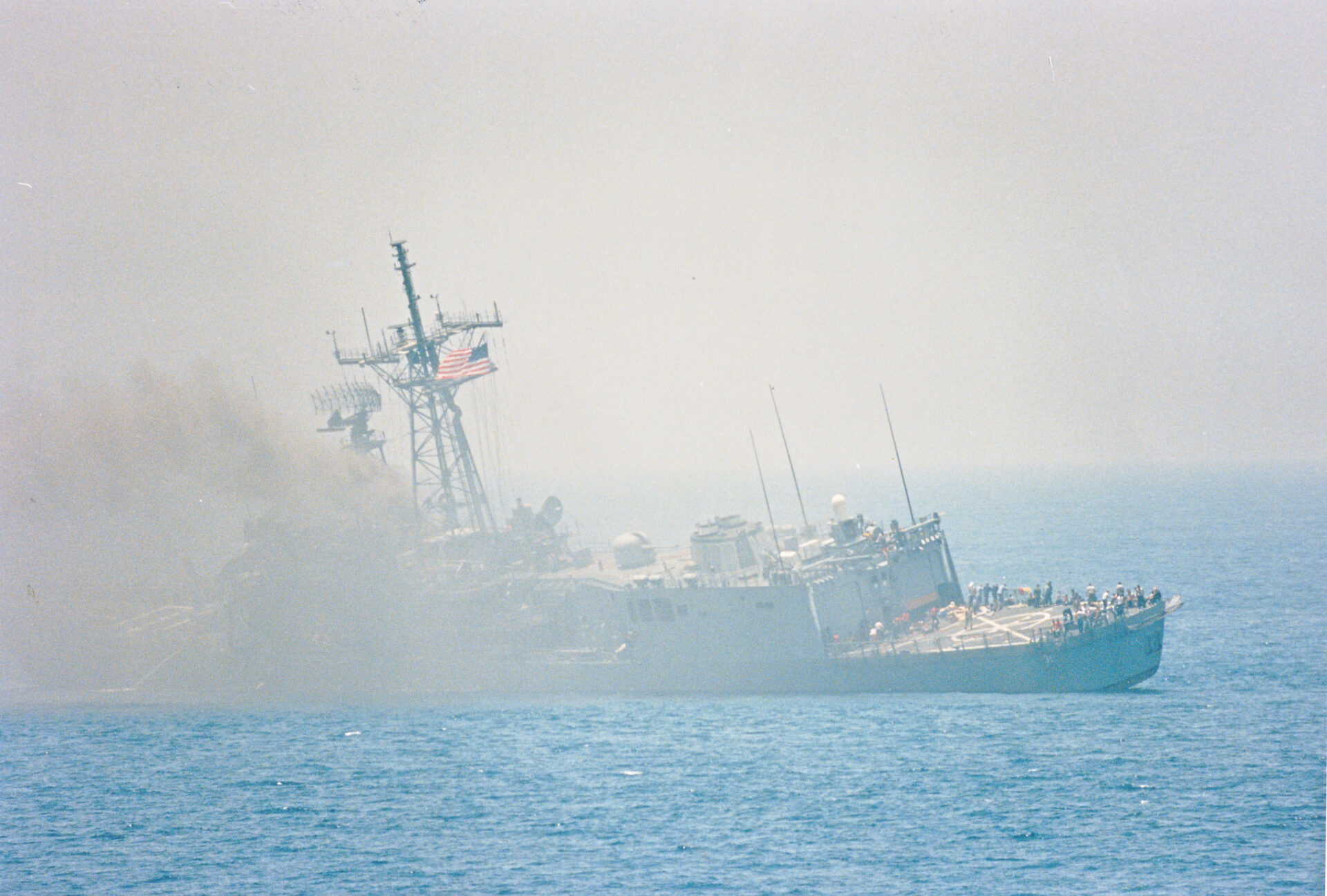
Since the attack by the USA and Israel on targets in Iran, the waters of the entire region have become a higher risk. This situation is not unusual or unexpected. All shipping companies, authorities, insurers and agencies involved have been dealing with the risks to shipping around the volatile region for decades. Historically, there have been several closures and threats of closures of the Strait of Hormuz, the naval forces of the neighbouring countries are prepared and there have been several operations involving the EU and NATO. Even German units have been deployed there: in 1991, German minesweepers cleared mines in the aftermath of the Gulf War as part of „Operation South Flank“. The so-called „Tanker War“ comes to mind: from 1980-1988 during the Iran-Iraq War, both sides attacked merchant ships and oil tankers in the Persian Gulf in order to weaken the exports of the respective opponent. Nearly 400 ships were damaged or destroyed. The conflict led to a threat to global oil supplies - at the time, the USA was not yet the world's largest oil producer, but was dependent on Saudi Arabia. This explains the presence of the US Navy in the region: in 1987, the Oliver Hazard Perry-class guided missile frigate USS „Stark“ (FFG-31) was attacked in the Persian Gulf by an Iraqi aircraft with two Exocet missiles. Thirty-seven sailors died and 21 were wounded. The ship was rescued and repaired. Just one year later, the USS „Samuel B. Roberts“ (FFG 58), also an Oliver Hazard Perry-class frigate, was damaged by an Iranian mine. The American response was an attack on Iranian warships, during which the Iranian frigate „Sahand“ was sunk. Since the beginning of the century - well after the end of the war between Iran and Iraq - the region has been unstable due to the Iranian nuclear programme: there were lockdowns and threats in 2006/07, 2011 and 2014, most recently in 2025.
The deployment of German units in the region is therefore not a precedent; we remember the deployment of the frigate „Hessen“ in the Red Sea in 2024 as part of the still existing Operation „Aspides“.
That's not surprising!
In this respect, no one should pretend that the impact on trade routes, with all its consequences for the global economy, is a completely surprising phenomenon. The importance of trade routes and „free shipping“, especially in the strategically important straits of this world - the so-called „choke points“ - has been discussed for decades by navies, security policy publishing institutes, insurance companies and shipping companies. This also applies to cruise shipping companies, which postulate the safety of passengers as their greatest asset. Travel warnings from the Federal Foreign Office are valuable and reliable for tourists and business travellers, while professionals rely on more extensive situation reports and consult experts. In Germany, this would be the German Shipowners' Association (VDR), the Institute for Security Policy at the University of Kiel (ISPK) or the German Maritime Institute DMI, the publisher of the marine forum. Civilian consultants such as NEXMARIS by Moritz Brake, a reserve officer and security politician, also provide professional help. TUI managers can't use the AA's travel warnings as an excuse. The tension in the region didn't come out of the blue, it came on the run: at the latest when the American president announced help for the Iranian people, one could have guessed that travelling might not be a good idea. Merchant shipping has to sail, it's part of the job and vital - going on holiday to crisis regions is a risk you take yourself.
It doesn't look good
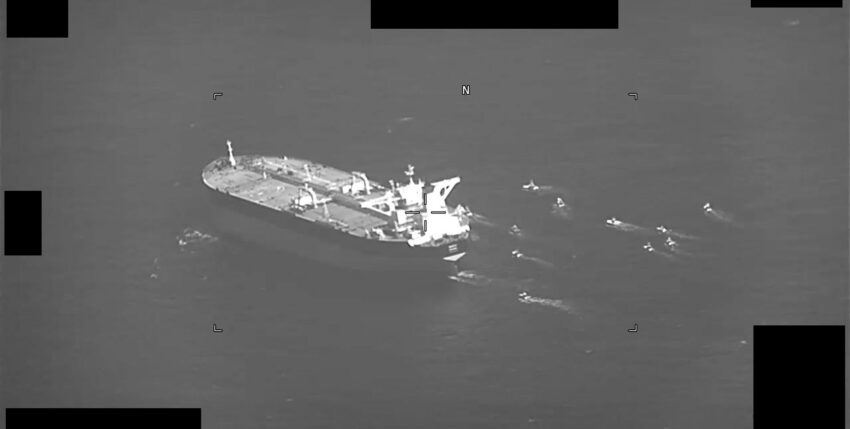
The war has spread to the entire region. We are now dealing with attacks by special forces of the Revolutionary Guards using speedboats. How long Iraq will keep quiet is questionable, as they are no longer necessarily enemies. In the long term, almost everything beyond ships and shipping must be protected: Hotels, airports, critical infrastructure such as power stations and transport facilities. This is bad news for the oil market. And if China intends to stop the export of oil products due to a lack of crude oil, this will extend to all traded goods.
Text: Holger Schlüter

 English
  German