









An annual joint mission of the U.S. Coast Guard and the National Science Foundation, the lead agency for the U.S. Antarctic programme, serves to provide the necessary supplies for research stations in the perpetual ice.
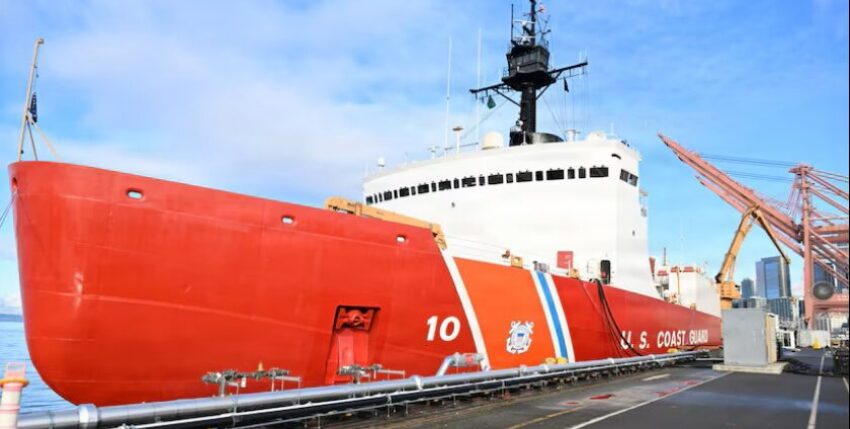
While the Coast Guard is preparing to modernise and renew its icebreaker fleet, there is still a long way to go before the arrival of new icebreakers. Icebreaker the "Polar Star" the only US vessel capable of breaking a navigable channel through the ice to reach McMurdo Station, the largest US Antarctic station and a logistical centre. Every year, the cutter plays this important role in ensuring access for supply ships through the Ross Sea. The US armed forces have been supporting the Antarctic programme since 1955.
As part of the "One Big Beautiful Bill", around 7.73 billion euros will be made available specifically for Icebreaker and infrastructure in the Arctic and Antarctic. These massive investments are intended to secure access, security and the leading role of the USA in the polar regions. This also appears to be necessary, as the Icebreaker "Polar Star" (11,000 tonnes) has been in service since 1976. And although it is almost 50 years old, with an output of up to 75,000 shaft horsepower, it remains the most powerful non-nuclear Icebreaker of the world. This requires financial outlay and a continuous effort by the crew to maintain the ageing ship, as it will probably be years before new polar-capable ships are put into service.
kdk, U.S. DoW (Department of War)

 English
  German