


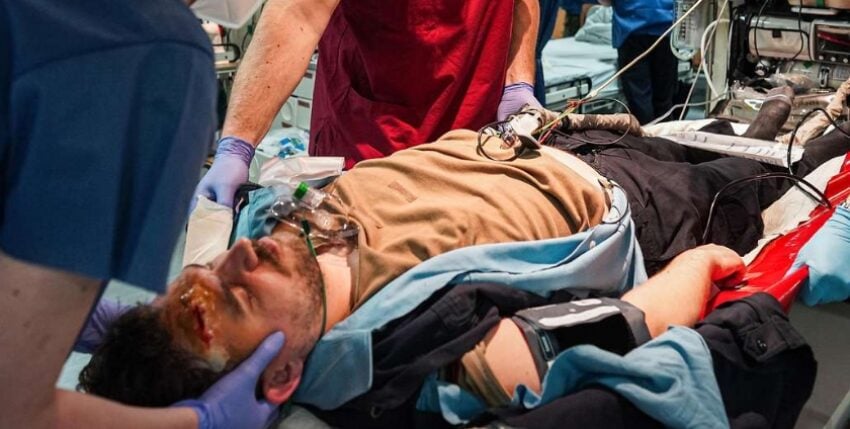



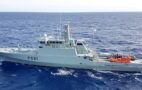

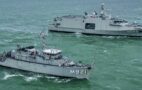
The sub-exercise "Role2Sea 2025" will take place in the western Baltic Sea until 25 August 2025. The German Navy and the Bundeswehr Medical Service are involved in this exercise. The aim of the manoeuvre is to ensure medical care at sea as part of the overarching "Quadriga 2025" exercise series, but also to practice the rescue chain and the transfer of casualties from sea to land to the civilian healthcare system.
"Such exercises with large numbers of casualties are very complex to plan and carry out and place a considerable burden on the units involved. However, they are essential for realistic mission preparation and the further development of our procedures. This is the only way we can practise the interaction between the men and women from the hospitals and regiments and the marine medical service and be sure that everything will work in an emergency," says the highest ranking member of the marine medical service, Admiral Dr Dirk Stölten.
Medical care at sea is essential for all maritime operations and ensures the operational readiness of national and international armed forces. In Role2Sea, the medical mission support at sea at NATO level "Role 2" practises advanced medical care in the theatre of operations (e.g. surgery, intensive care, X-ray, laboratories, preclinical measures). With the Maritime Rescue Centre (RZ See), the German Navy is fulfilling a NATO requirement for the German armed forces.
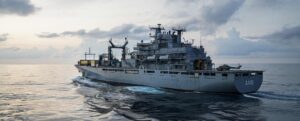
The RZ See is an integral part of the "Frankfurt am Main" task force supply centre. It comprises two medical operating theatres, a ward with more than 40 beds, various specialists and laboratories. During this exercise, the 45 or so soldiers at the supply station at sea, also known as the integrated Marine Emergency Medical Rescue Centre (iMERZ), receive intensive training under realistic conditions in order to provide people with the medical care they need in an emergency. Actors and actresses are elaborately made up and prepared as casualties.
The German Navy works closely with civilian and military partners in the rescue chain. After pre-hospital care on board by the Maritime Rescue Centre, injured persons are transported to civilian hospitals, such as the Rostock University Medical Centre and the Südstadt Rostock Clinic, for further medical care using helicopters from the Federal Police, the Central Command for Maritime Emergencies and the German Army or on land using ambulances from the professional fire brigade.

 English
  German