








Many civilian casualties, Western shipping prevented, Iran takes tolls and the Americans drive on...
Naval Shipping Command of the German Navy warns shipping companies
The situation has changed only slightly since the last situation report issued by the Hamburg office of the German Navy on 26 March 2026. Israel and the USA continue to attack targets in Iran using stand-off weapons. The neighbouring states are still defending themselves with defensive measures. IRN continues to attack the states in the Persian Gulf with ballistic missiles and drones. The de facto closure of the Strait of Hormuz (SoH) remains in place. In the period from 26 March to today, there have been two attacks on civilian ships in this sea area. There is still a risk of attacks. Individual ships appear to have left the Persian Gulf after making arrangements with Iran and paying a fee via Iranian territorial waters. The Naval Shipping Administration in Hamburg strongly advises shipping companies against such action, as ships with a German connection are categorised as hostile by Iran due to relations with Israel and/or the USA.
AIS and GPS are heavily disturbed, especially around the Strait of Hormuz, but the disturbances have been reduced during the reporting period. Due to this GPS interference, a Doppler log is required for entering the harbour of Mina al Fahal.
Since the start of the war, a total of 21 merchant ships have been hit in the Persian Gulf, some of which have suffered severe damage. Two ships have been attacked since the last naval command situation on 26 March 2026. The SAFEEN PRESTIGE, which was first attacked on 4 March 2026, sank on 31 March 2026 around 7 nautical miles north of the Musandam Peninsula. For further ships, see list below
Ships with a German connection
According to the Naval Shipping Administration, which cites AIS data and shipping companies as its source, there are around 151 ships with a German connection in the area, 51 of which are stuck in the Persian Gulf. It is also assumed that Iran still has sufficient missiles and drones, especially for attacks in the Persian Gulf. The danger to ships remains. Iran's regular navy is still weak and barely exists. However, the Revolutionary Guard still appears to have small arms, drones and missiles in the area. Iranian attacks are currently also directed against the maritime infrastructure of the countries bordering the Persian Gulf as far as the Omani coast in the Arabian Sea. During the attacks, there is a risk that civilian ships on site could be damaged unintentionally - both by attacks from Iran and by defence measures taken by the neighbouring states (e.g. falling debris with residual explosives). These dangers must also be assumed on shipping routes and anchorages/roadsteads.
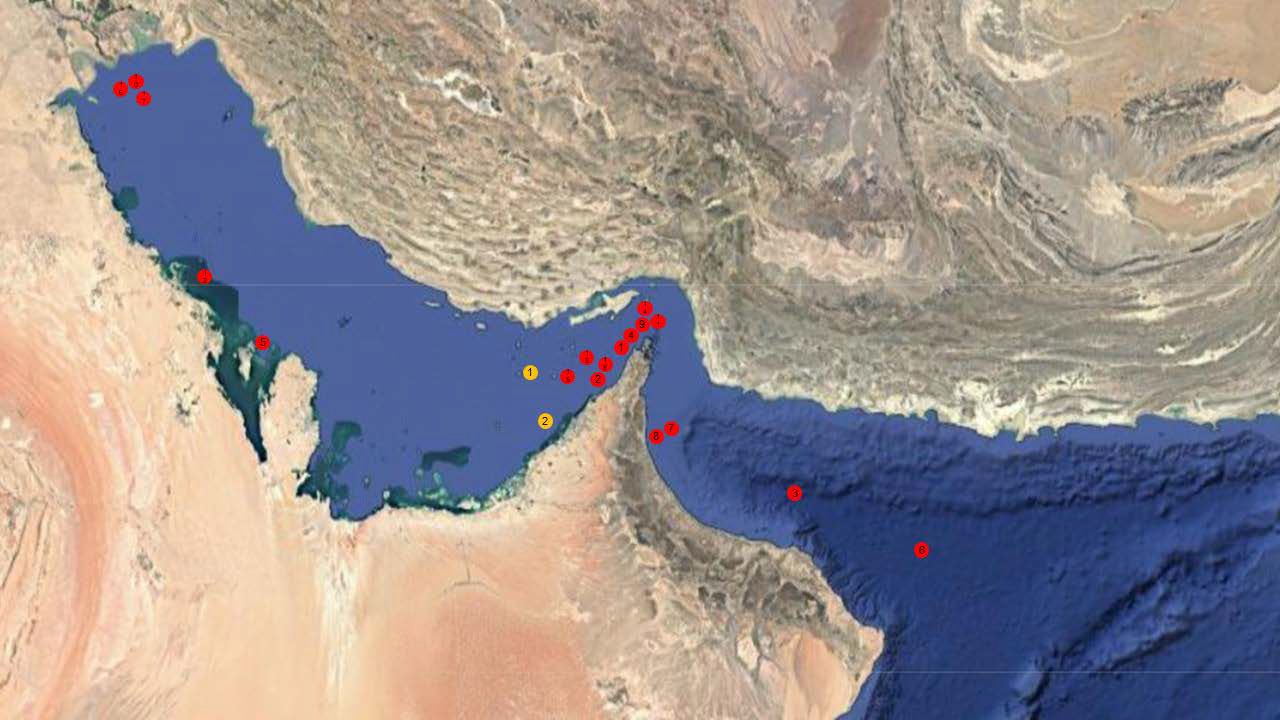
The HUTHI in Yemen have announced the resumption of attacks against shipping, but have not yet implemented them. Nevertheless, they confirm that attacks in the Red Sea can be resumed as soon as the Houthis deem them necessary. An Iranian-controlled transit corridor near the coast (north of the island of Larak) has been activated. This new route is already known as the „Island Gate“. Overall, further transit from and to the Persian Gulf can be observed, but only for motor vessels with a connection to Iran or after payment of a „passage fee“ of 2 million dollars. According to Iran, the Strait of Hormuz will be opened if future oil transactions are settled exclusively in Chinese yen. Bahrain imposes a daily traffic ban on all ships from 18:00 to 04:00. There are currently no means of escorting ships out of the area. According to other nations, several countries are working on options (escort operations) as soon as the situation has stabilised.
Do not try!
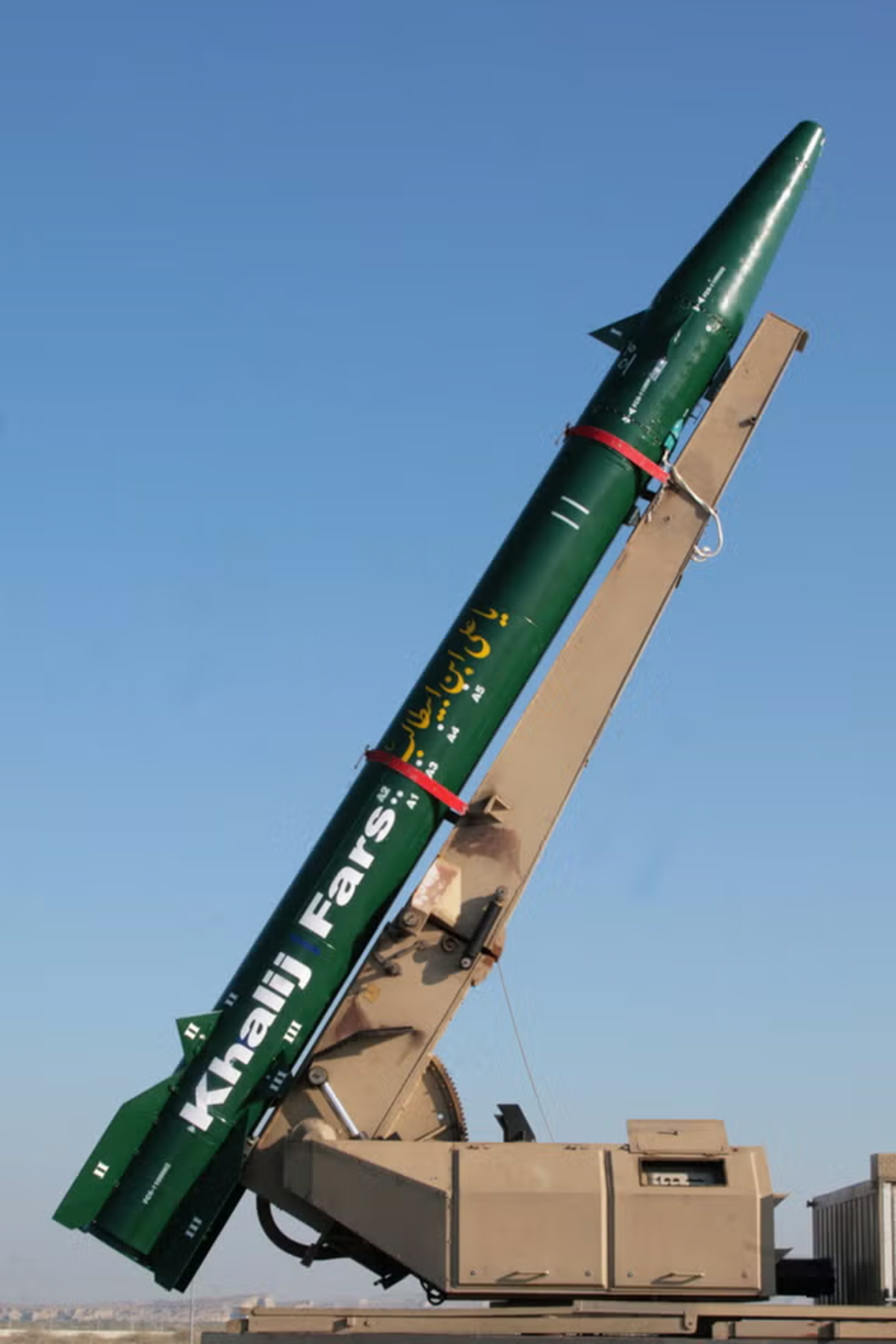
All ships and crews are in direct danger. Ships with former or existing links to Israel or the USA are also at far greater risk of being attacked by Iranian forces. The crews and ships cannot leave the region and are trapped. Attempting to pass through the Strait of Hormuz at this time must be considered highly dangerous. The Naval Maritime Administration strongly recommends not to attempt it. The risk of attacks by Houthis in the Red Sea is also considered high - a resumption of shelling of merchant ships is clearly a given. The risk potential for the Persian Gulf and neighbouring regions must still be classified as critical overall.
"Western" ships are completely displaced
Since 15 March, not a single large freighter has passed through the traditional fairway. All 57 transits recorded since 13 March have been via the Larak diversions controlled by the Revolutionary Guards. Since 1 March, Lloyd's has recorded 201 transits of freighters with more than 10,000 tonnes, of which 138 were eastbound and 63 westbound. In detail: 46 crude oil tankers, 32 product tankers, 22 gas carriers, 24 container ships, 67 bulkers. By origin: under Iranian flag or ownership 25 per cent, Greece 16 per cent, China 10 per cent. 71 per cent of all voyages are now Iran-related, i.e. either owned, flagged or sanctioned, and the shadow fleet accounted for 88 per cent of all registered transits in the last week of March.
What is the US Navy using?
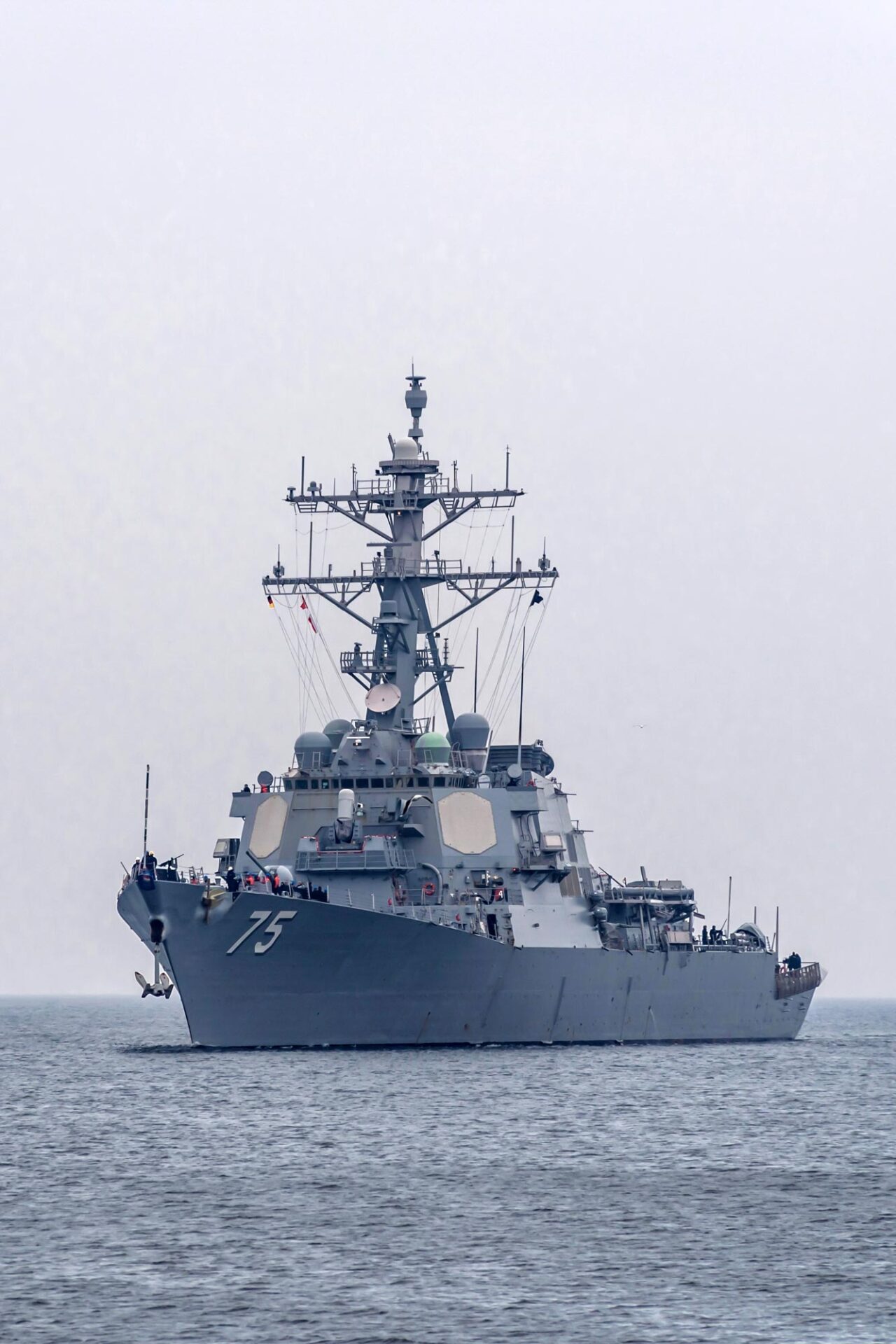
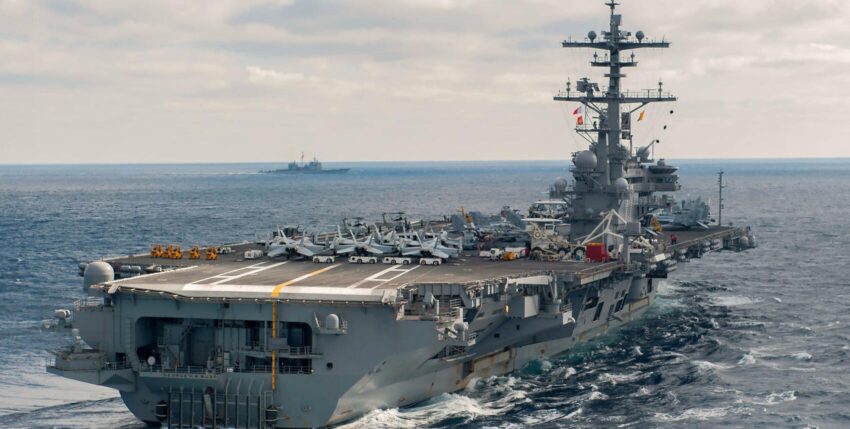
Two aircraft carrier groups and amphibious units ensure presence and limited options; a ground invasion is considered unlikely. In addition to the „USS Abraham Lincoln“ (CVN-72) deployed in the Arabian Sea and/or the Gulf of Oman, another carrier group, the „USS George H. W. Bush“ (CVN-77), is being deployed to the area. Together with the destroyers „USS Ross“ (DDG-71), „USS Donald Cook“ (DDG-75) and „USS Mason“ (DDG-87), it left Norfolk to the east on 31 March. The „USS Gerald R. Ford“ (CVN 78) was withdrawn from deployment after a fire on board and was in the Mediterranean off the coast of Croatia, which it left on 2 April, the USN reports on its official website. The amphibious Tripoli ARG (31st MEU) and the Boxer ARG (11th MEU) are also being added as flexible platforms for limited landing and security operations.
Consequences for the world - and Ukraine
The pressure mainly affects Asia (around 84 % of oil flows), while Europe is primarily affected by prices and insurance; the USA is less physically dependent. Washington is considering concluding the war without a military reopening of Hormuz - this would have long-term consequences for the global maritime order. Europe and Ukraine are indirectly affected: Competition for Western weapons, higher energy prices; Russia initially benefits from higher oil prices, despite logistical restrictions. Militarily, the Iran war competes with Ukraine for the same high-value goods - Patriot, SM-3 interceptor missiles, modern air and sea target munitions. Politico and others report that the Pentagon is considering diverting PURL stocks and air defence packages earmarked for Kyiv to the Middle East.
Dead and injured - list of damaged ships
- SKYLIGHT (IMO 9330020): Chemical tanker (Palau). Hit on 28/02 north of Khasab (OMN). 4 crew members injured; evacuated, sunk.
- MKD VYOM (IMO 9284386): Crude oil tanker (Marshall Islands). Hit on 01/03 in the Gulf of Oman. The ship is adrift and severely damaged; 1 fatality confirmed, unit evacuated. Severe damage to the hull above the waterline and fire in the engine room.
- HERCULES STAR (IMO 9916135): Product tanker (Gibraltar). Hit on 01 March, 20 nautical miles northwest of Dubai. Fire was extinguished.
- STENA IMPERATIVE (IMO 9666077): Oil/chemical tanker (USA). Hit in the harbour of Muharraq (Bahrain). Fire extinguished; crew evacuated.
- GOLD OAK (9806342): Bulk carrier (Panama). Side hit on 3 March at anchor in Fujairah (United Arab Emirates).
- SAFEEN PRESTIGE (9593517): Container ship (Malta). Hit on 04.03. Projectile went through the ship, fire broke out. Crew abandoned ship, further attack on 18.03, fire broke out, no crew on board (since 04.03)
- SONANGOL NAMIBE (9325049): Crude oil tanker (Bahamas). Hit on 4 March at anchor in Iraqi waters, water ingress and ballast water spillage.
- MUSSAFAH 2 (9522051): Tugboat (United Arab Emirates). Hit on 06.03. was on the way to salvage the SAFEEN PRESTIGE, hit by two missiles. 4 dead, 3 injured
- ARABIA III (8771332): Drilling rig (Liberia). Hit on 7 March, fire under control, one injured, crew reduced to a minimum.
- MAYUREE NAREE (9323649): Bulk carrier (Thailand): Hit on 11/03, fire under control, 3 missing
- STAR GWYNETH (9301031): Bulk carrier (Marshall Islands): Hit on 11.03, holes in hold and ballast tank, vessel heeled over
- ZEFYROS (9515917): Oil and chemical tanker (Malta): hit on 11/03 while STS with SAFESA VISHNU, fire, one dead
- SAFESA VISHNU (9327009): Crude oil tanker (Marshall Islands): Hit on 11/03 while STS with ZEFYROS, fire
- SOURCE BLESSING (9243198): Container ship (Liberia): hit on 12.03, fire extinguished (German reference)
- AL SALMI (9534793): Tanker (Kuwait): Hit on 30/03/2026, drone strike on starboard side, fire
- AQUA 1 (9573660): Tanker (Panama): 2 hits on 31/03/2026, 1 explosion, 1 undetonated explosive charge in engine room, recovery of explosive charge completed
Text/Source: MSchLtg / ESuT - Mergener / Schlüter

 English
  German