







The attack on Iran has a number of maritime aspects that the team at the marine forum endeavoured. And only We are only experts in shipping, the navy and maritime security. So: What can the Iranian navy do?
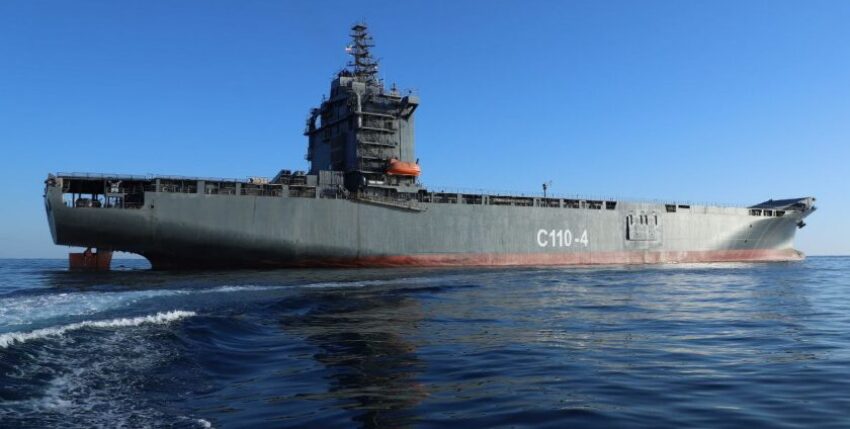
Or rather: what could the Iranian navy do? According to American information, eight units were sunk at the bases. That doesn't say much at first, because we can't verify which capabilities are restricted and to what extent. We count around a hundred surface units in total, but can these units get out and do anything against the US Navy? Probably not. That would be like shooting clay pigeons, according to an expert on "X". Take a look at what we are writing about here: Unusual units, dummies, small units, diverse fleet, pinpricks, but no warships. As if we had suspected it, read about the Iranian navy by naval author and warship expert Stefan Ulsamer here: https://marineforum.online/iran-drohnentraeger-schein-sein-propaganda/. An article that we published a few days ago. In any case, the 20 underwater drones or the Ghadir-class mini-submarines in the Persian Gulf and the various small special units of the Revolutionary Guards are more likely to be classified as unpredictable.
What's going on in the Strait of Hormuz today?
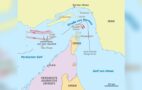
A look at marinetraffic is enough: Nothing! The ships - especially tankers - gather to the west off Dubai and to the east in the Gulf of Oman. In the strait itself: Iranian „proxy units“ and a few scattered fishing boats. Those who cannot leave with oil because the passage through the Strait of Hormuz is too dangerous have to wait. This is causing a halt in supplies to the world's major oil ports. Not today, but perhaps next week. These ships are not the reason why diesel has become more expensive at petrol stations today. And the empty tankers on the eastern side of the Strait of Hormuz want to pick up the crude oil - and have to wait. That will be a problem, because there are not enough places to refuel oil so that everyone can be served quickly. The wait will be protracted, which will certainly be a reason for prices to continue rising temporarily. But: OPEC has announced an increase in production elsewhere. In the medium term, we will - we repeat ourselves - not experience an oil crisis.
Blocking? By whom?
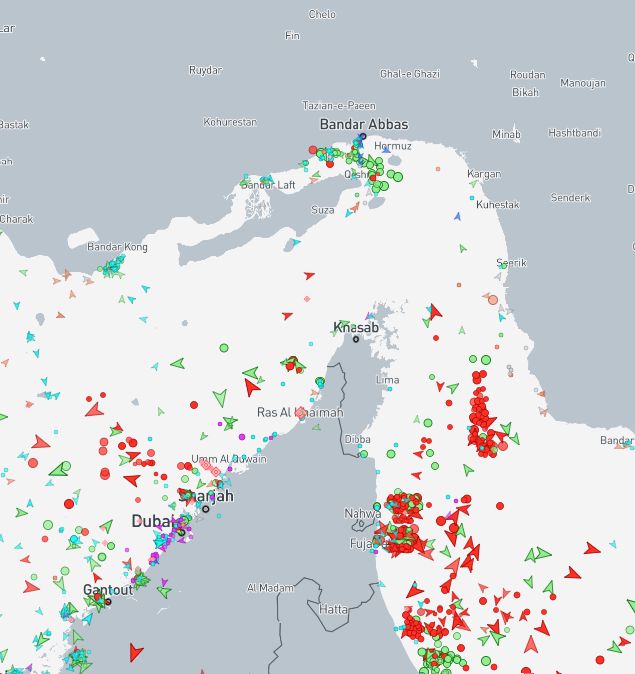
Iranian officials have proclaimed the closure of the Strait of Hormuz, but are unable to enforce it with their own naval units. Although a tanker has been hit by a Shahed kamikaze drone, this is so far the only attack on a merchant ship, which is also a sanctioned pro-Iranian vessel. The crew of the Palau-flagged oil tanker „Skylight“ was evacuated in time. The real reason why no more ships are sailing is not just the risk of missile attacks, but the insurance policies. A lot of money is at stake here for the risks to be hedged. It is not only the Iranian navy that is paralysing the sea route through indiscriminate attacks with guided missiles, but also the profit from premiums.
Where does our oil come from? Gas is a problem!
The alternatives to the Strait of Hormuz, through which at least 33% of the world's liquid natural gas (LNG) and 20% to 40% of crude oil are transported, are few. That is 20 million barrels per day. One alternative would be to build pipelines. But is that feasible when the main customers are China and India? Our European problem is not the oil that goes through the Strait of Hormuz, because after the ban on Russian oil, Germany gets its energy from Norway, Kazakhstan (Druzhba Pipeline) and the USA. Only a small amount comes via Rotterdam from Saudi Arabia and Nigeria. The gas supply is becoming more problematic than the oil supply! The loss of Russian gas has made replacement urgent: unfortunately, our storage facilities are currently only filled to 21%, as even the Federal Network Agency admits. Because the operators did not want to pay high prices in the autumn, they will now have to pay any price. Once again, the old, instructive wisdom: industrial energy and warm homes are dependent on free sea lanes.
Conclusion:
The editorial team marine forum is not staffed or equipped to provide all users with the latest news on missile strikes. And we don't want to, because that doesn't contribute significantly to opinion-forming. Next month - sorry - nobody will be interested in whether an influencer in Dubai was screaming at the microphone or hotel guests were sitting in the underground car park. And we'd better keep quiet about cruise organisers who could have foreseen the drama. However regrettable it may be for those affected, The lessons to be learnt are of a security policy nature. Sea routes are relevant for all of us in Germany; energy supply is not possible without maritime security. Do not misunderstand: We too would like to see a peaceful outcome and freedom for the Iranian people, an end to the killings and indiscriminate attacks throughout the region - but our focus is the sea. And there is more to report on: the impact on shipping in the Red Sea and the Mediterranean, the possible increase in the EU's Operation Aspides, and what role NATO could still play. We are not speculating - We want to provide maritime-related information. Please wait and see.
Text: hsc / ajs

 English
  German