





Kanda's submarines - economic anchoring as a strategic compass
When the government in Ottawa announces the decision on the „Canadian Patrol Submarine Project“ (CPSP) in June 2026, it will be about much more than the technical specification of twelve conventional submarines. In a geopolitical environment characterised by growing tensions in the Arctic and Indo-Pacific, this defence contract - the most significant in the country's history - serves as an economic and strategic game changer. The central question is: Which economic anchor is more sustainable for Canada in the long term? The established ties to the East, represented by Germany and the European Union, or the aggressive industrial expansion to the West in the direction of South Korea?
Canada finds itself in a situation in which economic indicators are directly translated into security policy ambitions. Germany is already Canada's second largest trading partner. The depth of this relationship can be seen in massive direct investments: While cumulative South Korean investment in Canada totalled around CAD 15.7 billion by 2022, the Volkswagen Group alone invested around CAD 7 billion for its battery cell factory in Ontario, almost half of this sum in a single project. These figures illustrate the weight of the German industrial footprint, which extends far beyond the defence sector.
Two bidders, two industrial philosophies
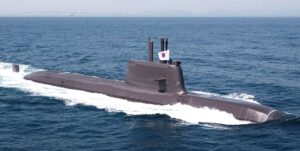
The competition between ThyssenKrupp Marine Systems (TKMS) and Hanwha Ocean reveals two contrasting visions for Canada's industrial landscape. South Korea is pursuing a strategy of „aggressive expansion“. Hanwha Ocean promises not only submarines, but also the establishment of Canada as a hub for the South Korean „K-Defence“ ecosystem. The offer includes impetus for hydrogen fuel cell technology and the local production of land systems such as the K9 self-propelled howitzer or the Redback infantry fighting vehicle. Commitments to the national steel industry at Algoma Steel in Ontario are also intended to strengthen security of supply. It is the promise of broad industrial revitalisation through diversification.
In contrast, TKMS pursues an approach of technological deep integration, the core of which is The „Canadian Defence and Dual-Use Innovation Ecosystem“ (CDDE) forms. Instead of broad diversification into tank construction, Kiel is focusing on creating a highly specialised research ecosystem. One prominent example is the cooperation with General Dynamics Mission Systems-Canada to set up the „Arctic Sentinel“ underwater research and development centre“. This centre will not only strengthen the monitoring of the Arctic sea area, but also generate up to one billion dollars of added value domestically through the development of exportable dual-use technologies. Particularly important: the resulting intellectual property is to remain explicitly in Canada.
The budget behind the boats: Life cycle vs. purchase
In the public debate, the estimated total budget of up to 90 billion Canadian dollars (around 56 billion euros) regularly causes misunderstandings. The differentiation between industrial order volume and life cycle costs is crucial for categorisation. The figure of 37 billion euros often quoted describes the pure volume for the design and construction of the twelve units. This amount is used in the media in connection with TKMS. The figures for Hanwha vary, with the South Korean offer said to range from just under 30 to 42 billion euros. Compared to the company price, thehe Canadian Department of National Defence (DND) with the „Total Cost of Ownership“ over a service period of 30 to 40 years.
This long-term calculation includes maintenance, training, spare parts stocks and necessary infrastructure adjustments. This is precisely the argument against an often speculated „split“ of the order. The military leadership has repeatedly rejected a division between the bidders as impractical. Two different ship classes would almost double the logistical complexity and the need for specialised personnel - an incalculable risk in view of the existing personnel shortage in the Royal Canadian Navy. In addition, the industrial offsetting projects are economically linked to the full volume of twelve units.
Clout in the context of Arctic sovereignty
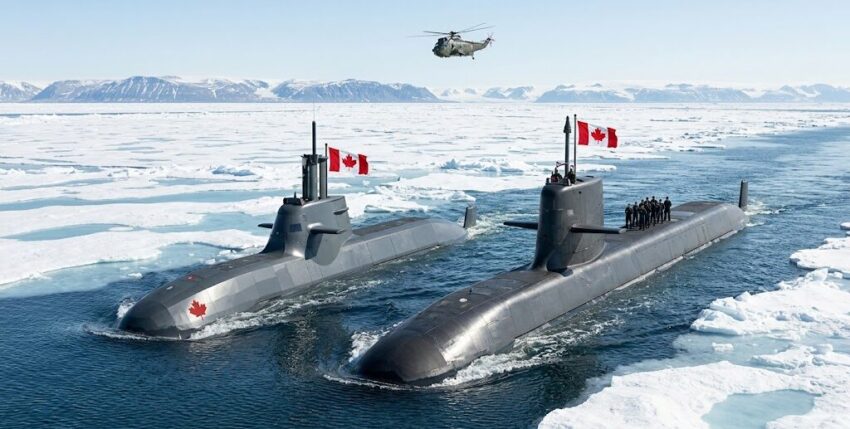
Despite the focus on economic aspects, operational suitability remains the ultimate criterion. The competitors could hardly be more different:
-
Hanwha KSS-III Batch II: With approx. 89.3 metres long and with a submerged displacement of around 4,000 tonnes, it is an impressive power projection platform. Its unique selling point is the Vertical Launch System (VLS) with ten cells for cruise missiles, which gives it high strategic effectiveness.
-
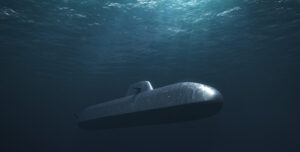
TKMS U212CD: With approx. 73 to 74 metres long and with a displacement of 2,800 tonnes, it is significantly more compact and less labour-intensive. It relies on maximum stealth properties thanks to non-magnetic steel and the distinctive „diamond shape“. The technological expertise for VLS solutions - as already implemented by TKMS for Israel - is a proven option in the background, but is not listed as a standard hull integration in favour of acoustic camouflage.
Optimisation for Arctic operating conditions is essential for Canada. This is where the CDDE concept comes in, integrating partners such as Magellan Aerospace for weapon systems, Finkl Steel for pressure hull components and E3 Lithium for the battery supply chain. An academic network with Dalhousie University (Halifax), Western University (Ontario) and the University of British Columbia (Vancouver), among others, will also drive forward AI-supported sensor analysis in order to technologically secure sovereignty in northern waters.
Can defence policy and economic ties be the deciding factors?
The decision in June 2026 will show whether Canada gives in to the temptation of South Korean industrial breadth or favours transatlantic technological depth. The economic ties to the East have grown historically and are underpinned by billions in investments in key sectors such as battery technology. U212CD also offers seamless integration into proven NATO structures and the security of interoperability with the closest allies.
South Korea, on the other hand, offers the dawn of a new era as a defence manufacturer. Ultimately, Ottawa must consider which partnership will best protect national sovereignty - both industrially and militarily - over the next four decades. Germany's economic anchor is heavier and buried deeper in Canadian soil, but the aggressive dynamic from the Far East presents a challenge that extends far beyond the wake of submarines.
Info box: Comparison of industrial ecosystems
| Range | Team Hanwha Ocean | Team TKMS U212CD |
| System integration |
MDA Space, CAE, Lockheed Martin Canada (CMS connection) |
General Dynamics Mission Systems Canada |
| Weapon systems | Hanwha (VLS hardware), Raytheon Canada |
Magellan Aerospace (weapons integration and production) |
| Steel & structure |
Algoma Steel |
Finkl Steel, Forges de Sorel |
| Maintenance |
Babcock Canada, AtkinsRéalis |
Seaspan |
| Energy & Batteries |
Hanwha (Li-Ion Tech), Elektra Battery Materials |
E3 Lithium (local raw material chain) |
| Research & AI | Cohere (AI), Ballard Power Systems (fuel cell option) |
Arctic Sentinel Centre, Dalhousie University, Western University, University of British Columbia and others. |
| Industrial focus |
Automotive & Armouring (APMA) |
Deep-Sea & Arctic-Tech Transfer (CDDE) |
 English
  German