






Hybrid threats and dynamic security situations place new demands on the protection of maritime infrastructures. Adaptive, mobile multi-sensor platforms complement conventional monitoring systems with rapid deployment capability, networked data analysis and an improved situational awareness for operators and authorities.
The maritime industry is facing a growing number of security-related challenges that are increasingly reaching the limits of traditional monitoring and control approaches. In addition to traditional risks such as accidents or weather events, targeted disruptions and hybrid threats are on the rise: sabotage of submarine cables, GNSS disruptions or drone overflights over LNG terminals show that maritime infrastructures have long been part of hybrid threat scenarios. Operators of harbours, waterways and offshore facilities are therefore faced with the challenge of providing a reliable situational picture even under dynamic conditions.
Until now, maritime surveillance has mainly been based on stationary sensor technology. Radar systems, AIS receivers or cameras are permanently installed, designed for clearly defined areas and commissioning involves considerable administrative, organisational and infrastructural effort. Stationary systems provide continuous data, but are limited in their range and adaptability. High investment costs, approval processes, space requirements and complex IT integration also lead to long realisation times. In dynamic security situations, such structures can therefore only react to a limited extent. In addition, data sources are often analysed in isolation, meaning that correlations between cyber and physical events are only visible to a limited extent.
One approach to overcoming these limitations is the use of mobile, adaptive sensor platforms. Instead of relying exclusively on fixed infrastructure, mobile sensor platforms are specifically relocated to where they are currently needed. Mobile platforms on land and floating sensor carriers at sea thus shift the monitoring logic from static presence to demand-orientated responsiveness - without lengthy set-up phases or permanent interventions in existing infrastructure. Such systems can be put into operation within a very short time and removed again just as quickly once an operation has been completed. They complement stationary solutions and significantly expand the room for manoeuvre of operators and authorities.
However, the real challenge lies not only in data acquisition, but also in analysing the resulting data volumes: Ship movements, radio signals, GNSS data, radar information, operational or environmental data. Only the targeted combination of this data creates a consistent maritime situation picture. For operators of critical maritime infrastructures in particular, this approach not only means more data, but also better decision-making quality. Harbours, terminals, offshore wind farms and important waterways can be monitored in a targeted and demand-oriented manner without having to install new stationary systems across the board. AI-supported analyses detect anomalies - such as conspicuous ship movements, interference with navigation signals or drone overflights - prioritise events and reduce false alarms, which is a decisive advantage in the event of a crisis. Instead of pure observation, a forward-looking assessment of the situation is used to actively support decision-making processes. The systems do not replace human judgement, but increase transparency and situational awareness.
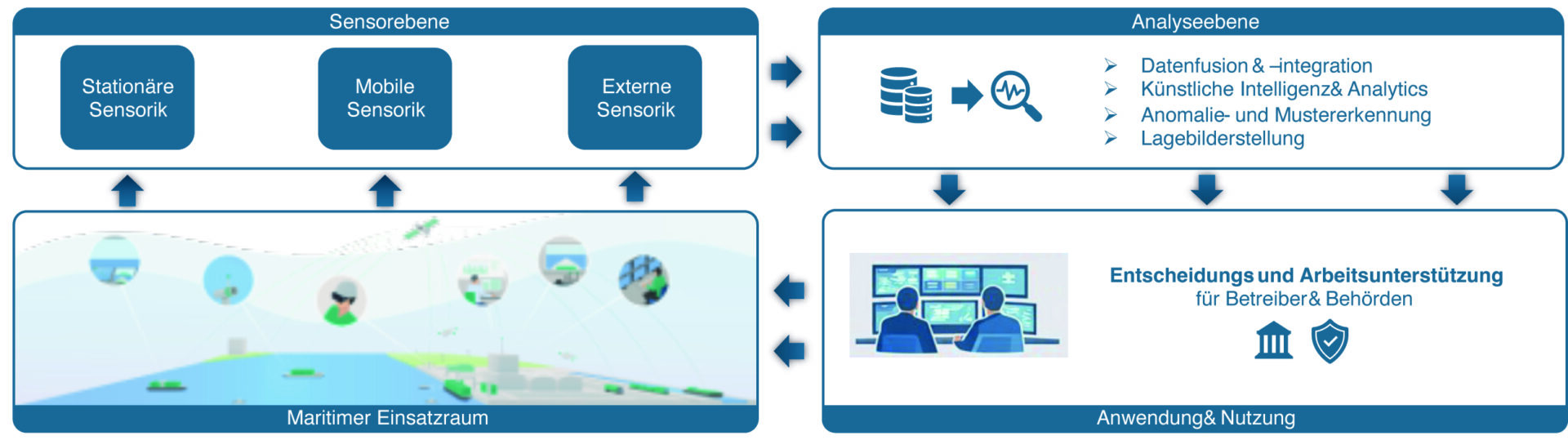
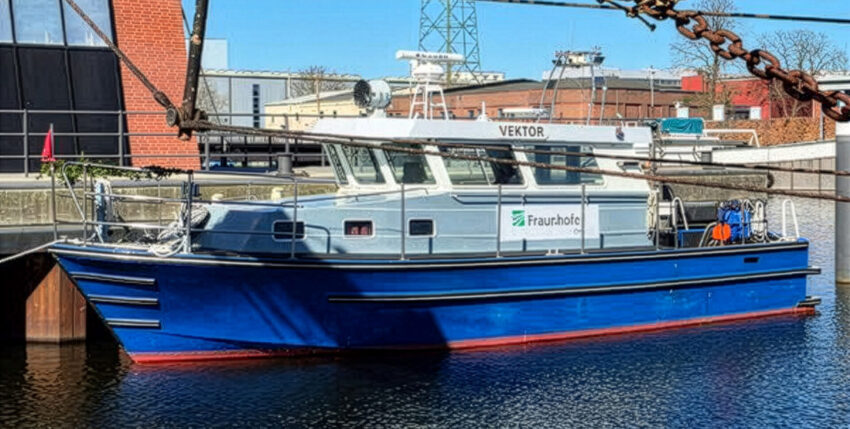
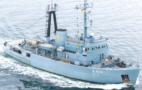
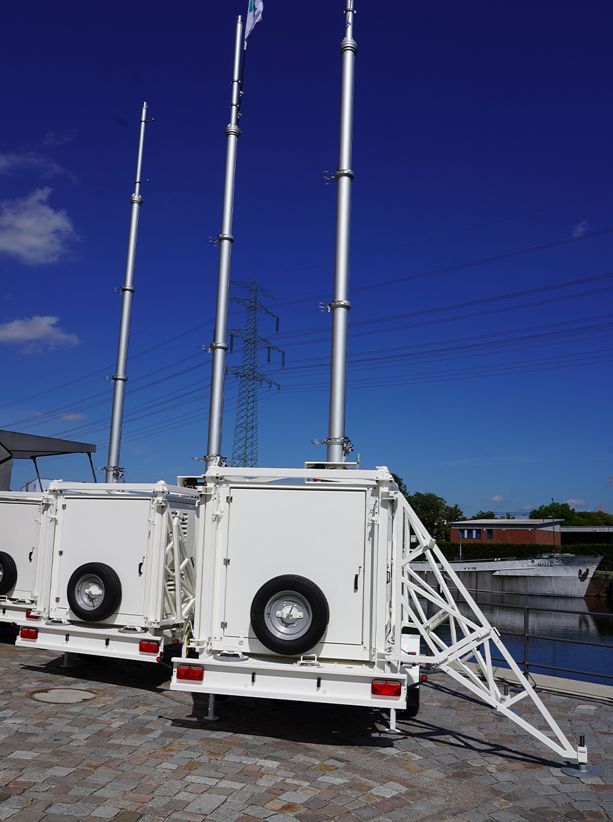
In this context, the Fraunhofer Centre for Maritime Logistics and Services CML in Hamburg pools expertise in the areas of data and sensor fusion, system integration and AI-supported decision support. The combination of real infrastructure and its own analysis platform makes it possible to validate research approaches directly under real operating conditions. To this end, the Fraunhofer CML operates a sensor network consisting of four adaptive, mobile multi-sensor platforms. Three land-based „Cells on Wheels“ (CoWs) and the research vessel »Vektor« as a maritime carrier platform form the core of the network. Equipped with a large number of sensors, this combination makes it possible to record the maritime space from both land and sea and to merge different perspectives into a common situational picture. The collected data is combined in a separate, independent data and analysis platform to create a cyber-physical situational picture. AI and analysis tools, for example for traffic flow analyses or speech processing, are used to extract relevant information from the data streams and link it together in a useful way.
Building on the data and analysis platform, Fraunhofer CML is developing application demonstrators for various use cases in research and development projects. For example, the adaptive, mobile multi-sensor platforms are being used in the DIEB research project (data-driven identification, assessment and addressing of hazards for LNG terminals) to enrich the situation picture at the Wilhelmshaven LNG terminal with additional data sources. Data-driven algorithms for identifying and assessing threats from espionage and sabotage activities from the air, sea and cyber domains are being developed based on the expanded situational picture. The aim is to significantly shorten the response chains for addressing the threats. The DIEB research project is being implemented together with Niedersachsen Ports and other partners from industry and authorities, including UAV DACH, the Federal Waterways and Shipping Administration (WSV), Deutsche Energy Terminal GmbH, the Lower Saxony State Office of Criminal Investigation (LKA) and the German Navy. The project is funded by the Federal Ministry of Research, Technology and Space (BMFTR) as part of the „Research for Civil Security“ programme.
The development of AI-supported situational awareness systems and the integration of adaptive, mobile multi-sensor platforms marks an important step towards greater resilience in the maritime sector. A scenario is conceivable, for example, in which mobile sensor platforms are deployed at short notice in the vicinity of a sensitive harbour area or along a busy waterway in order to provide a resilient, situation-dependent situational picture within a few hours in the event of a changed threat situation. The future of maritime security does not lie in the replacement of stationary systems, but in their targeted supplementation with mobile multi-sensor platforms and the strategic utilisation of the data obtained. These mobile multi-sensor platforms make it possible to flexibly scale monitoring capacities and operationally integrate data-driven analysis processes. For maritime infrastructure operators, this means one thing above all: greater responsiveness, comprehensive transparency and increased resilience to dynamic threats.
The Fraunhofer CML is positioning itself as a research and development partner for the integration of mobile sensor technology, data-driven AI analysis and operational implementation in the maritime environment.
The authors:
Dr Ole John, M. Sc. Maximilian Reiman and M. Sc. Christoph Martius, Fraunhofer CML, Hamburg

 English
  German
One Response
The article makes an extremely valuable and timely contribution to strengthening maritime critical infrastructures. The outlined paradigm shift away from rigid sensor technology towards adaptive, AI-supported multi-sensor platforms is strategically absolutely correct and innovative in view of the increase in hybrid threats. In particular, combining disparate data into a holistic picture of the situation offers authorities tangible added value for predictive action.
Despite all the technological euphoria, however, the text falls short in key operational dimensions: the immense cyber security requirements of the mobile sensor networks themselves unfortunately go unmentioned. These include, for example, state-of-the-art ML-KEM encryption with FrodoKEM as a fallback level or other details such as PTP for synchronising the individual sensor node time stamps. In addition, such a highly complex AI situation picture requires crystal-clear official responsibilities, otherwise the technological speed advantage will evaporate in practice.
Another ambiguity is the official GNSS system installed on the research vessel Vektor, which is said to be accurate to „well below 6 metres“: https://youtu.be/EoLhBMjGJPg?si=Rskwpl8pSBvhvAIm&t=153
Even if modern technologies such as RTK (more precise navigation through the use of additional correction data) are unlikely to be used consistently for some KRITIS objects such as pipelines and submarine cables, it is surprising that Galileo services such as HAS (the highly accurate Galileo signal) and PRS (Public Regulated Service) in particular are apparently not being used here. The hardened PRS service in particular is intended for authorities and KRITIS operators and, together with other methods such as R-Mode (a modern trilateration of stationary radio transmitters), would form the basis for the required hybrid navigation.
Nevertheless, the Fraunhofer CML offers an outstanding, forward-looking impetus for applied security research, for which the participants deserve great thanks. -15 lines