









Multinational maritime manoeuvre Mjølner 2026 in northern Norway
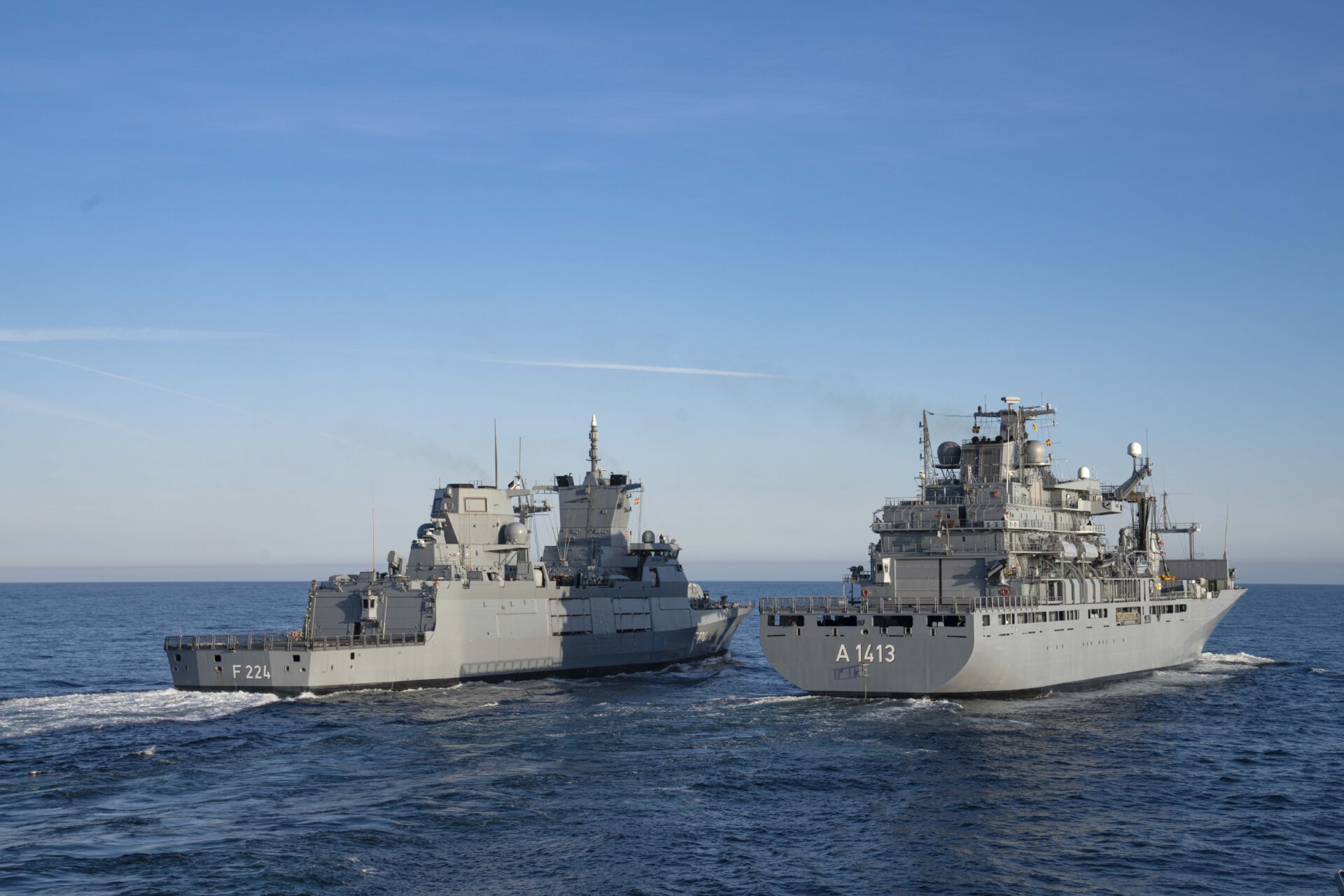
On 1 May 2026, the ships involved in the Mjølner 2026 exercise arrived in Harstad, Norway, for the first time. Their arrival marks the start of the visible preparatory phase of a multinational maritime exercise under German leadership.
Almost 2,500 soldiers from Norway, Belgium, Denmark, the Netherlands and Germany are taking part in the manoeuvre. Sweden and Lithuania are accompanying the exercise as observers. A total of eight ships from the participating nations and forces from the Norwegian armed forces are involved.
The German Navy is represented by the frigates "Sachsen-Anhalt" and "Hamburg", the task force provider "Bonn" and the corvettes "Braunschweig" and "Erfurt". The Norwegian frigate "Fridtjof Nansen" and the Danish frigates "Iver Huitfeldt" and "Absalon" are also taking part in the manoeuvre.
Mjølner 2026 will focus on training under realistic operational conditions. Training will take place over several days in continuous 24-hour operations at sea and on land. The aim is to consolidate procedures under time pressure and to further strengthen cooperation between the partners, all under high stress. The tactical firing plans are generally not publicised. This is due to the security policy framework. The northern flank is the strategically most important and largest area on the northern flank. Moelnar is more than just a major exercise: Mjølner symbolises NATO's steadfastness on the northern flank.
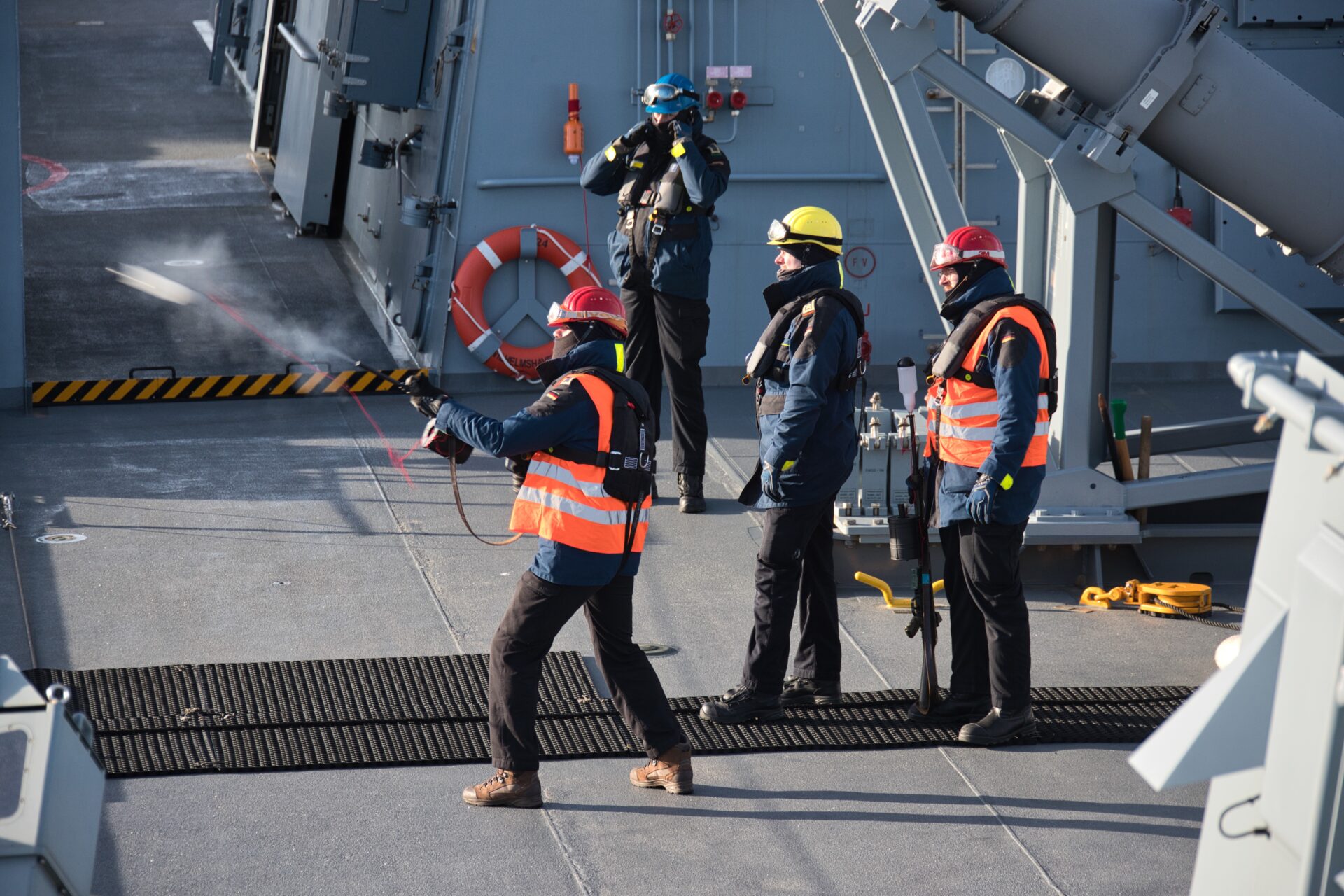
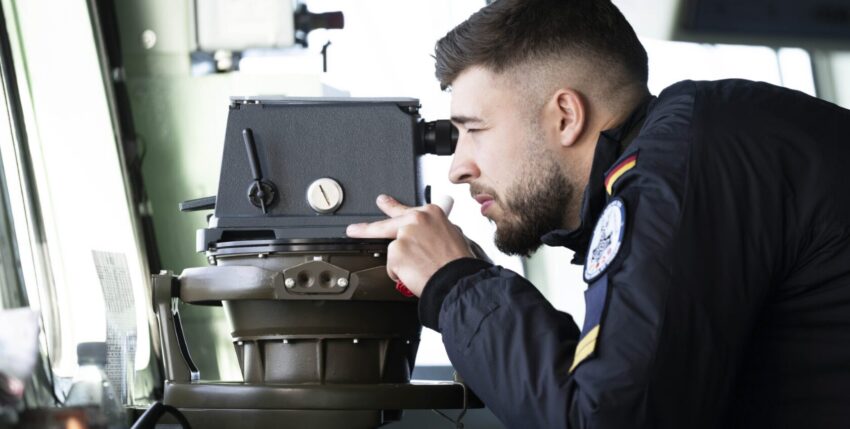
In the so-called CET/FIT phase (Combat Enhancement Training/Force Integration Training), the soldiers prepare for the coming week. The aim is not just to master individual skills, but to allow all forces to act in unison.
Text: Red / Photos: German Navy/Julia Kelm

 English
  German
2 responses
Dear Mr Schaedel,
Thank you very much for your questions, which we would like to answer here as far as we know the answers.
It is customary internationally that military training and shooting projects are not publicised, usually for reasons of secrecy. In this respect, it is not possible for us as editors to answer your question in detail by location and date. Speculation and conjecture are also not our concern.
In general, marine life can die or be harmed during live-fire exercises, particularly by underwater explosions and strong sonar signals. However, as far as we are aware, the Mjølner 2026 exercise is predominantly conducted above water, in the air and on land.
Modern navies, such as NATO members, try or are obliged to minimise disruption through exclusion zones, observation, scheduling, technical options, acoustic monitoring and interruption in the event of sightings. The aim is always to minimise disruption and injuries - but the risk cannot be completely eliminated.
Marine mammals such as whales, dolphins, harbour porpoises and seals are particularly affected by strong pressure waves and noise in general. Fish, especially those with swim bladders, are also at risk (example: fishing by blasting), but invertebrates such as crabs, mussels, squid or plankton also react to loud disturbances - unfortunately often less well researched, but certainly relevant.
However, this is not the only threat. Every year, over 50 harbour porpoises are washed up on the German Baltic coast. Researchers suspect that these mammals have died as bycatch in gillnets, for example.
Various technical methods can be used to protect these sea creatures. The most common method is the bubble curtain: compressed air is pressed through hoses laid on the seabed to dampen the extreme pressure of (mining) blasting or pile-driving work (e.g. during the construction of offshore wind farms). The rising curtain of air bubbles absorbs and scatters the sound waves, which significantly reduces the volume. This is also the favoured method of the German Navy.
Special resonator units are another method of minimising sound energy. These work in a similar way to silencers, only electronically. They are placed around the noise source in the water and „swallow“ the noise.
Laser-based methods or controlled burnout (deflagration) are increasingly being used to destroy old munitions instead of genuine „high-order“ detonation. This generates a much lower pressure wave.
There is a clear physical answer to your question about how far detonations can be heard in the sea and how quickly sound waves travel. Sound travels in salt water (depending on the salt content (salinity), pressure (water depth) and temperature) at an average speed of 1,500 metres per second. This is almost 4.5 times faster than in the air at 343 m/s.
We hope that we have answered your questions as comprehensively as possible.
Yours sincerely,
for the editorial team
Klaus Klages
Hello,
Are many sea creatures killed during the shooting exercises? What is being done to protect them?
How far do the detonations reverberate in the sea?
Thank you very much for your reply.
Yours sincerely
H. Schaedel