




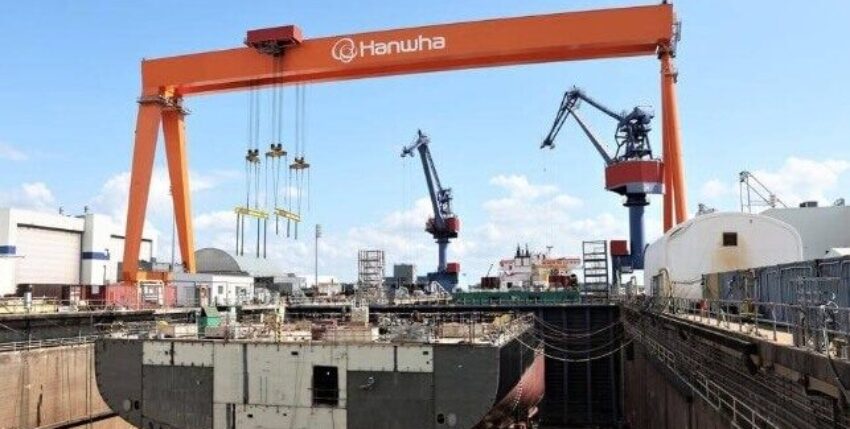


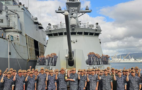


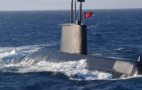
Hanwha Philly Shipyard, formerly Philadelphia Shipyard, has been under South Korean management since December 2024 and has won its first construction contract for the US Navy.
As a subcontractor of VARD Marine US Inc. - a company of the Italian Fincantieri Group specialising in ship design, naval architecture and shipbuilding - the shipyard is participating in the development programme for a light supply tanker T-AOL. The contract includes concept development, analysis of existing foreign designs, cost assessments and optimisation for cost-effective production. This will also improve Hanwha's starting position for subsequent construction contracts.
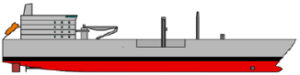
The new class of ship is intended to ensure the advance supply of the US naval forces using commercially available technology. The plan is for a small, lightweight and cost-effective supply ship that can also operate in coastal areas. According to previous studies, the carrying capacity should be around 3,500 to 4,000 tonnes. The shipbuilding plan for the US budget year 2023 calculated costs of around 128 million euros for the first unit. Last year, around 85 million euros were pre-authorised for the procurement. By comparison, a John Lewis-class carrier group supply ship with a displacement of just under 50,000 tonnes costs around 680 million euros.
The supply fleet is currently a particular focus of the US Navy. A fleet can only remain operational as long as fuel, ammunition, spare parts and other supplies are secured. However, the Military Sealift Command (MSC), which operates the fleet, has been struggling with a lack of personnel for years and has already had to decommission smaller support units. The Chief of Naval Operations recently warned that the MSC is overstretched due to high utilisation, but that it is of central importance in the Indo-Pacific in particular.
A combat-capable fleet - including the German fleet - is therefore only as strong as its logistical support. For this reason, operational supply, personnel recruitment and sustainability must always be prioritised as core strategic tasks.
kdk, The Maritime Executive

 English
  German