





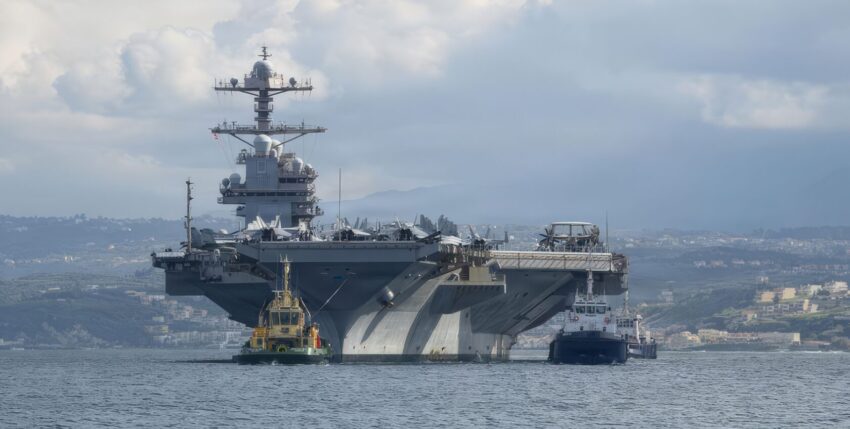





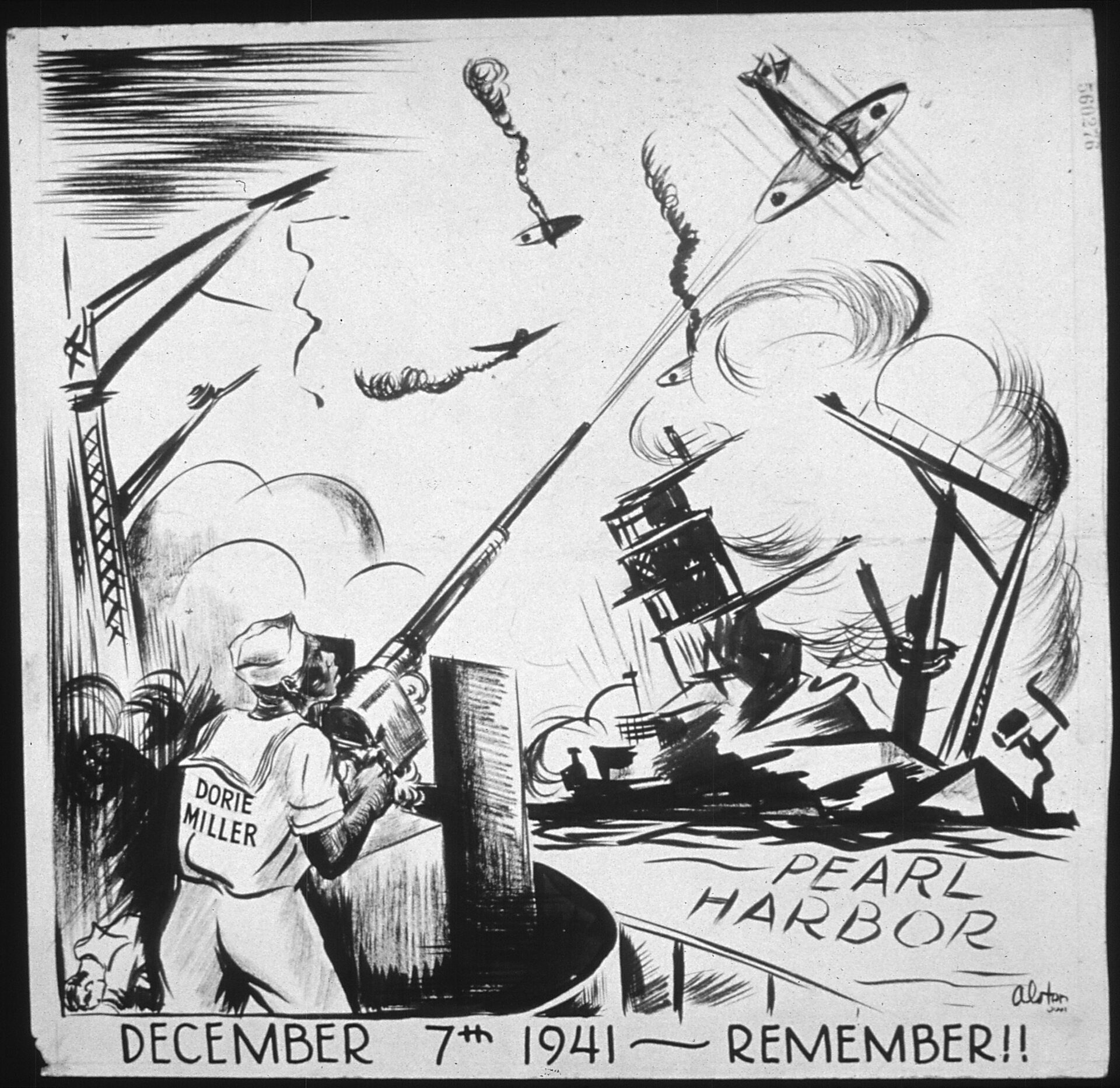
According to the budget documents for fiscal year 2027, the delivery of the third US aircraft carrier of the Gerald R. Ford class, the „USS Enterprise“ (CVN-80), has been postponed until March 2031. The fourth ship in the class, the „USS Doris Miller“ (CVN-81), is now not due to be handed over to the Navy until February 2034, which is also two years later than previously planned.
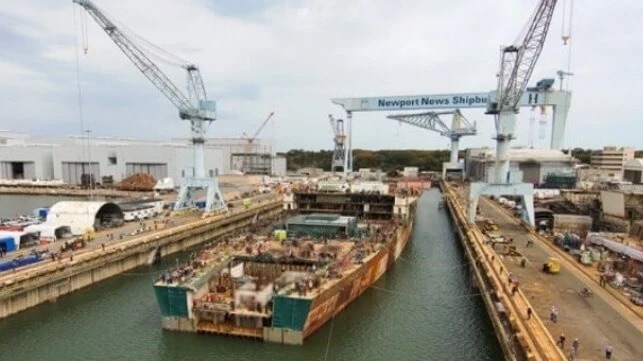
The Navy cites limited production capacity at Newport News Shipbuilding as the main reason for this. The Huntington Ingalls Industries shipyard is still the only company in the United States that builds nuclear-powered aircraft carriers. According to the Navy, space bottlenecks at the shipyard are currently hampering parallel module production for the fourth carrier. In addition, there are ongoing supply chain problems and delays in the construction of the „USS Enterprise“, which are now having an impact on the follow-up programme. More on the modernisation programme for the US carrier fleet:
This development illustrates the ongoing structural challenges facing the Ford class. While the last Nimitz-class carrier, the „USS George H.W. Bush“, was completed in less than six years from keel laying to commissioning, the construction times for the new class are increasing significantly. The „USS John F. Kennedy“ (CVN-79), which is now scheduled for commissioning in March 2027, will take almost twelve years to build.
This has immediate consequences for the US Navy. Congress stipulates a fleet of at least eleven aircraft carriers. In order to comply with this requirement, the „USS Nimitz“, which was originally scheduled for decommissioning, will remain in active service for longer. The replacement of other older units of the class of the same name is also likely to be delayed accordingly.
Newport News refers to the extensive modernisation of its infrastructure. The construction dock was already converted at the end of 2024 so that two girders can be installed in parallel for the first time. However, the latest postponements show that these measures have not yet been able to eliminate the bottlenecks.

This brings fundamental questions about the performance of the US shipbuilding industry and aircraft carrier construction in particular into focus. In view of growing global tensions and the central role of carrier battle groups for the power projection of the USA, the delayed influx of new units is of considerable strategic relevance.
kdk, Maritime Executive, Stars&Stripes

 English
  German
One Response
I think Iran just demonstrated that aircraft carriers are becoming obsolete!