











Strait of Hormuz: Iran's no-go zone and the danger of mines
As we learnt at the weekend, Iran is said to have laid mines in the Strait of Hormuz. Presumably. There is no evidence of this and the probability is low. But this allegation can cause a great deal of uncertainty and unrest. That is the purpose. Does Iran have anything to gain from mining its own waters? No.
On the morning of 9 April 2026, the Revolutionary Guards published a navigation map that officially declares the internationally established shipping routes of the Traffic Separation Scheme (TSS) to be a „Danger Zone“. This has led to a situation in which transit is increasingly dependent on Iranian authorisation, prior inspection and fee demands. Instead of free passage under international maritime law, the threat of military force against unauthorised ships applies. The Tehran regime only needs to selectively control traffic, create uncertainty and increase the risk for shipowners, charterers and insurers to such an extent that economic coercion has the same effect as a physical blockade.
Asymmetric warfare and traffic control
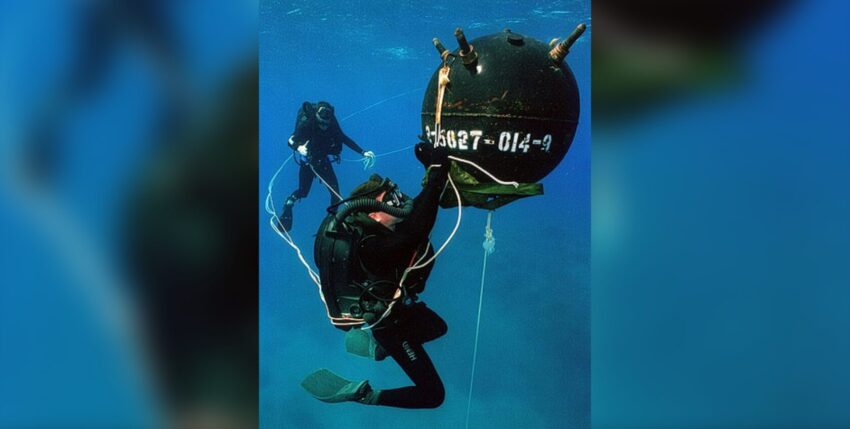
One means of creating uncertainty is the threat of a mine hazard. According to specialist sources and risk analyses, Iran has had around 5,000 to 6,000 sea mines of various types for years. However, it is not the total number in the stockpile that is decisive, but the quantity that has been and/or can be deployed in the designated sea area.
The public picture of the situation remains blurred: in March 2026, reports ranged from fewer than ten to around a dozen to several dozen mines that had already been laid or prepared. An openly confirmed, reliable total figure is not yet available. In military terms, this lack of clarity is not a shortcoming, but part of the effect. In a bottleneck like Hormuz, a few credibly placed mines are enough to slow down traffic, force diversions, increase war risk premiums and tie up mine defence forces.
Iranian mines
A mixed arsenal of simple and more complex systems can be assumed for the range of types. These include classic anchor and contact mines. In addition, there are base mines with magnetic and acoustic sensors. These mines have a so-called "shipcount", which only detonates the mine after a certain number of passages. He also lists EM-52 and EM-56, bottom mines that have a drive. The military value of this arsenal lies not in its technical diversity, but in the combination of its operating principles: Simple mines quickly create a risk on the ground - more complex systems prolong clearance times and increase insecurity.
In addition to the available arsenal, transport capability is an important criterion. Sutton and Arab News point out that small IRGC boats can transport two to three mines per trip. Due to its proximity to its own coast and the large number of small platforms, Iran can thus create a credible mine risk. Iranian propaganda videos demonstrate the transport of mines from helicopters. The Ghadir mini-submarines are said to be capable of deploying mines. Ultimately, civilian vehicles - such as dhows or fishing boats - can also be used to deliver mines.
The threat
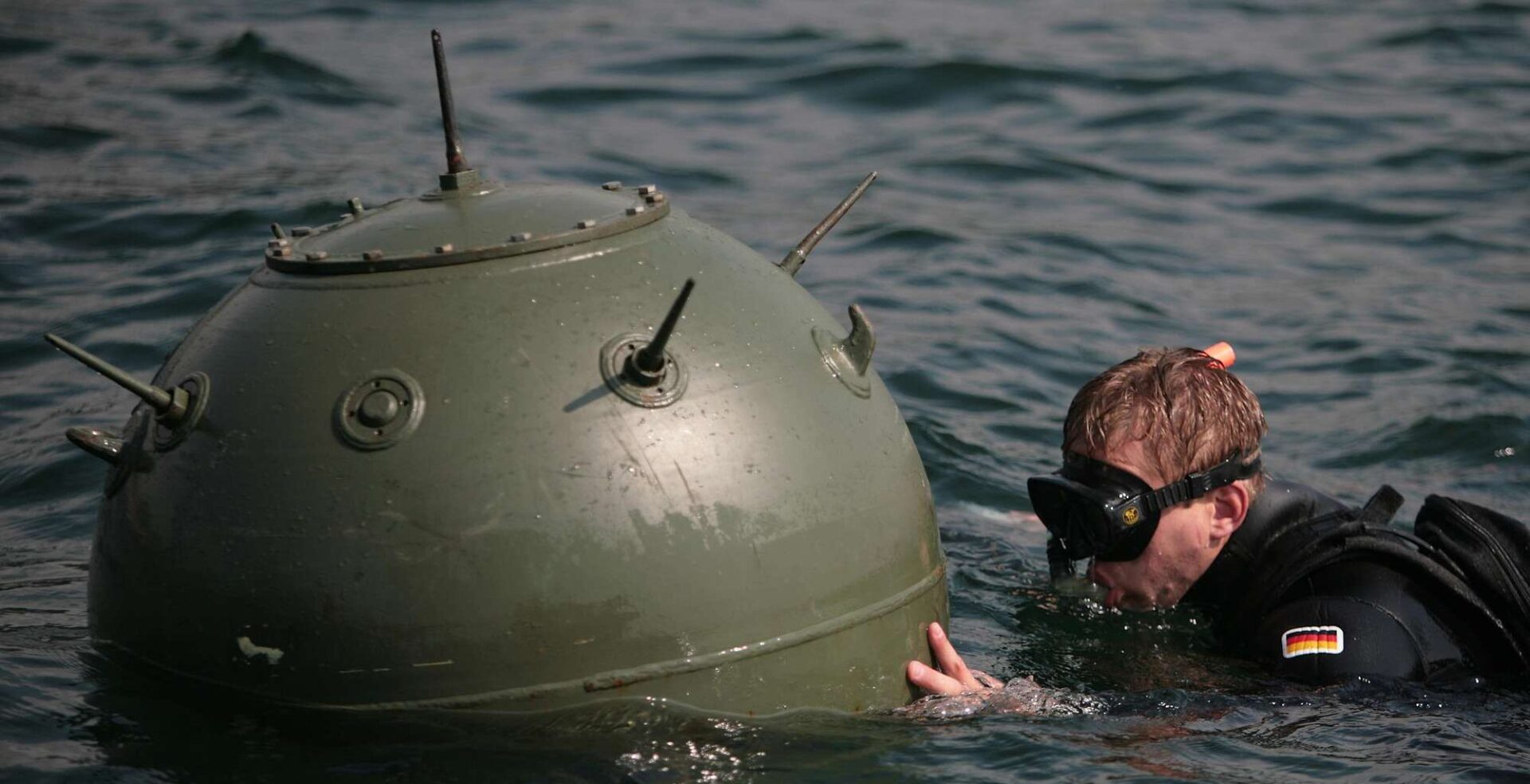
The real threat therefore arises from two factors: From existing possibilities - and from the political will to utilise them.
The political will can be seen in the current transit controls, in the demand for fees and clearances and in the willingness to openly instrumentalise merchant shipping as a means of exerting pressure.
For the maritime situation assessment, it is not only decisive whether a large minefield has already been detected. The Tehran announcement alone is enough to increase the risk. In the context of the control regime, sea mines become the central instrument of „maritime coercion“.
The Marineschifffahrtleitung, an office of the German Navy, states in its situation report of 9 April, not only because of the mine danger: „Attempting to pass the SoH at this time is to be regarded as highly dangerous. A recommendation not to attempt this will continue to be issued by the MSchLtg to German shipowners.“
Text: hum / hsc

 English
  German
One Response
- The EM-52s lie at the bottom, and when they are triggered, they shoot vertically to the surface.
- The EM-56s have a drive that enables them to travel in supposedly cleared areas and constantly change their position.
Even if I repeat myself here: New threats will not wait!
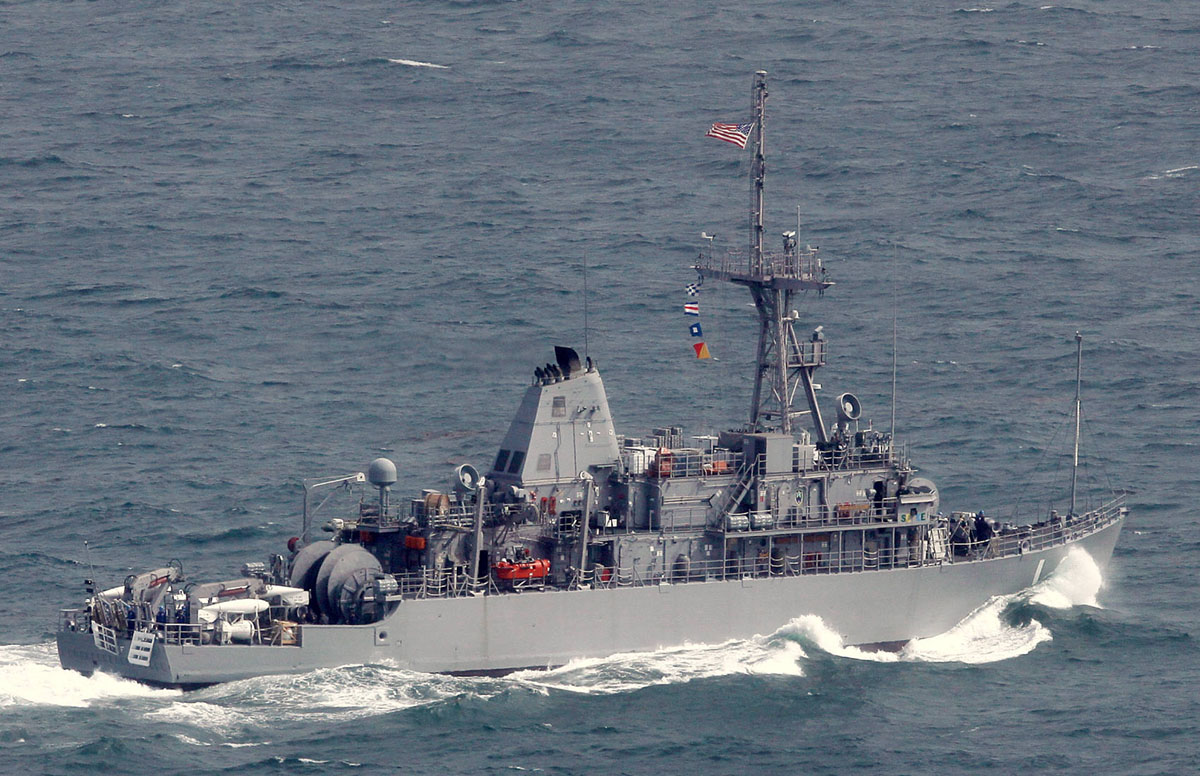
We need to modernise our mine countermeasure capabilities quickly, because the threat is changing rapidly. We need to move away from the simple image that the technology of the future will completely replace the old. Instead, we will be dealing with a dangerous mix in the future: Traditional naval mines such as anchor mines or bottom mines will remain as inexpensive barrier weapons. However, these are increasingly being supplemented by autonomous mines. These new intelligent systems drift or patrol independently in designated areas or lie in wait, barely detectable. The war in Ukraine has shown how effective surface drones are with systems such as the MAGURA series or the Sea Baby. But drones will also hunt autonomously underwater in the future.
The EM-52 and EM-56 are just the beginning of a development that will continue inexorably, as in the drone war in Ukraine. It is time to move forward quickly before we are completely left behind by developments and, as has already happened in other areas, fall behind! -10 lines