








When British Prime Minister Keir Starmer attended the Joint Expeditionary Force Summit in Helsinki at the end of March, London announced that military and paramilitary teams would now be authorised to board or board sanctioned vessels that are part of the shadow fleet while transiting British waters in order to inspect them and take further action.
This explicitly includes the English Channel as a waterway frequently chosen for these transports and one of the most important international „chokepoints“. This decision was due because other JEF partners such as Finland, Sweden and Estonia are already putting this authorisation into practice in the Baltic Sea. The UK, as the main player and location of the headquarters, could no longer have been left behind! Since 2014, the founding members of the Nordic Action Community within NATO have included Denmark, Estonia, the UK, Latvia, Lithuania, the Netherlands and Norway; even before they joined NATO, Finland and Sweden joined in 2017, with Iceland becoming the tenth member in 2021.
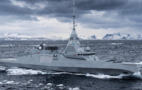
Now London is floating a new idea in the north of Europe: A multinational naval association of nine NATO members is to strengthen the deterrent potential for the North Atlantic and Arctic - the High North - through collective defence measures and increased readiness at sea. At any rate, the First Sea Lord, General Sir Gwyn Jenkins, spoke in favour of this in mid-April during a lecture at the Royal United Services Institute (RUSI). This initiative is intended to promote partnership, integration and responsiveness of the „Northern Navies“. In particular, it is aimed at countering aggressive hybrid actions by Russia. This measure is intended to complement the existing Joint Expeditionary Force (JEF), which has been led by the UK from its headquarters in Northwood since 2014, but which is centred around joint exercises and operations. The new proposal focuses on maritime aspects and is intended to conduct training, exercises and operations using harmonised systems, common standards and integrated logistics - the result should be a force that is immediately operational thanks to coordinated operational plans and interoperable procedures. This is to take place within NATO and in a complementary manner to existing organisations.
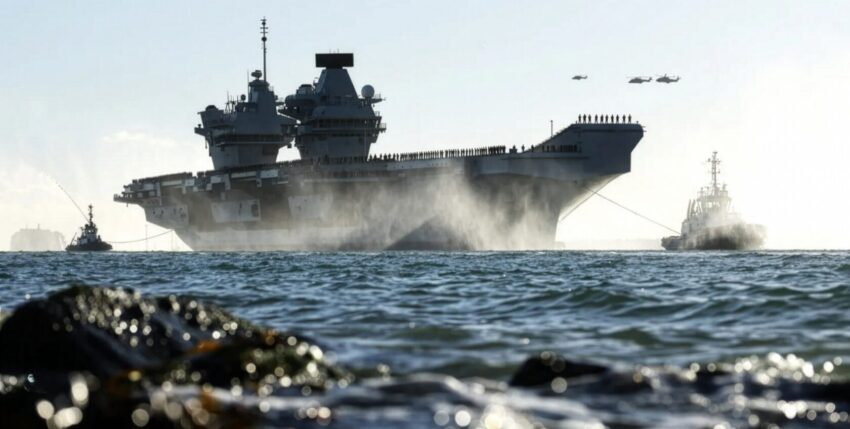
Sounds like NATO Standing Naval Force 2.0! But why duplicate a recipe for success? Of course NATO needs more maritime presence in the High North. But isn't it also the case that although the UK operates two aircraft carriers and strategic submarines - both extremely expensive and complex - it does not currently have its own operational frigates and destroyers to provide adequate protection for the carrier, which ultimately make up a carrier strike group? This will change in ten or fifteen years when all the newbuildings have been built. But that's not enough for today and the crucial next decade.
So then as known from London: Sparkling idea, lean organisation chart, HQ near London, fill high-value positions from own resources, preferably first in. First in - first out. My game - my rules. Necessity is the mother of invention!

 English
  German